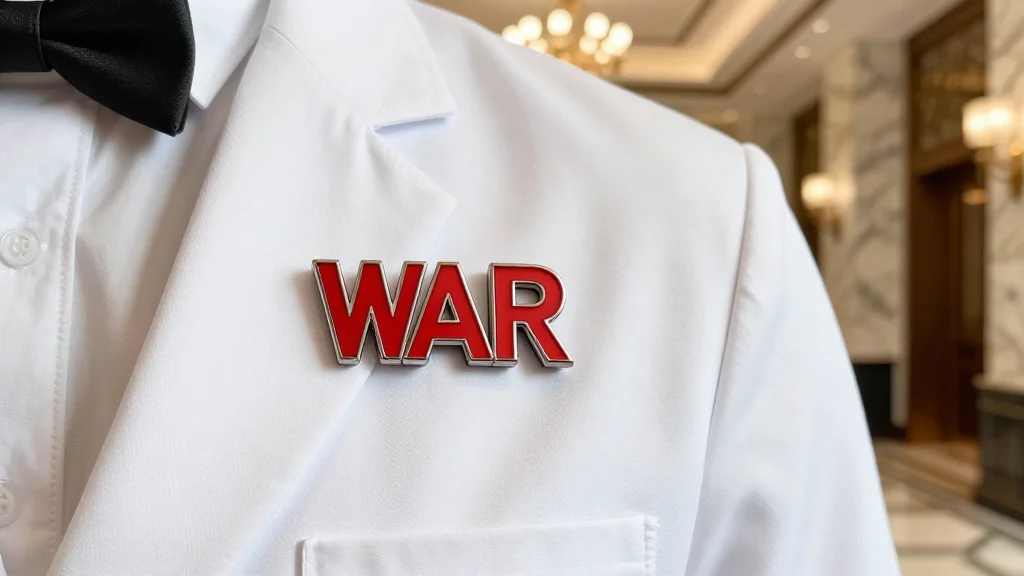
American Airlines Flight Attendants Union Brings Back Strike-Threat Pins — But Still Will Not Say What It Wants
Key Takeaways
- •Union revived red “WAR” pins after contract negotiations
- •No confidence vote expressed against CEO Robert Isom
- •Union has not disclosed specific bargaining demands
- •Profit‑sharing gap highlighted versus non‑union competitors
- •Unclear agenda may prolong labor‑airline tensions
Pulse Analysis
The airline industry has seen a resurgence of visible labor activism, and American Airlines’ flight‑attendant union is at the forefront. By re‑issuing the red “WAR” pins—originally part of a strike‑threat campaign—the crew is sending a clear visual cue that discontent remains high. Historically, such symbols have preceded collective bargaining pushes, as seen with United and Southwest, where pin‑based campaigns helped rally member solidarity and attract public attention. In American’s case, the pins reappear two years after a contract win, suggesting lingering grievances beyond wage issues.
What sets this episode apart is the union’s silence on specific demands. While they have publicly voted no confidence in CEO Robert Isom and highlighted a profit‑sharing disparity with non‑union carriers, they have not articulated concrete goals such as staffing levels, aircraft upgrades, or compensation adjustments. This lack of clarity can stall negotiations, giving the airline’s board leverage but also risking a prolonged standoff. Analysts note that ambiguous labor messaging often leads to reactive, rather than proactive, bargaining, potentially prompting the National Mediation Board to intervene if a work stoppage threatens critical routes.
For investors, passengers, and industry observers, the situation underscores a broader tension between airline profitability and workforce satisfaction. Should the union’s pressure translate into a formal strike or a forced mediation, American Airlines could face flight cancellations, revenue dips, and reputational damage—factors that typically ripple through stock performance and competitor market share. Stakeholders would do well to monitor any forthcoming statements from the board or the union, as a clarified agenda could either defuse the conflict or sharpen the bargaining chips on both sides. In an era where labor stability is a key component of airline resilience, the outcome will likely influence future contract frameworks across the sector.
American Airlines Flight Attendants Union Brings Back Strike-Threat Pins — But Still Will Not Say What It Wants
Comments
Want to join the conversation?