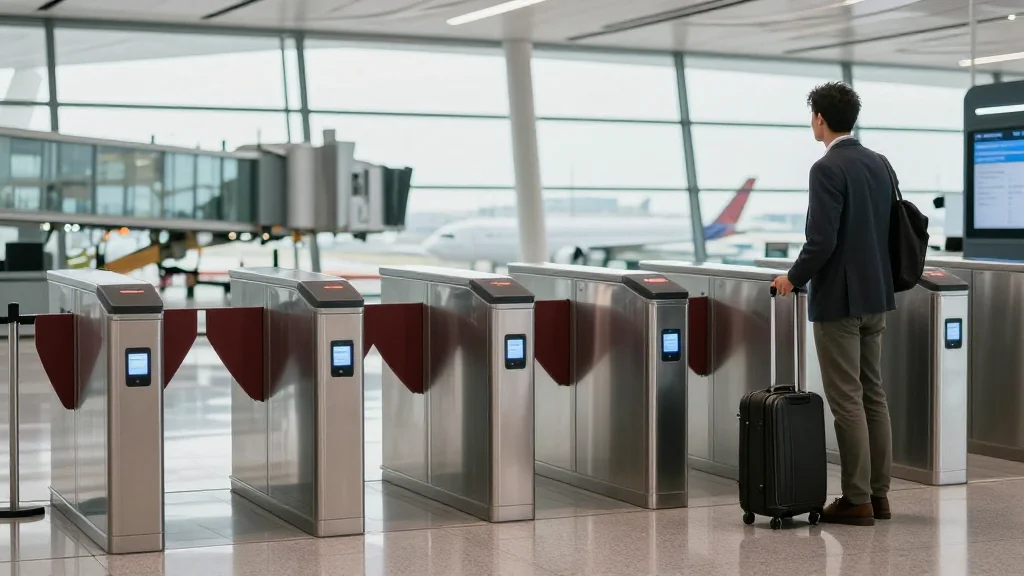
American Airlines Says Turnstiles Will Improve Boarding — They May Just Make Flying Worse
Key Takeaways
- •American rolls out turnstile boarding gates at DFW’s C concourse.
- •Pilot in Nov 2025 showed positive feedback, prompting wider deployment.
- •Gates aim to automate pass validation and regulate boarding flow.
- •Critics warn added hardware may increase delays and reduce staff assistance.
- •Privacy concerns rise over potential biometric scanning without clear disclosure.
Pulse Analysis
Airlines are accelerating the adoption of electronic boarding gates as part of a wider digital transformation of airport operations. American Airlines’ rollout at DFW, its largest hub, follows a successful pilot that demonstrated faster pass scans and clearer visual cues for travelers. By integrating touchscreen instructions and automated validation, the carrier hopes to smooth the transition from gate to jet bridge, a choke point that often snarls boarding during peak periods. The technology aligns with a trend seen at major airports worldwide, where e‑gates are used to streamline both domestic and international departures.
However, the operational reality may be more nuanced. While automated scans can reduce manual handling, they also introduce a new point of failure that depends on reliable hardware, network connectivity, and software updates. Passengers with damaged barcodes, seat changes, or connecting‑flight passes may still require human assistance, meaning gate agents remain essential. Moreover, the speed advantage can be offset if each traveler spends extra seconds waiting for the gate to open, especially when families or groups board together. Critics argue that the focus on queue management overlooks larger bottlenecks such as carry‑on volume, overhead‑bin scarcity, and pre‑boarding crowding.
Privacy and regulatory considerations add another layer of complexity. Although American has not confirmed biometric imaging at the new e‑gates, the industry’s move toward facial‑recognition verification raises questions about data retention, consent, and secondary use. Passengers increasingly demand clear disclosures and opt‑out mechanisms for any camera‑based scanning. As the Transportation Security Administration and Customs and Border Protection push for tighter identity checks, airlines must balance security mandates with consumer trust. The success of American’s turnstile system will ultimately depend on how well it integrates technology, staff support, and transparent privacy policies into a seamless boarding experience.
American Airlines Says Turnstiles Will Improve Boarding — They May Just Make Flying Worse
Comments
Want to join the conversation?