Ascott Advances AI Infrastructure with Focus on Agent-Led Travel
Companies Mentioned
Why It Matters
The move positions Ascott to lead AI‑driven booking and service, improving efficiency while meeting rising guest expectations and labor pressures in the hospitality sector.
Key Takeaways
- •Ascott partners with Accenture, Amadeus, EHL to build AI travel platform.
- •Cubby AI concierge processed over 900,000 guest queries since 2023.
- •New Amadeus CRS enables flexible inventory beyond fixed room types.
- •Staff training focuses on AI adoption while preserving service standards.
- •Agentic commerce aims to transform end‑to‑end travel booking.
Pulse Analysis
The hospitality sector is accelerating its digital transformation as AI moves from experimental pilots to core operational engines. Ascott, the global serviced‑apartment leader, announced a multi‑year investment to embed artificial‑intelligence across its booking and service workflow. By aligning with Accenture’s consulting expertise, Amadeus’s reservation technology, and the EHL Hospitality Business School, the company is constructing a unified AI infrastructure that can handle everything from inspiration to loyalty. This strategic shift reflects a broader industry consensus that agentic commerce—where software acts as a proactive travel agent—will redefine guest interactions.
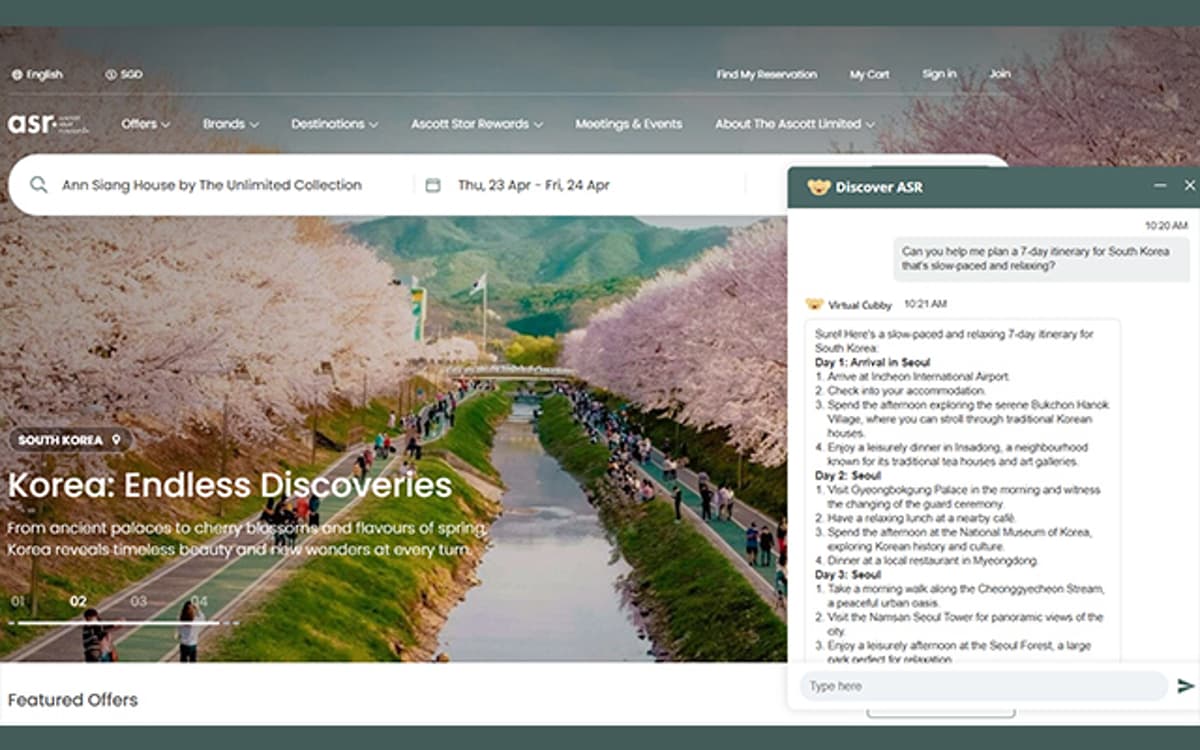
Central to Ascott’s rollout is Cubby, an AI‑powered concierge that has already fielded more than 900,000 guest inquiries since its 2023 launch. The next phase will upgrade Cubby from a reactive chat assistant to an autonomous booking agent, leveraging large‑language models and unified commerce platforms developed with Accenture. Simultaneously, the adoption of Amadeus’s Central Reservations System breaks the constraints of fixed room categories, allowing dynamic inventory presentation tailored to AI‑driven search algorithms. Complementary staff training through EHL’s Global Brand Academy ensures that human judgment remains embedded in the decision‑making loop.
The initiative positions Ascott to capture efficiency gains while addressing labor shortages and rising guest expectations for instant, personalized service. Automated lead conversion, pricing optimization, and content creation promise cost reductions, whereas the AI‑enhanced loyalty and CRM layers aim to deepen brand affinity. Competitors watching the rollout may feel pressure to accelerate their own agentic solutions, potentially reshaping the competitive landscape of serviced‑apartment and hotel distribution. If successful, Ascott’s model could become a benchmark for AI‑first hospitality operations, influencing investment patterns across the travel tech ecosystem.
Ascott advances AI infrastructure with focus on agent-led travel
Comments
Want to join the conversation?
Loading comments...