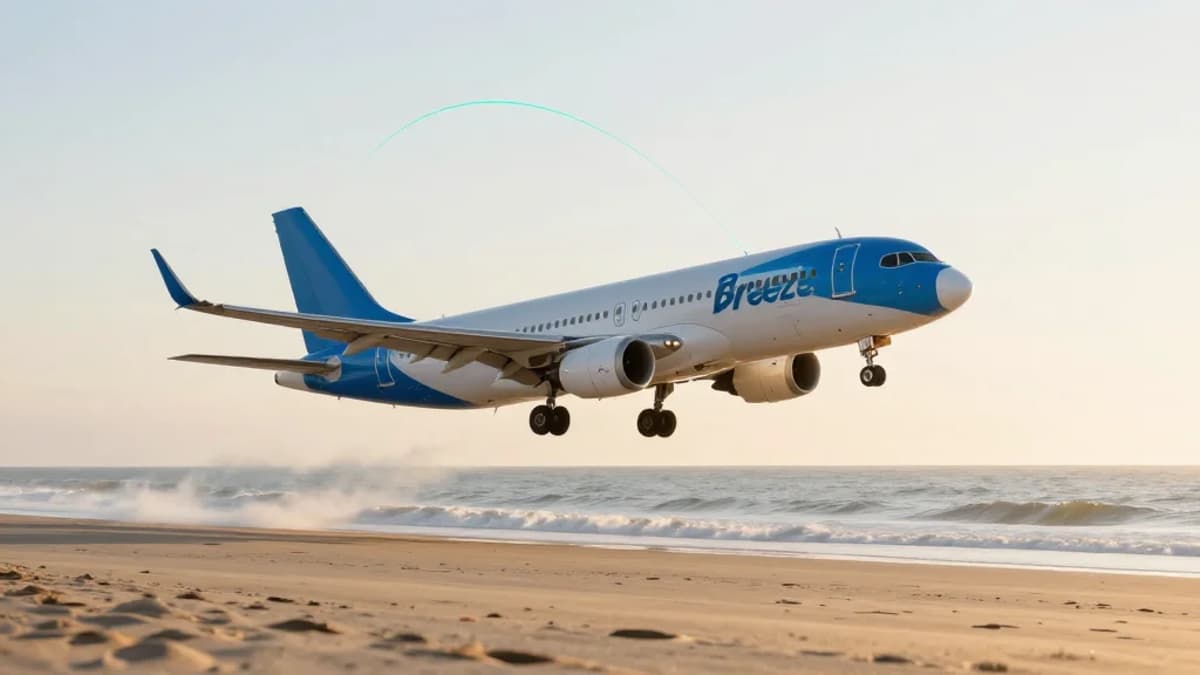
Breeze Announces Two New Destinations From Myrtle Beach, Expands Service to Existing Destinations
•February 24, 2026
0
Why It Matters
The new routes deepen Myrtle Beach’s national connectivity, attracting both residents and tourists while bolstering Breeze’s foothold in the low‑cost leisure segment.
Key Takeaways
- •New nonstop Myrtle Beach–Pittsburgh flights start July 3.
- •One‑stop BreezeThru service launches Myrtle Beach–Portland, Maine.
- •Daily Akron‑Canton flights begin July 1, increasing frequency.
- •Fort Lauderdale service expands to six weekly flights.
- •Long Island flights increase to four weekly departures.
Pulse Analysis
Breeze Airways continues its aggressive push into secondary markets by leveraging Myrtle Beach’s rapid population growth and tourism appeal. The carrier’s strategy hinges on offering direct, low‑fare options to cities that larger airlines often overlook. By introducing a nonstop link to Pittsburgh and a BreezeThru connection to Portland, Breeze not only fills a service gap but also positions Myrtle Beach as a modest hub for east‑coast leisure travel, encouraging outbound tourism and inbound visitor spending.
The new routes are supported by Breeze’s modern Airbus A220‑300 fleet, which delivers fuel efficiency and a comfortable cabin experience. Pricing as low as $39 one‑way underscores the airline’s commitment to affordability, while premium amenities such as free family seating, high‑speed Wi‑Fi, and flexible ticket policies differentiate it from traditional ultra‑low‑cost carriers. The BreezeThru model—one‑stop, no‑change‑of‑plane service—offers a seamless travel experience that rivals hub‑and‑spoke connections, appealing to price‑sensitive travelers who value convenience.
For the regional economy, increased flight frequency to Akron‑Canton, Fort Lauderdale and Long Island translates into more business opportunities, tourism dollars, and job creation at Myrtle Beach International Airport. Competitors may feel pressure to match Breeze’s price points and service levels, potentially reshaping the low‑cost carrier landscape in the Southeast. As Breeze expands its network, investors and industry analysts will watch closely to gauge whether this model can sustain growth while maintaining profitability.
Breeze Announces Two New Destinations from Myrtle Beach, Expands Service to Existing Destinations
0
Comments
Want to join the conversation?
Loading comments...