Can Robots Help Pizza Franchises Stay Competitive?
•March 3, 2026
0
Why It Matters
Automation promises faster service, lower labor expenses, and uniform product quality, giving early adopters a competitive edge in a crowded pizza market.
Key Takeaways
- •Little Caesars launches sidewalk delivery robots in Los Angeles
- •Donatos automates sauce application with seven‑second Smart Saucer
- •Pizza Guys tests dough‑spreading and sauce‑applying robots
- •Pizza Hut uses AI Byte system for kitchen, fleet coordination
- •AI ordering platforms boost speed, accuracy across pizza chains
Pulse Analysis
The pizza sector’s tech race is reshaping the consumer experience from the moment an order is placed. AI‑powered ordering engines, such as Papa John’s partnership with Google Cloud, now suggest optimal combos, handle voice commands, and route orders to the most efficient fulfillment channel. This digital front‑end reduces friction, shortens wait times, and captures data that fuels predictive inventory and staffing models, allowing brands to scale without proportionally increasing labor.
In the kitchen, robotics are moving beyond novelty to become production workhorses. Donatos’ Smart Saucer can evenly sauce a pie in seven seconds, while its autonomous airport outlet completes the entire bake‑and‑cut cycle in six minutes. Pizza Guys’ prototype robots for dough spreading and sauce application aim to outperform human speed and precision, addressing the industry’s chronic challenge of consistency across locations. These innovations lower variable labor costs and enable tighter quality control, a crucial differentiator for franchisees competing on taste and reliability.
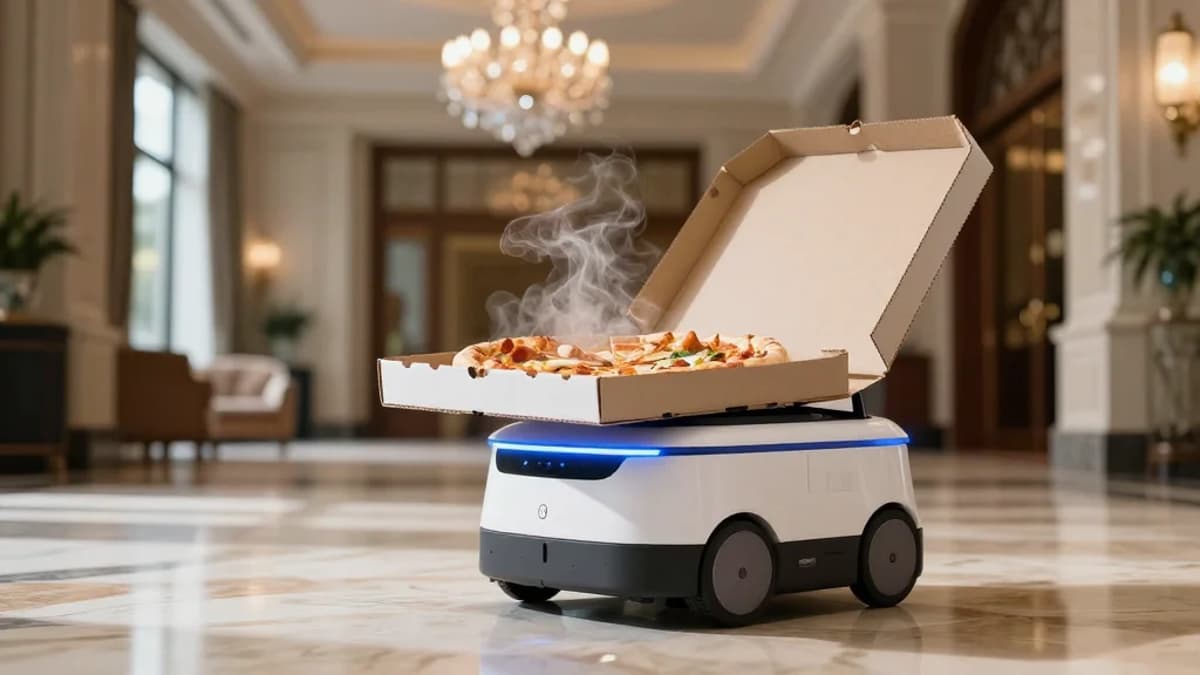
Delivery, the final touchpoint, is witnessing the most visible transformation. Little Caesars’ partnership with Serve Robotics introduces sidewalk bots that travel up to seven miles per hour, delivering pizzas within 20‑30 minutes in select Los Angeles neighborhoods. Domino’s integration with DoorDash and Pizza Hut’s AI‑driven Byte platform further optimize routing, driver assignment, and real‑time tracking. As autonomous vehicles and drones mature, the cost barrier diminishes, promising a future where human couriers become optional rather than essential. Collectively, these advances position tech‑savvy pizza chains to capture market share, improve margins, and meet evolving consumer expectations for speed and consistency.
Can Robots Help Pizza Franchises Stay Competitive?
0
Comments
Want to join the conversation?
Loading comments...