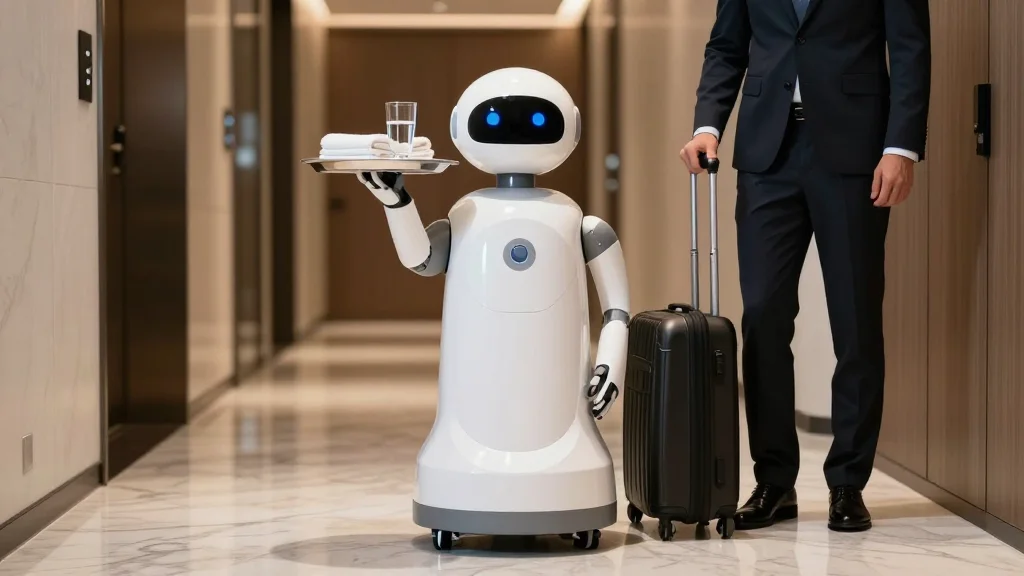
China to Launch Fully Robot-Operated Hotel in Shenzhen by End‑2026

Companies Mentioned
Why It Matters
The Shenzhen robot‑run hotel illustrates how automation can reshape the economics of hospitality, offering a blueprint for reducing labor costs while maintaining high service standards. If successful, the model could accelerate adoption of AI‑driven operations across mid‑scale and luxury segments, prompting hotel owners to invest in robotics platforms and re‑evaluate workforce strategies. Beyond cost considerations, the project raises questions about guest experience, data privacy, and regulatory oversight of autonomous service systems. As robots assume more guest‑facing roles, industry standards for safety, accessibility and customer satisfaction will need to evolve, potentially influencing policy in jurisdictions beyond China.
Key Takeaways
- •44 luxury guestrooms will be serviced entirely by robots.
- •Pudu Robotics partners with Shenzhen tourism developers to build the hotel.
- •Operations are expected to start before the end of 2026, with full rollout by 2030.
- •Robots will handle reception, luggage, food delivery, cleaning, security and guest interaction.
- •The project aims to create a seamless, integrated robotic ecosystem for hospitality.
Pulse Analysis
The Shenzhen robot‑run hotel represents a strategic gamble that could redefine cost structures in the hospitality industry. Historically, hotels have relied on large labor forces to deliver personalized service; automation promises to compress that expense curve, but the trade‑off lies in guest perception. Early adopters like this project must prove that robotic interactions can meet or exceed the emotional expectations of travelers accustomed to human touch.
From a competitive standpoint, the initiative positions China as a leader in hospitality robotics, potentially giving domestic hotel chains a technological edge over international rivals still dependent on conventional staffing. The partnership with Pudu Robotics, a company already embedded in Chinese service sectors, suggests a vertically integrated supply chain that could lower hardware costs and accelerate deployment timelines.
Looking ahead, the success metrics will likely focus on occupancy rates, average length of stay, and guest satisfaction scores compared to traditional hotels. If the robot‑run model delivers comparable or superior performance, we may see a wave of similar projects in other high‑density urban centers, especially where labor shortages are acute. Conversely, any shortcomings in service quality or safety incidents could stall broader adoption and reinforce the value of human staff. The next twelve months will be critical in determining whether this bold experiment becomes a template for the future of hotels or a cautionary tale about over‑automation.
China to Launch Fully Robot-Operated Hotel in Shenzhen by End‑2026
Comments
Want to join the conversation?
Loading comments...