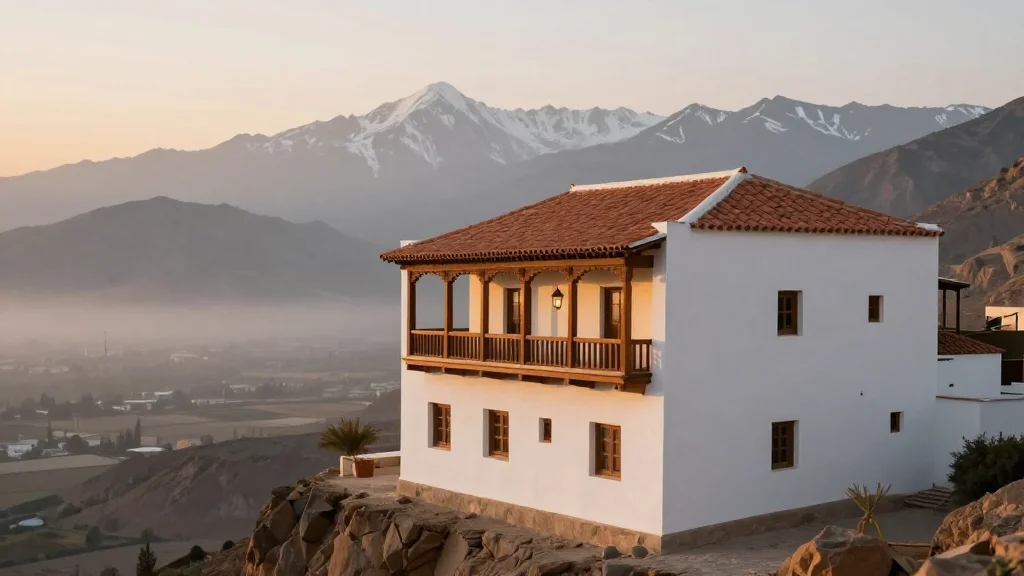
Dar Ahlam’s Atlas Mountain Retreat Redefines Luxury Hospitality

Why It Matters
Dar Ahlam’s success signals a pivot in the luxury hotel sector from iconic city landmarks to remote, culturally immersive experiences. By delivering a highly personalized, schedule‑free stay in a region still healing from a major earthquake, the hotel demonstrates that high‑net‑worth travelers are willing to trade traditional opulence for authenticity and adventure. This shift could accelerate investment in boutique properties that prioritize local heritage, sustainability, and bespoke service over sheer scale. For the broader hospitality industry, the Dar Ahlam model challenges the notion that luxury must be synonymous with grand architecture and centralized services. It suggests a future where hotels act as curators of place, leveraging unique geography and cultural narratives to command premium rates. As travel demand rebounds, operators that can replicate this blend of exclusivity, immersion, and flexibility may capture a growing segment of affluent guests seeking transformative experiences.
Key Takeaways
- •Travel writer spent four unscheduled days at Dar Ahlam, a remote luxury hotel in Morocco’s High Atlas.
- •Access to the hotel requires crossing the 7,400‑foot Tizi n’Tichka pass, often in severe weather.
- •Dar Ahlam forgoes a reception desk; General Manager Marcio greets guests personally in a tadelakt salon.
- •The property’s location and service model contrast with Marrakech’s La Mamounia, where rooms start at $900 per night.
- •The hotel operates in a region still recovering from the 2023 Al Haouz earthquake (magnitude 6.8, ~3,000 deaths).
Pulse Analysis
Dar Ahlam illustrates a broader redefinition of luxury that is less about conspicuous consumption and more about curated immersion. Historically, high‑end hospitality has been anchored in grand urban palaces—think La Mamounia, the Ritz, or the Four Seasons—where scale and décor dominate the guest experience. The shift toward remote, experience‑centric properties reflects changing consumer preferences accelerated by the pandemic, which forced travelers to value safety, privacy, and authenticity. Dar Ahlam’s model—no reception desk, daily check‑ins that ask "what do you feel like doing," and a setting that feels like a living museum—aligns with this trend.
From a market perspective, the hotel’s ability to command premium rates despite its modest size suggests that scarcity and narrative can outweigh traditional amenities. Investors may see this as a signal to fund similar boutique ventures in under‑served, high‑beauty locales, especially where cultural heritage can be leveraged. However, scaling such intimacy is fraught with risk; the very elements that make Dar Ahlam unique—personalized service, limited capacity, and remote access—are difficult to replicate at scale without diluting the brand.
Looking ahead, the industry will likely see a bifurcation: mega‑luxury chains will continue to dominate city centers, while a parallel ecosystem of ultra‑boutique retreats will grow, targeting travelers who view luxury as a transformative journey rather than a status symbol. Dar Ahlam’s success could catalyze partnerships between traditional hotel groups and local operators, blending brand reach with authentic, place‑based experiences. The key question for the sector will be how to balance exclusivity with growth, ensuring that the next wave of luxury hospitality retains the sense of discovery that made Dar Ahlam stand out.
Dar Ahlam’s Atlas Mountain Retreat Redefines Luxury Hospitality
Comments
Want to join the conversation?
Loading comments...