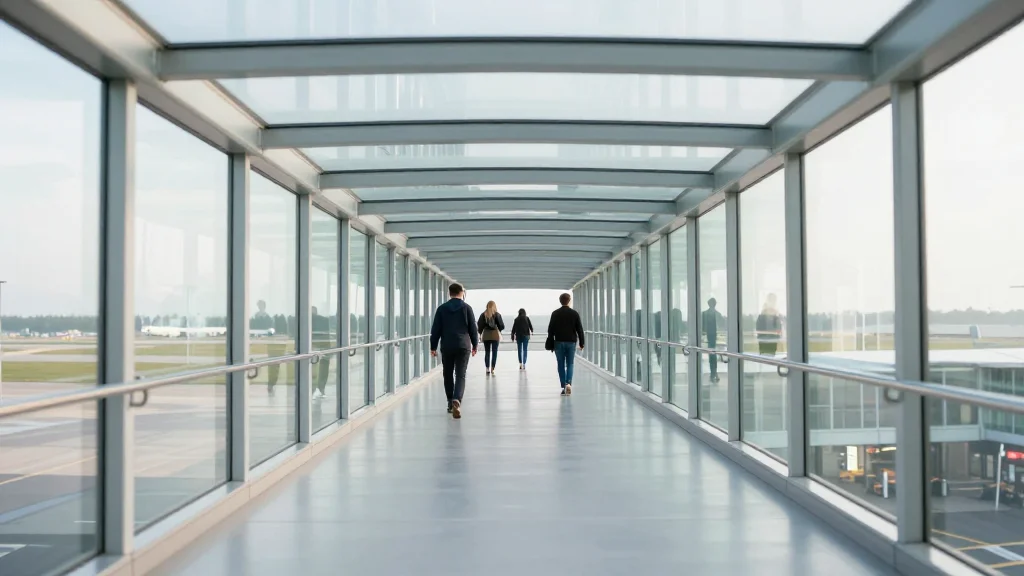
Denver International Airport Continues Investment in Customer Experience, Announces Plans for Pedestrian Walkways Connecting Concourses
Why It Matters
The walkways enhance inter‑concourse mobility, reducing bottlenecks and supporting DEN’s goal of handling 100 million passengers annually, which strengthens its competitive position among major U.S. hubs.
Key Takeaways
- •Walkways will link Concourses A, B, C using repurposed baggage tunnels
- •Construction slated for 2027, complementing the airport’s existing train system
- •Supports Vision 100 plan aiming for 100 million passengers annually
- •United, Southwest, and American airlines praise added connectivity options
- •Follows $75 million train upgrades and recent 39‑gate expansion
Pulse Analysis
Denver International Airport (DEN) is accelerating its push toward the Vision 100 strategic roadmap, which envisions handling 100 million passengers per year. The airport has already invested heavily in infrastructure, adding 39 new gates across its three concourses and spending more than $75 million to modernize its automated train system. As passenger volumes rebound post‑pandemic and international routes expand, seamless inter‑concourse movement becomes a critical factor in maintaining operational efficiency and passenger satisfaction.
The newly announced pedestrian walkways will repurpose sections of DEN’s underground baggage tunnels, creating a direct, walk‑able link between Concourses A, B and C. Construction is slated to begin in 2027, running alongside scheduled upgrades to the train fleet. Airline partners—including United, Southwest and American—have voiced strong support, citing the added flexibility for connecting flights and reduced reliance on the single‑track train. The walkways will not replace the train but will provide a resilient, low‑cost alternative during peak periods or service disruptions.
From an industry perspective, DEN’s move reflects a broader trend of legacy hubs retrofitting existing assets to boost capacity without massive new builds. By leveraging underused baggage tunnels, the airport can improve passenger flow while containing capital outlays, a model other large U.S. airports may emulate. The project also reinforces Denver’s role as Colorado’s economic engine, contributing roughly $47 billion annually to the regional economy. Enhanced connectivity is likely to attract additional airlines and routes, further solidifying DEN’s competitive standing among North American gateways.
Denver International Airport Continues Investment in Customer Experience, Announces Plans for Pedestrian Walkways Connecting Concourses
Comments
Want to join the conversation?
Loading comments...