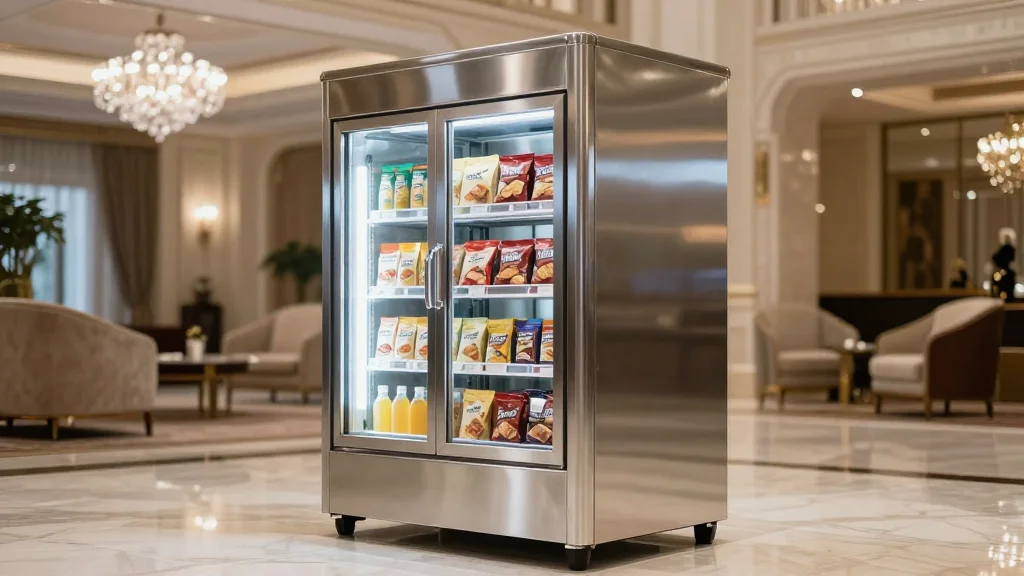
Digit7 Launches Zero‑cost MicroMarket at Asheville Hotel, Adding 24/7 Guest Retail

Why It Matters
The Asheville MicroMarket illustrates how autonomous retail can solve two persistent challenges for hotels: enhancing guest convenience and unlocking revenue from underused spaces. By eliminating upfront costs, the model lowers the barrier to entry for properties of all sizes, potentially reshaping ancillary revenue strategies across the industry. As travelers increasingly demand contactless, on‑demand services, hotels that adopt such technology may gain a competitive edge in guest satisfaction scores and loyalty metrics. Furthermore, the revenue‑sharing framework creates a partnership model where technology providers and hotel owners share upside, aligning incentives for continuous optimization of product mix and pricing. If widely adopted, this could spur a new ecosystem of AI‑driven retail solutions tailored to hospitality, influencing future investment and M&A activity in the sector.
Key Takeaways
- •Digit7’s MicroMarket installed at a premium Asheville hotel with no upfront cost to the property
- •Solution offers 24/7 self‑service snacks, drinks and essentials via AI‑driven inventory and checkout
- •Revenue‑sharing model provides hotels a recurring income stream from underutilized lobby space
- •Zero‑investment approach differentiates Digit7 from traditional vending and unattended retail vendors
- •Pilot could accelerate adoption of autonomous retail across hotels, hospitals, airports and gyms
Pulse Analysis
Digit7’s entry into the hospitality market arrives at a moment when hotels are re‑evaluating ancillary revenue sources after the pandemic disrupted traditional food‑and‑beverage operations. The zero‑investment proposition removes a key friction point—capital expenditure—that has historically limited the rollout of unattended retail in mid‑scale properties. By shouldering installation, inventory and maintenance, Digit7 effectively outsources the operational complexity, allowing hotel operators to focus on core guest‑experience metrics.
Historically, hotel mini‑bars and in‑room snack offerings have suffered from low utilization and high labor costs. Autonomous kiosks like Digit7’s MicroMarket could render those legacy models obsolete, especially as guests gravitate toward contactless, on‑demand options. The revenue‑share arrangement also aligns with the broader trend of performance‑based contracts in hospitality technology, where vendors are compensated based on measurable outcomes rather than flat fees.
Looking ahead, the success of the Asheville deployment will likely be measured by transaction volume, average spend per guest and the impact on overall guest satisfaction scores. If the data shows a positive lift, we can expect a cascade of similar installations, potentially spurring competitive responses from established vending manufacturers and new AI‑focused startups. The next wave may see integration with hotel property management systems, enabling dynamic pricing based on occupancy levels or time of day, further deepening the financial upside for operators. In sum, Digit7’s model could become a catalyst for a broader digital transformation of hotel ancillary services, reshaping how properties monetize space and meet evolving guest expectations.
Digit7 launches zero‑cost MicroMarket at Asheville hotel, adding 24/7 guest retail
Comments
Want to join the conversation?
Loading comments...