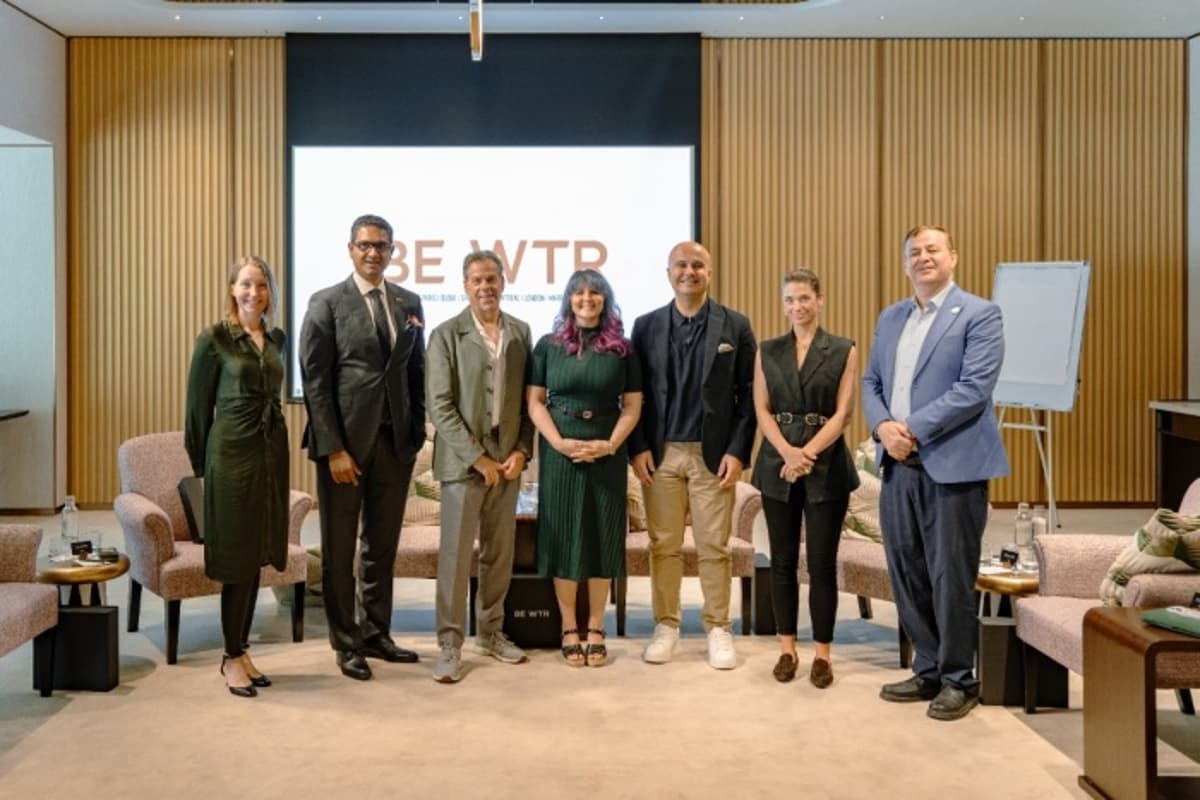
Dubai’s Leading Sustainability Voices Joined BE WTR for an Informative World Earth Day Roundtable
Why It Matters
The event signals a shift toward measurable, profit‑aligned sustainability in the UAE’s hospitality and consumer sectors, influencing industry standards and policy direction. It demonstrates how local circular initiatives can drive both environmental impact and brand differentiation.
Key Takeaways
- •BE WTR’s bottles reusable up to 300 times, cutting single‑use plastic.
- •UAE hospitality brands adopting local sourcing to lower carbon footprints.
- •Panel stressed data‑driven ESG reporting for consumer trust.
- •Technology and social media accelerating waste measurement and greenwashing scrutiny.
- •Government incentives, like a plastic tax, urged to boost circular economy.
Pulse Analysis
Marking World Earth Day on April 22, BE WTR gathered a cross‑section of UAE sustainability leaders at the W Hotel Mina Seyahi. The roundtable underscored a growing consensus that the Gulf’s luxury hospitality sector must transition from token green gestures to measurable ESG performance. Participants—from BE WTR’s founder to executives at HAMA MEA, BOCA and Thrift for Good—highlighted how homegrown brands are leveraging local sourcing, advanced filtration and reusable glass to cut carbon emissions and plastic waste. The dialogue reflected Dubai’s ambition to position itself as a regional hub for circular innovation.
The panel drilled into concrete tactics. BE WTR’s circular model, which allows each glass bottle to be refilled up to 300 times, was showcased as a blueprint for reducing single‑use plastics. Hospitality operators cited data‑driven waste audits and real‑time monitoring technology as essential for identifying inefficiencies. Social media emerged as a double‑edged sword, amplifying transparency while exposing greenwashing. Yet speakers warned that financial viability remains a hurdle; aligning sustainability with profit margins requires clear ESG reporting, stakeholder education and scalable cost structures.
Looking ahead, the roundtable called for stronger policy levers. A proposed plastic tax on fashion and incentives for local manufacturing could accelerate circular supply chains across the UAE. Government‑backed standards for ESG disclosure would give consumers confidence and enable brands to differentiate on sustainability. As consumer awareness deepens, the convergence of technology, regulation and collaborative industry networks is likely to drive long‑term behavioral change, positioning Dubai’s hospitality and consumer goods sectors for resilient, low‑carbon growth.
Dubai’s Leading Sustainability Voices Joined BE WTR for an Informative World Earth Day Roundtable
Comments
Want to join the conversation?
Loading comments...