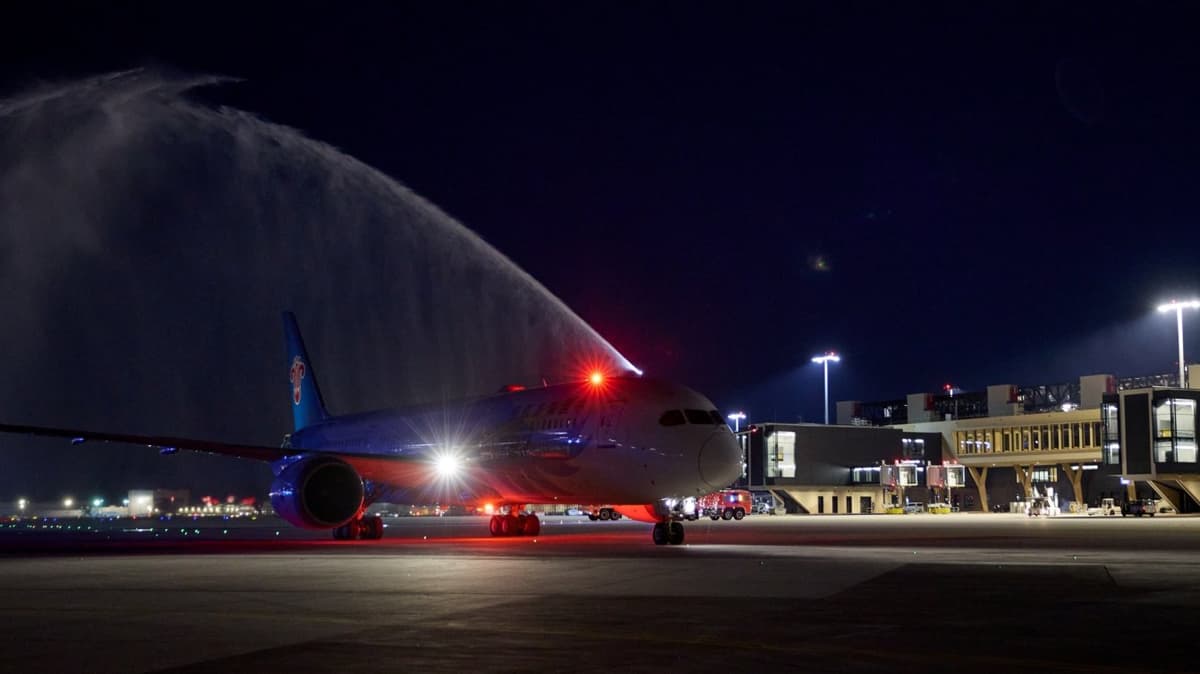
Frankfurt Airport Welcomes First Flight Into Terminal 3 Building
Why It Matters
The opening expands Frankfurt’s capacity at Europe’s busiest airport, strengthening its role as a key gateway for Asia‑Europe traffic and supporting future growth in passenger volumes. It also showcases Fraport’s long‑term investment in infrastructure to meet rising demand.
Key Takeaways
- •First flight CZ8021 from Shenyang landed at 5:25 am on 23 April
- •Terminal 3 handled 6,000 passengers across 12 arrivals and departures
- •The new terminal adds capacity for up to 19 million passengers annually
- •Construction spanned ten years, beginning October 2015, led by Fraport Ausbau Süd
- •Terminal 3’s three piers (G, H, J) help capture growing Asia‑Europe traffic
Pulse Analysis
Frankfurt Airport’s Terminal 3 represents a milestone for one of Europe’s most trafficked hubs. After a decade of construction that began in October 2015, the facility opened with a ceremonial water salute, signaling the culmination of extensive planning and engineering. The terminal’s three piers—G, H, and J—are equipped with modern gate systems and advanced baggage handling, positioning Frankfurt to handle a projected 19 million passengers per year, a significant boost to its existing capacity.
The immediate operational impact is evident: on its first day, Terminal 3 processed 6,000 travelers across 12 arrivals and 12 departures, including the inaugural China Southern Airlines flight from Shenyang. This early traffic mix highlights the terminal’s strategic focus on Asia‑Europe routes, a segment that has shown robust growth despite recent global disruptions. By expanding gate availability and streamlining passenger flow, Frankfurt can attract additional long‑haul carriers, improve slot utilization, and reduce congestion at its older terminals, enhancing overall airport efficiency.
Beyond passenger throughput, the new terminal carries broader economic implications. Managed by Fraport Ausbau Süd, the project generated thousands of construction jobs and will create permanent positions in operations, retail, and services. The increased capacity also supports regional business travel and tourism, reinforcing Frankfurt’s status as a financial and logistics hub. As airlines recalibrate networks post‑pandemic, Terminal 3 offers the infrastructure needed to capture emerging demand, making it a pivotal asset in Fraport’s long‑term growth strategy.
Frankfurt Airport Welcomes First Flight into Terminal 3 Building
Comments
Want to join the conversation?
Loading comments...