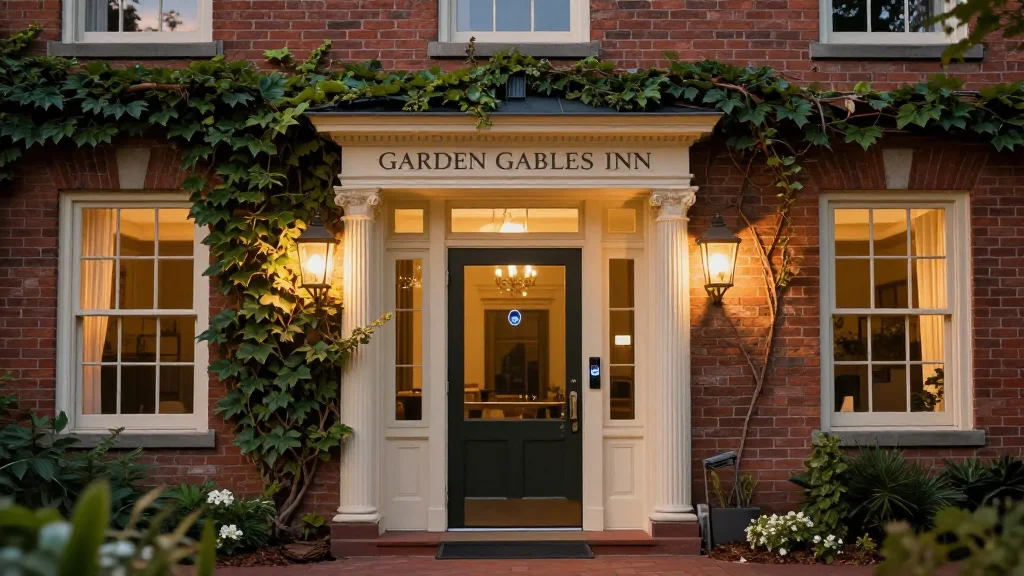
Garden Gables Inn Completes $1.4 Million Luxury Renovation in Lenox

Why It Matters
The Garden Gables renovation illustrates how boutique hotels can revitalize historic assets to meet modern traveler expectations, blending heritage with technology. By adopting mobile access and flexible booking, the inn taps into the growing segment of remote workers and short‑term leisure travelers, potentially boosting occupancy rates year‑round. The project also signals confidence in small‑town tourism economies, where upscale boutique properties can drive ancillary spending in local businesses and justify municipal support for expansion permits. Furthermore, the $1.4 million spend demonstrates that investors see viable returns in upgrading legacy properties rather than building new hotels. This could encourage similar capital flows into other historic inns across New England, reshaping the competitive landscape and prompting larger chains to reconsider their approach to personalization and tech integration in boutique settings.
Key Takeaways
- •Renovation cost: just shy of $1.4 million
- •Purchase price: $2.475 million in November 2024
- •Current inventory: 16 rooms; approved expansion adds 10 more
- •Rates: $135‑$215 nightly; $899‑$1,038 over July 4 weekend
- •Tech upgrades: text‑message access codes and concierge service
Pulse Analysis
Garden Gables’ $1.4 million overhaul is a textbook case of how capital can be deployed to extract premium value from heritage properties. Historically, boutique inns in New England have struggled to compete with chain hotels that benefit from economies of scale. By investing in high‑touch amenities—Italian linens, scented diffusers—and low‑touch technology—mobile check‑in and coded entry—the inn creates a hybrid experience that satisfies both the desire for authenticity and the demand for convenience.
The financial calculus is compelling. Assuming an average ADR (average daily rate) of $200 for the 16 rooms and a 70 % occupancy rate, the inn could generate roughly $1.0 million in annual room revenue. Adding the approved ten‑room expansion could lift revenue by an additional $600,000, pushing the property toward a breakeven point on the renovation within three to four years, especially given the premium pricing during peak holidays. This ROI horizon is attractive for a development firm like Sullivan Capital, which can replicate the model across its other historic assets.
Strategically, the move also pressures regional chains to elevate their service standards. As boutique properties adopt tech‑enabled personalization, larger brands may need to invest in similar capabilities or risk losing the high‑spending segment that values experiential stays. The success of Garden Gables could therefore catalyze a wave of boutique‑focused renovations, reshaping the hospitality supply chain in small‑town America and reinforcing the economic resilience of communities that rely on tourism.
Garden Gables Inn Completes $1.4 Million Luxury Renovation in Lenox
Comments
Want to join the conversation?
Loading comments...