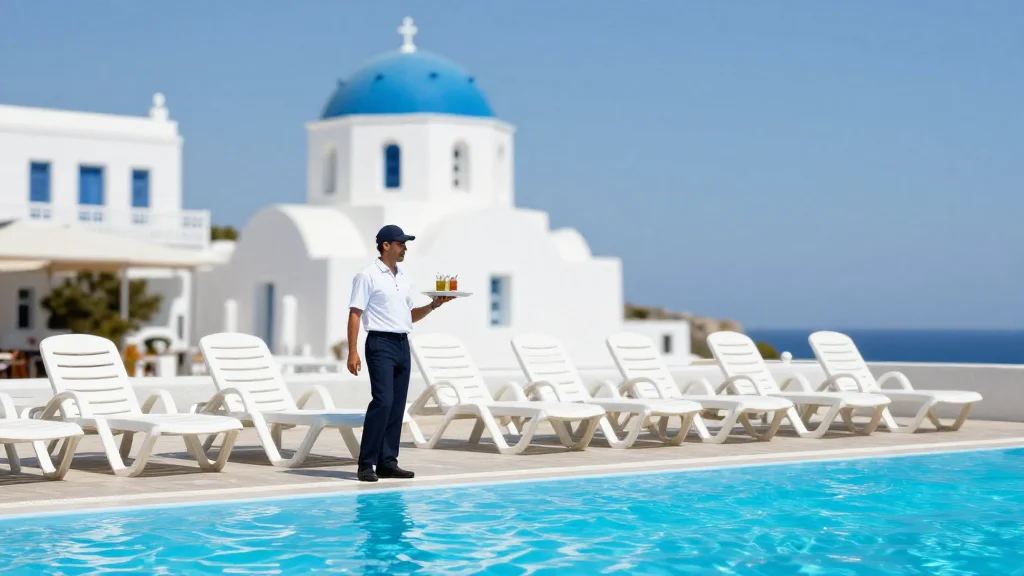
Greece’s Tourism Boom Meets a Harsh Reality: Not Enough Greeks to Welcome the World
Why It Matters
The shortage threatens Greece’s core growth engine, risking a decline in service quality and visitor satisfaction that could erode tourism’s contribution to GDP. It also highlights a regional labor crunch that forces policymakers to rethink migration, wages, and skill development.
Key Takeaways
- •Greece faces 90,000 tourism job vacancies.
- •Non‑EU recruitment covers only ~25% of open positions.
- •Seasonal labor shortages mirror broader Mediterranean crisis.
- •Skilled tourism roles will dominate 70% of future demand.
- •Policy mix needed: migration, wages, training, season extension.
Pulse Analysis
Tourism remains Greece’s economic lifeline, accounting for roughly 25% of GDP and drawing millions of visitors each summer. Yet the sector is now constrained by a labor deficit of about 90,000 hospitality workers, part of a wider 360,000‑person shortfall across the economy. Demographic trends—an aging population, post‑pandemic worker exits, and a historic brain drain—have depleted the domestic pool, while seasonal jobs offer unstable income that deters long‑term commitment. The government’s 2026 plan to admit 95,000 non‑EU workers aims to plug the gap, but the influx will likely cover only a quarter of vacancies, leaving many positions unfilled and pressuring service standards.
Greece’s dilemma mirrors a Mediterranean-wide crisis. Spain and Portugal have built bilateral pipelines with Latin America, achieving faster recruitment and cultural compatibility, while Italy’s regularization of undocumented migrants provided short‑term relief but sparked political backlash. Germany’s focus on higher wages, vocational training, and streamlined visas has boosted productivity and retention, underscoring that job attractiveness matters as much as headcount. These examples suggest that Greece’s reliance on low‑skill, seasonal labor may be insufficient; a strategic migration framework coupled with improved employment conditions could yield more sustainable outcomes.
Looking ahead, experts warn that up to 70% of future tourism roles will require medium‑ to high‑skill capabilities, from digital concierge services to sustainable‑tourism management. Greece must therefore blend immediate staffing solutions with long‑term reforms: faster visa processing, competitive wages, year‑round tourism offerings, and robust training programs. Leveraging technology—such as AI‑driven scheduling and contactless services—can augment the workforce without eroding the personal touch that defines Greek hospitality. Failure to address these structural issues risks turning a booming visitor market into a reputation problem, potentially curbing the sector’s growth trajectory.
Greece’s Tourism Boom Meets a Harsh Reality: Not Enough Greeks to Welcome the World
Comments
Want to join the conversation?
Loading comments...