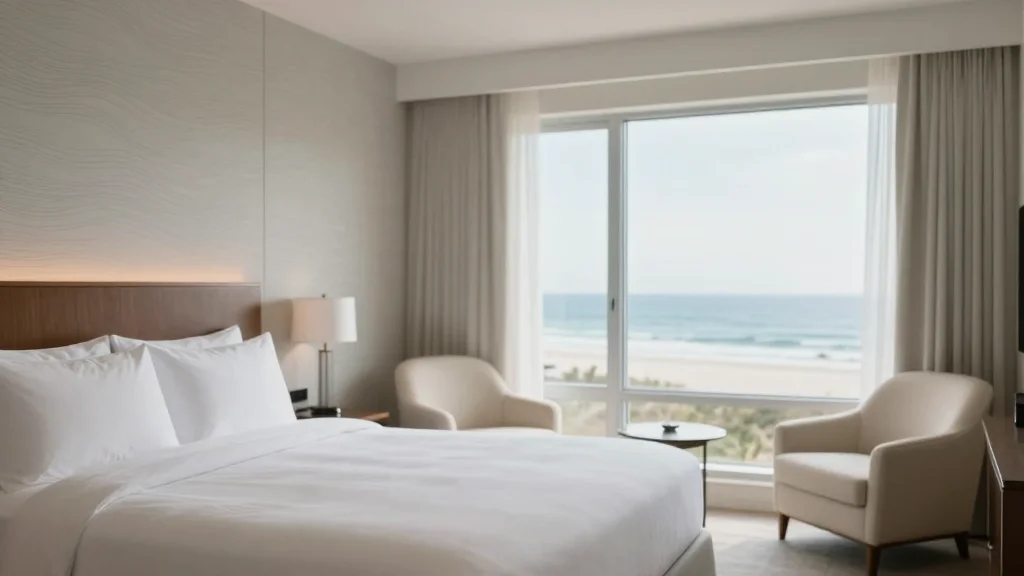
Hamptons Luxury Hotels Revamp: Hedges Inn Unveils Designer Renovation Ahead of Summer

Companies Mentioned
Why It Matters
The Hedges Inn renovation signals a broader trend of boutique hotels in the Hamptons investing heavily in design and brand differentiation to capture a post‑pandemic wave of affluent travelers. By aligning with a renowned AD100 designer, the property not only raises its own market profile but also pressures neighboring hotels to elevate their aesthetic and service standards. This arms‑race in luxury positioning could drive higher average daily rates, increase capital expenditures across the region, and reshape the competitive landscape for high‑end hospitality on the East Coast. Furthermore, the owners’ dual‑property strategy—spanning East Hampton and Palm Beach—illustrates how hotel operators are building cross‑regional luxury portfolios to offer seamless experiences for repeat guests. As travel patterns continue to favor short‑haul, high‑value trips, the success of the Hedges Inn could encourage more investors to target legacy properties for designer‑led transformations, accelerating the upscale revitalization of historic hotels nationwide.
Key Takeaways
- •Hedges Inn, a 12‑room historic hotel in East Hampton, reopens after a designer‑led renovation by AD100 architect David Netto.
- •Owners Sarah and Andrew Wetenhall, also behind The Colony in Palm Beach, funded the upgrade (exact cost not disclosed).
- •New interior features include Mongiardino Boiserie wallpaper, custom de Gournay prints, and Americana‑styled guest rooms.
- •Hamptons luxury hotel ADRs have risen 12% YoY, reflecting strong demand for high‑end boutique experiences.
- •The renovation positions Hedges Inn as a benchmark for design‑focused hospitality, prompting competitive upgrades across the region.
Pulse Analysis
The Hedges Inn’s makeover is more than a cosmetic refresh; it reflects a strategic pivot in boutique hospitality toward experiential luxury anchored in design authenticity. In the past decade, the Hamptons have transitioned from a seasonal retreat to a year‑round destination for high‑net‑worth individuals, prompting hotels to compete not just on location but on narrative. By enlisting David Netto—an AD100 designer whose portfolio includes flagship retail and residential projects—the Wetenhalls are leveraging brand equity that extends beyond the property’s walls. This approach mirrors a broader industry shift where hotels partner with celebrated designers to create "destination hotels" that become cultural touchstones, much like the boutique hotels that have reshaped Manhattan’s hotel scene.
Financially, the renovation could unlock premium pricing. With ADRs already up 12% across the Hamptons, a refreshed property can command rate differentials of 15‑20% over comparable inns, especially when paired with curated experiences such as private beach access, bespoke dining, and wellness services. The owners’ existing footprint in Palm Beach suggests a potential loyalty program that cross‑sells guests between the two locations, deepening customer lifetime value. However, the success of this model hinges on execution—staff training, service consistency, and the ability to maintain the design narrative throughout the guest journey.
Looking forward, the Hedges Inn may catalyze a wave of similar investments. Developers with legacy assets are likely to seek designer collaborations to differentiate in an increasingly saturated market. This could spur a secondary market for boutique hotel acquisitions, as investors chase properties with untapped design potential. Moreover, the emphasis on high‑touch, design‑centric experiences aligns with emerging consumer preferences for authenticity and personalization, suggesting that the Hamptons could become a proving ground for the next generation of luxury hospitality concepts.
Hamptons Luxury Hotels Revamp: Hedges Inn Unveils Designer Renovation Ahead of Summer
Comments
Want to join the conversation?
Loading comments...