Why It Matters
The launch signals hospitality’s shift toward AI‑driven personalization, potentially boosting conversion rates and guest satisfaction while setting a new competitive benchmark.
Key Takeaways
- •Hilton AI Planner beta launched on hilton.com
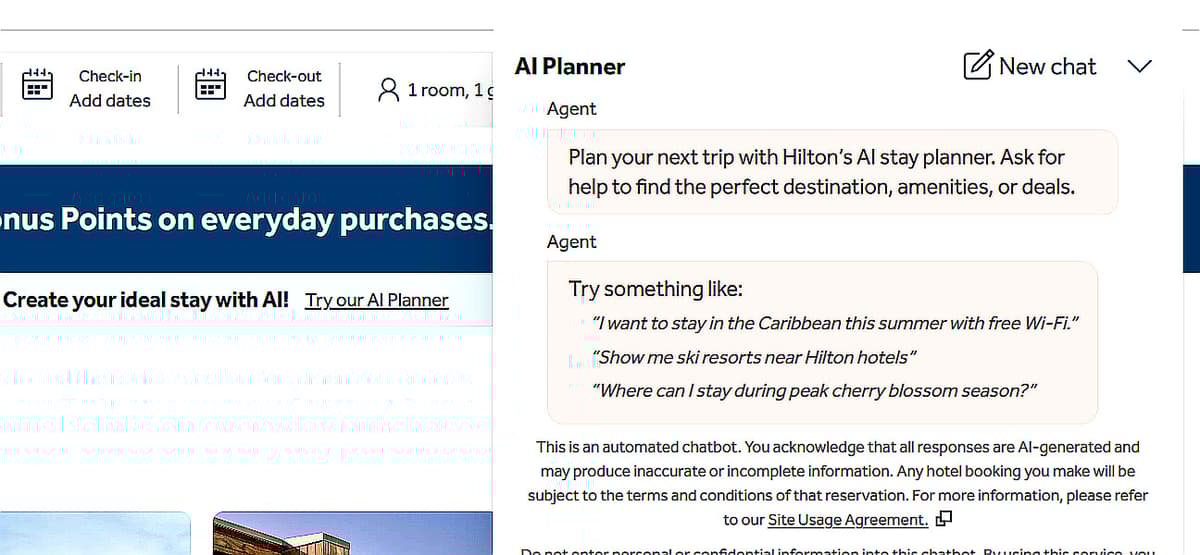
- •Uses conversational AI for destination, property, amenity suggestions
- •Real‑time responses replace traditional search filters
- •Pilot limited to small traffic, scaling later
- •User data will refine personalization and future features
Pulse Analysis
The hospitality sector has been quick to adopt digital tools, but generative AI is still emerging as a differentiator. Hilton’s AI Planner builds on its existing ecosystem—Digital Key, Hilton Honors app, and Connected Room—by adding a conversational layer that can interpret nuanced traveler intent. This move reflects a broader industry trend where brands leverage large language models to cut friction in the pre‑stay phase, turning browsing into a guided experience rather than a keyword hunt.
Functionally, the AI Planner acts as a virtual concierge, asking guests about travel goals, budget constraints, and amenity preferences before surfacing curated hotel options. Its real‑time response engine draws from Hilton’s global inventory, delivering suggestions that align with brand standards and local experiences. By integrating directly into the booking funnel, the tool can reduce drop‑off rates, increase average booking value, and gather actionable insights on guest behavior that traditional analytics often miss.
For competitors, Hilton’s beta signals that AI‑enhanced personalization will become a baseline expectation. Hotels that lag in deploying similar capabilities risk losing market share to tech‑savvy chains that can offer instant, tailored recommendations. As the AI Planner matures, we can anticipate deeper integration with loyalty data, dynamic pricing, and even post‑stay engagement, reshaping the entire guest lifecycle. Early adopters will likely benefit from a feedback loop that accelerates innovation while setting new standards for guest experience across the industry.
Hilton introduces the Hilton AI Planner
0
Comments
Want to join the conversation?
Loading comments...