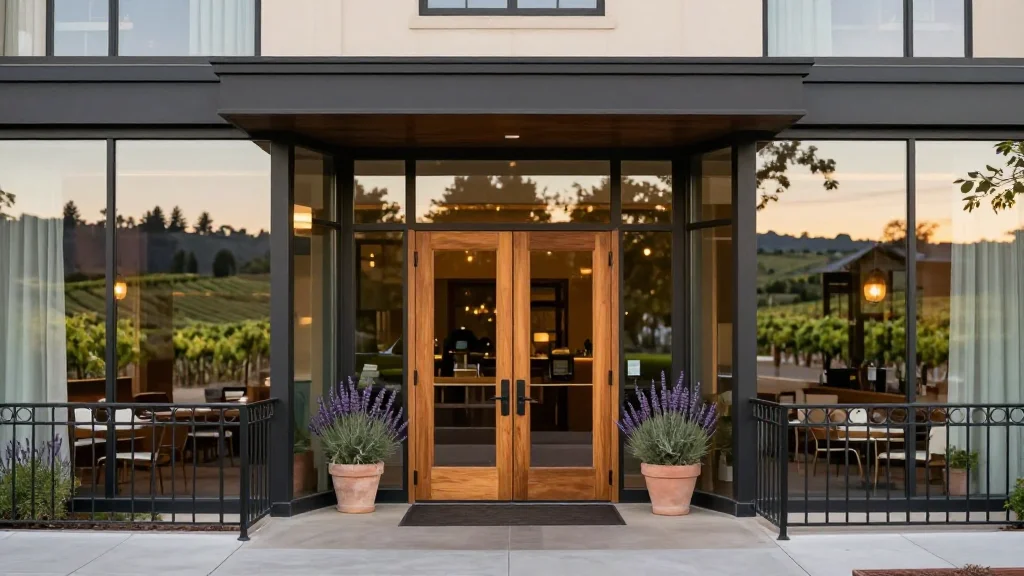
Hilton Launches $80 Million Casa Mani Resort, Napa’s First Full‑Service Downtown Hotel

Companies Mentioned
Why It Matters
The Casa Mani Resort fills a critical gap in Napa’s downtown lodging market, offering a scale and service level previously unavailable in the city core. By anchoring a large, full‑service hotel in the heart of the wine region, Hilton not only expands premium accommodation capacity but also creates a catalyst for ancillary economic activity—restaurants, retail, and event services—thereby reinforcing Napa’s position as a premier tourism destination. The project also signals confidence in the post‑pandemic travel rebound, encouraging other major brands to consider similar high‑investment developments in secondary markets. Furthermore, Hilton’s simultaneous push for operational innovation, exemplified by the drone‑cleaned windows at its Belfast hotel, suggests a strategic focus on cost‑efficiency and safety that could translate into lower operating expenses and higher guest satisfaction at Casa Mani. If successful, the model may become a template for future upscale resorts seeking to balance luxury amenities with cutting‑edge service delivery.
Key Takeaways
- •Hilton invested $80 million to convert the former Embassy Suites into the Casa Mani Resort.
- •The resort adds over 200 rooms, making it the largest downtown hotel in Napa.
- •Three on‑site dining venues include BOA Steakhouse, Creekside Terrace, and Lobby Lounge & Market.
- •Projected to create ~150 construction jobs and 80 permanent positions for the local economy.
- •Hilton’s Belfast hotel recently pioneered drone‑based window cleaning, highlighting the brand’s tech‑focused operations.
Pulse Analysis
Hilton’s decision to anchor a Curio Collection resort in downtown Napa reflects a strategic shift toward high‑density, brand‑driven properties in secondary tourism hubs. Historically, Napa’s lodging landscape has been dominated by boutique inns and suburban resorts that cater to wine‑tourists seeking intimate experiences. By introducing a large‑scale, full‑service hotel, Hilton is betting that the market can sustain both volume and premium pricing, especially as affluent travelers increasingly demand comprehensive amenities—spa, multiple dining options, and robust loyalty benefits—under one roof.
The $80 million outlay also signals confidence in the long‑term resilience of wine‑country tourism, which has rebounded strongly after pandemic disruptions. With the resort’s opening timed just before the harvest season, Hilton can capture peak demand and establish a foothold for future event programming, such as corporate retreats and wine‑focused conferences. Competitors will likely respond with either new boutique projects or upgrades to existing properties, intensifying a race for differentiated experiences.
Hilton’s parallel push for operational innovation—exemplified by the drone‑cleaned windows at its Belfast property—suggests a broader agenda to reduce labor‑intensive tasks and improve safety. If similar technologies are deployed at Casa Mani, the resort could achieve lower maintenance costs and higher guest satisfaction, reinforcing the value proposition of large‑scale, tech‑enabled hospitality assets. The success of this model could encourage other major chains to replicate the approach in comparable markets, reshaping the competitive dynamics of upscale regional tourism.
Hilton Launches $80 Million Casa Mani Resort, Napa’s First Full‑Service Downtown Hotel
Comments
Want to join the conversation?
Loading comments...