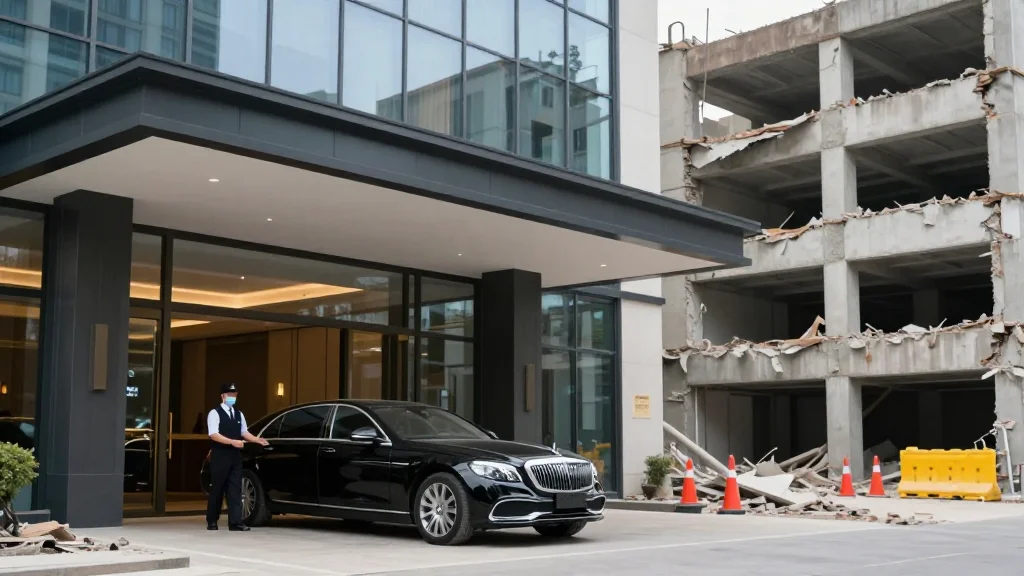
Houston Demolishes Avenida South Garage, Leaving Convention‑Center Hotels Short on Parking

Companies Mentioned
Why It Matters
The abrupt loss of the Avenida South Garage removes a critical parking asset for hotels that serve the George R. Brown Convention Center, directly affecting guest experience and revenue during a period of expected event growth. With the convention center’s expansion slated for 2028, the current disruption highlights the delicate balance cities must strike between long‑term infrastructure upgrades and short‑term operational continuity for the hospitality sector. If hotels cannot secure reliable parking for attendees, the district risks losing bookings to competing cities with more stable logistics. Moreover, the valet‑only restriction could increase operational costs for hotels, which may pass higher fees onto guests, potentially dampening demand for Houston’s convention‑center hotels in the near term.
Key Takeaways
- •Demolition of Avenida South Garage begins Monday; all vehicles must be removed by 5 p.m. Sunday.
- •Traffic on Avenida de las Américas will be restricted to Hilton valet‑only after the garage closes.
- •A new parking structure at Chenevert and Bell Streets is slated to open in fall 2026.
- •The garage removal is part of a 700,000‑sq‑ft GRB expansion plan expected to debut in 2028.
- •Hotels face immediate parking shortages, prompting shuttle and valet solutions to maintain guest service.
Pulse Analysis
Houston’s decision to raze the Avenida South Garage illustrates a classic trade‑off in urban development: sacrificing short‑term convenience for a longer‑term vision. The convention‑center district has been a growth engine for the city’s hotel market, and the 2028 expansion promises to attract larger conventions and higher‑spending attendees. However, the interim parking deficit could erode that momentum if hotels cannot adequately compensate for the loss. In comparable markets, such as Las Vegas and Orlando, cities have mitigated similar disruptions by offering temporary shuttle services and partnering with private parking operators, thereby preserving guest satisfaction while construction proceeds.
The valet‑only restriction, while limiting self‑parking, may inadvertently create a premium service niche that hotels can monetize. Yet, the added cost could deter price‑sensitive travelers, especially for mid‑scale properties that rely on volume rather than high‑margin services. Hotel chains with strong brand loyalty, such as Hilton and Marriott, may leverage their loyalty programs to offset inconvenience, but independent hotels could see a sharper dip in bookings.
Looking ahead, the success of the new Chenevert‑Bell garage will be a litmus test for Houston’s ability to synchronize large‑scale infrastructure projects with hospitality operations. If the new facility opens on schedule and integrates seamlessly with existing traffic flows, the city could emerge with a more modern, higher‑capacity parking ecosystem that supports the expanded GRB. Conversely, delays or design flaws could prolong the parking crunch, giving competing destinations a competitive edge. Stakeholders should monitor city‑issued traffic‑management updates and hotel occupancy trends over the next six months to gauge the real impact of this transition.
Houston Demolishes Avenida South Garage, Leaving Convention‑Center Hotels Short on Parking
Comments
Want to join the conversation?
Loading comments...