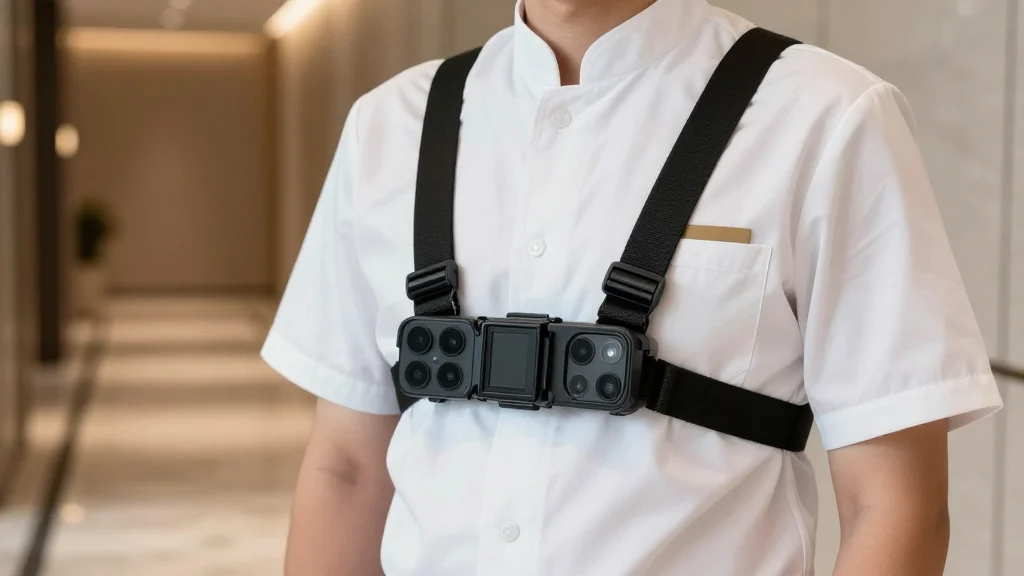
Instawork Deploys Instacore Wearable to Capture Hotel Gig Workers’ Data

Why It Matters
Instacore could redefine how hotels gather operational intelligence. By converting everyday gig work into a data‑collection exercise, hotels gain access to granular visual and motion data that were previously unavailable or too costly to capture. This data can accelerate robot perception models, making autonomous service robots more reliable in the chaotic, unstructured environments typical of hospitality settings. Beyond technology, the initiative signals a shift in labor economics. Gig workers become contributors to AI development, blurring the line between employee and data source. The scale of Instawork’s workforce means that the resulting dataset may set industry standards, influencing how future regulations address worker privacy, consent, and compensation for data generation.
Key Takeaways
- •Instawork launches Instacore, a five‑camera wearable for hotel gig workers.
- •System records up to eight hours of synchronized video from head, chest, and wrists.
- •Instawork has raised over $150 million and serves about 10 million Pros.
- •Instacore aims to create the largest commercial robotics data set for AI labs.
- •Production of hundreds of units is underway in Mountain View, with overseas scaling planned.
Pulse Analysis
Instawork’s pivot from pure staffing to data acquisition reflects a broader trend where platform economies monetize the by‑products of labor. The company’s deep bench of 10 million Pros gives it a unique advantage: it can capture diverse, real‑world scenarios across hotel brands, geographic regions, and service tasks. This breadth is a critical asset for training perception models that must handle the variability of hotel corridors, guest interactions, and back‑of‑house logistics.
Historically, robotics data has been sourced from controlled labs or limited pilot sites, leading to models that struggle when deployed at scale. Instacore’s crowd‑sourced approach could compress years of data‑collection into months, potentially giving early adopters a competitive edge. However, the success of this strategy hinges on data quality, worker compliance, and the ability to anonymize footage to meet privacy standards. If Instawork can navigate these challenges, it may catalyze a wave of hotel‑specific service robots, from autonomous housekeeping carts to AI‑driven concierge kiosks.
From a market perspective, the move could pressure traditional hotel staffing firms to consider similar data‑centric offerings or risk losing relevance as automation gains traction. Investors have already signaled confidence with $150 million in backing, suggesting that the capital markets view the convergence of gig labor and AI data as a high‑growth opportunity. The next milestone—large‑scale deployment in operational hotels—will be the litmus test for whether Instacore can translate raw footage into functional, revenue‑generating robotics solutions.
Instawork Deploys Instacore Wearable to Capture Hotel Gig Workers’ Data
Comments
Want to join the conversation?
Loading comments...