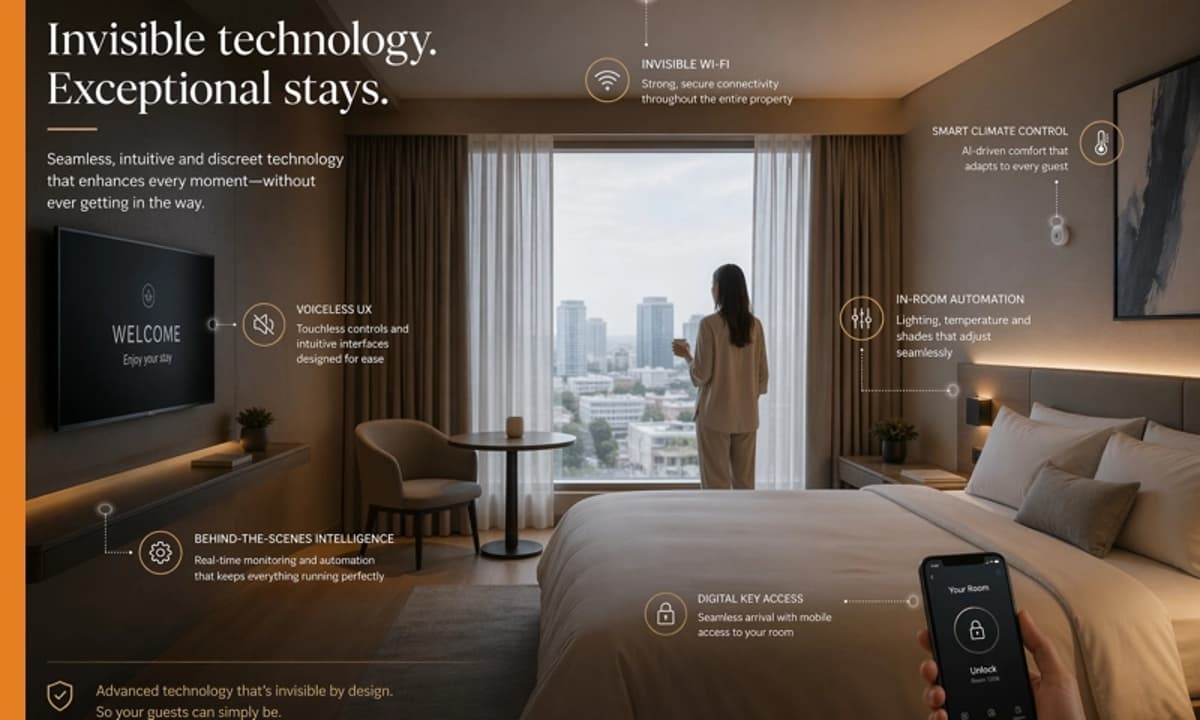
Invisible Technologies: The Hidden Element of Smart Hospitality - By Tatyana Tsukanova
Companies Mentioned
Why It Matters
Invisible tech transforms hotel economics by cutting operating costs, boosting sustainability, and elevating guest satisfaction, positioning early adopters as leaders in the next wave of luxury hospitality.
Key Takeaways
- •AI and IoT enable seamless, frictionless guest journeys
- •Ambient intelligence cuts energy use by 20‑30%, boosting sustainability
- •Automation frees staff for personalized, high‑touch service
- •Invisible tech drives luxury perception through discreet, anticipatory experiences
- •Hotels like citizenM and Marina Bay Sands showcase real‑world deployments
Pulse Analysis
Invisible technologies are reshaping hospitality from a visible gadget showcase to a silent, omnipresent service layer. By embedding AI-driven chatbots, generative recommendation engines, and IoT sensors into rooms and back‑office platforms, hotels create a seamless journey that begins the moment a guest opens a mobile app. This shift mirrors broader industry trends toward ambient intelligence, where the environment senses and adapts without demanding user interaction, delivering a frictionless experience that feels almost magical.
Operationally, the hidden tech stack drives measurable efficiencies. Real‑time data from smart thermostats, occupancy sensors, and digital twins enables predictive maintenance and dynamic energy management, delivering 20‑30% reductions in utility consumption. Automated workflows—such as robotic process automation in Marriott’s Marina Bay Sands—free thousands of staff hours, allowing employees to transition from routine data entry to curated, high‑touch guest interactions. The result is a virtuous cycle: lower costs, higher sustainability scores, and a differentiated brand promise that resonates with eco‑conscious travelers.
Strategically, the rise of invisible technology forces hoteliers to rethink the human element of service. While automation handles logistics, staff can focus on designing memorable moments, turning data‑driven insights into personalized touches like pre‑stocked minibar favorites or tailored spa bookings. However, the quiet nature of these systems raises privacy and ethical considerations; hotels must balance anticipatory service with transparent data governance to avoid a "creepy" perception. Companies that master this balance will set new standards for luxury—where excellence is felt, not seen—positioning themselves at the forefront of the smart‑hospitality evolution.
Invisible Technologies: The Hidden Element of Smart Hospitality - By Tatyana Tsukanova
Comments
Want to join the conversation?
Loading comments...