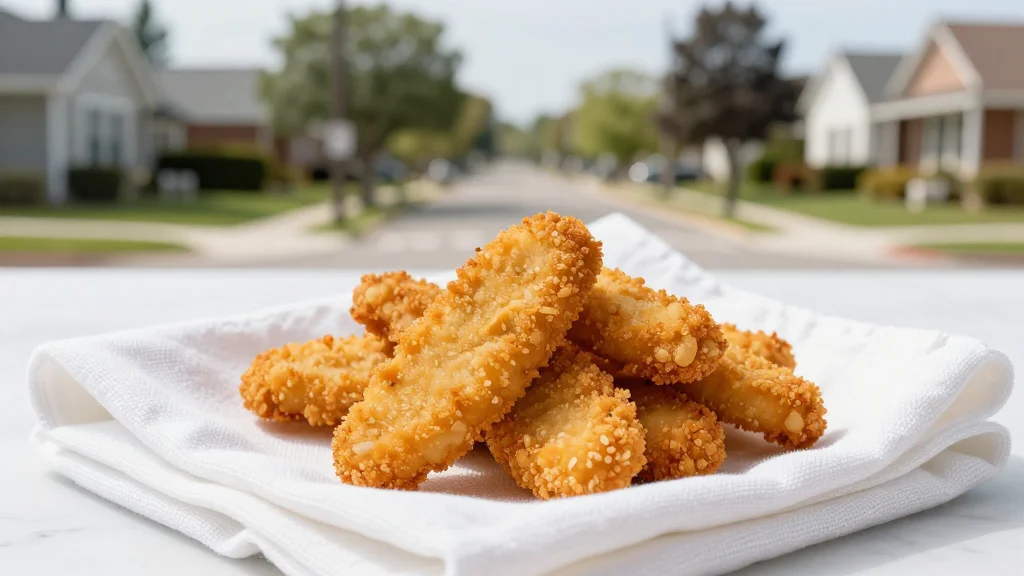
Layne’s Chicken Fingers Thinks It Has What It Takes to Go National
Why It Matters
The rapid, franchise‑driven expansion of a niche premium‑tender concept signals a new growth vector in the crowded QSR sector, challenging larger players and reshaping unit‑economics benchmarks.
Key Takeaways
- •41 locations across nine states as of 2025
- •Plans 100% unit growth in 2026 via franchising
- •Targets 4,000 stores nationwide over 20 years
- •Premium tenders hand‑battered, in‑house sauces differentiate
- •Franchisees pay cost‑plus food, 5% royalty only revenue
Pulse Analysis
The U.S. quick‑service restaurant (QSR) landscape has seen a surge in chicken‑based menus, yet premium chicken tenders remain a relatively untapped niche. Layne’s Chicken Fingers leverages this gap by offering genuine chicken tenders—marinated, hand‑battered, and served with proprietary sauces—setting it apart from chains that repurpose chicken breast cuts. This product differentiation aligns with consumer trends favoring higher‑quality protein and convenience, allowing Layne’s to command a modest price premium while riding the broader chicken‑price advantage over beef.
Growth for Layne’s is anchored in a disciplined franchise model that emphasizes cost control and experienced operators. By bulk‑purchasing tenders and equipment at negotiated rates and passing those costs through to franchisees, the brand eliminates traditional franchisor mark‑ups. Its revenue stream relies almost exclusively on a 5% royalty, a rarity among franchisors, which simplifies the economics for franchisees and improves return‑on‑investment metrics. The company also favors second‑generation real‑estate conversions, accelerating market entry and reducing build‑out timelines, while targeting affluent suburban demographics rather than geographic proximity.
Looking ahead, Layne’s ambition to reach 4,000 locations over 20 years could reshape the premium chicken‑tender segment, pressuring incumbents like Raising Cane’s and Zaxby’s to refine their own offerings. Success will depend on maintaining supply‑chain efficiencies, replicating the hand‑crafted experience at scale, and securing franchise partners with proven multi‑unit expertise. If these challenges are met, Layne’s model may become a blueprint for niche‑focused, franchise‑led expansion in the broader fast‑casual arena.
Layne’s Chicken Fingers thinks it has what it takes to go national
Comments
Want to join the conversation?
Loading comments...