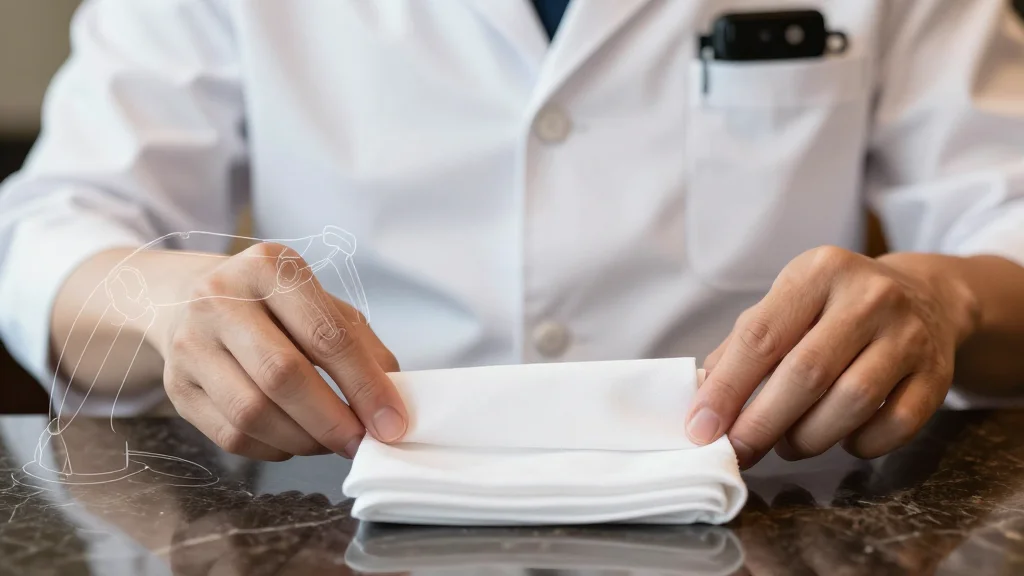
Lotte Hotel Seoul Feeds AI Robot with Napkin‑Folding Data to Automate Service

Companies Mentioned

Why It Matters
The partnership signals a shift from purely back‑of‑house automation to front‑of‑house guest interaction, a frontier that has lagged behind kitchen robotics. By teaching robots the fine motor skills required for hospitality tasks, hotels could reduce reliance on seasonal labor, standardise service quality, and free human staff to focus on higher‑value, personalised experiences. At the same time, the move highlights the growing convergence of AI, robotics and the service sector, prompting regulators and labor groups to consider the impact on employment and skill development. For the wider hotel industry, RLWRLD’s approach offers a template for data‑driven robot training that can be replicated across brands and geographies. As more properties experiment with similar pilots, the competitive pressure to adopt AI‑enabled service solutions will intensify, potentially reshaping guest expectations and operational cost structures worldwide.
Key Takeaways
- •Lotte Hotel Seoul wired 10 staff with body cameras to record napkin‑folding motions for AI training.
- •RLWRLD is building a cross‑industry library of human expertise, including data from CJ logistics and Lawson stores.
- •South Korea’s government allocated $33 million to capture master‑technician know‑how for AI‑driven manufacturing.
- •RLWRLD aims to deploy industrial AI robots at scale by 2028, with hotel service robots slated for trials later this year.
- •Professor Billy Choi highlighted South Korea’s focus on humanoids tailored for manufacturing and service sectors.
Pulse Analysis
RLWRLD’s data‑centric strategy reflects a broader trend in robotics: moving from hard‑coded motion scripts to learning‑based control. By harvesting real‑world human motions, the startup sidesteps the costly trial‑and‑error phase that has hampered many robot deployments. In the hospitality context, the granularity of napkin‑folding data is a proof‑of‑concept for more complex, guest‑facing tasks that require tactile finesse and contextual awareness.
However, the timeline remains optimistic. Scaling from a single prototype to a fleet that can navigate crowded hotel lobbies, adapt to diverse table settings, and respond to unpredictable guest behaviour will demand advances in perception, safety, and human‑robot interaction design. Moreover, the labor economics are nuanced: while robots could alleviate staffing shortages, they may also trigger resistance from unions and raise questions about the future of low‑skill hospitality jobs. The $33 million government fund underscores that South Korea views physical AI as a national priority, yet the sector’s profitability hinges on proving ROI in high‑margin environments like luxury hotels.
If RLWRLD’s pilot succeeds, it could catalyse a cascade of similar initiatives across the global hotel chain ecosystem, accelerating the adoption curve for service robots. Competitors such as SoftBank Robotics and Boston Dynamics will likely intensify their focus on hospitality‑specific modules, driving a new wave of innovation that blends AI perception with the subtle art of guest service. The next twelve months will be critical in determining whether the napkin‑folding experiment remains a niche showcase or becomes a cornerstone of the next generation of hotel operations.
Lotte Hotel Seoul Feeds AI Robot with Napkin‑Folding Data to Automate Service
Comments
Want to join the conversation?
Loading comments...