Lotte Hotel Seoul Records Staff Motions to Train AI Robots for Banquet Service

Why It Matters
The Lotte Hotel Seoul experiment illustrates how hospitality can become an early adopter of physical AI, a sector traditionally resistant to automation due to the need for fine motor skills and guest interaction. By turning human expertise into data, the project could accelerate the deployment of service robots, easing labor shortages in a market where skilled staff are scarce. Moreover, the initiative dovetails with South Korea’s $33 million government push to capture tacit knowledge, positioning the country to compete globally in a field where it already excels in hardware and manufacturing. Success would validate a new business model where hotels partner with AI startups to co‑create robot capabilities, potentially reshaping labor dynamics and capital allocation across the hospitality industry. Conversely, any shortcomings could reinforce labor concerns and slow investment in physical AI, highlighting the high stakes of this early‑stage trial.
Key Takeaways
- •Lotte Hotel Seoul recorded motions of ~10 banquet staff to train AI robots for service tasks.
- •South Korean startup RLWRLD is building a cross‑industry motion database, including data from CJ logistics and Lawson stores.
- •The South Korean government allocated $33 million to capture master technicians' skills for AI‑driven manufacturing.
- •Industry leaders Hyundai Motor and Samsung Electronics aim to roll out humanoids and AI factories by 2028‑2030.
- •Labor groups warn that rapid robot deployment could threaten skilled hospitality jobs.
Pulse Analysis
South Korea’s bet on physical AI is a calculated response to its relative weakness in large‑language models. By leveraging its manufacturing heritage and a workforce adept at precise manual tasks, the country hopes to dominate the next wave of robotics—humanoids that can operate in unstructured environments like hotel banquet halls. The Lotte Hotel pilot is a microcosm of this strategy: it transforms a routine, high‑touch service into a data set that can be fed to learning algorithms, effectively turning human expertise into a replicable software asset.
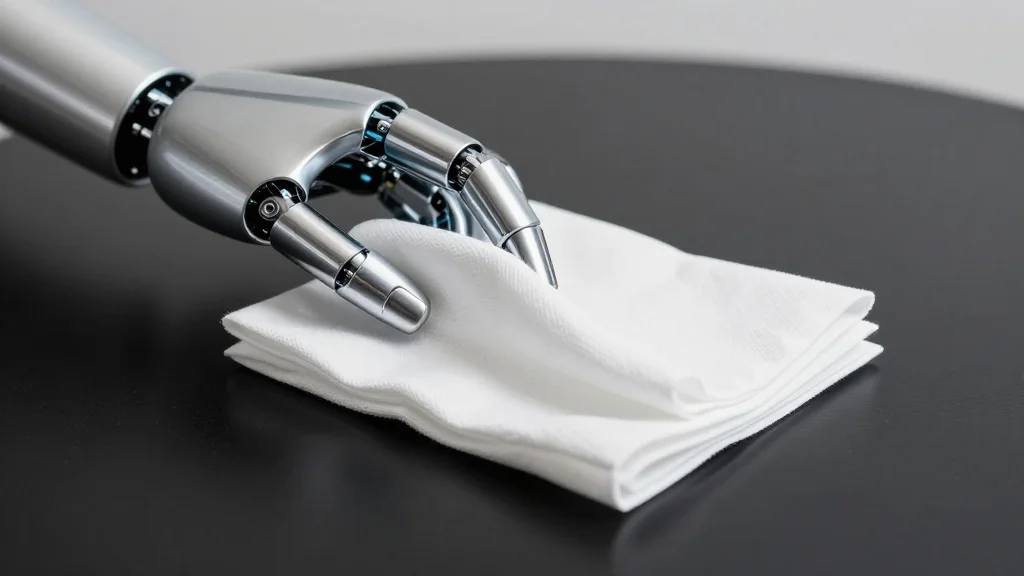
Historically, hospitality has been slow to adopt robotics beyond floor‑cleaning bots, largely because guest experience hinges on subtle gestures. If RLWRLD’s model can teach a robot to fold napkins with the same finesse as a veteran server, it could unlock a cascade of automation opportunities—from tray handling to room service delivery—redefining labor cost structures. Investors will likely watch the upcoming 2025 field trial as a litmus test for scalability; a successful demonstration could trigger a wave of funding into similar partnerships across Asia and Europe.
However, the technology’s promise is tempered by social and regulatory realities. Labor unions in South Korea are already vocal about job displacement, and any misstep could provoke stricter oversight or public backlash. The government’s $33 million program signals policy support, but it also raises expectations for measurable productivity gains. In the next two years, the industry will gauge whether the data‑driven approach can bridge the gap between human nuance and robotic precision, ultimately determining if physical AI becomes a cornerstone of hospitality or remains a niche experiment.
Lotte Hotel Seoul Records Staff Motions to Train AI Robots for Banquet Service
Comments
Want to join the conversation?
Loading comments...