Why It Matters
The project reshapes Central and Eastern European connectivity, offering a new logistics gateway that can accelerate regional trade and spur economic growth. Its integrated design sets a benchmark for next‑generation airport infrastructure worldwide.
Key Takeaways
- •Port Polska airport slated to open 2032, handling 34‑44 M passengers
- •Integrated high‑speed rail links expand catchment area beyond Warsaw‑Łódź corridor
- •Cargo hub includes Airport City and Free Customs Zone for EU freight
- •Digital platform unifies passenger, airline, and logistics operations from day one
- •Construction contracts awarded to TPF, Budimex, and Hill International consortium
Pulse Analysis
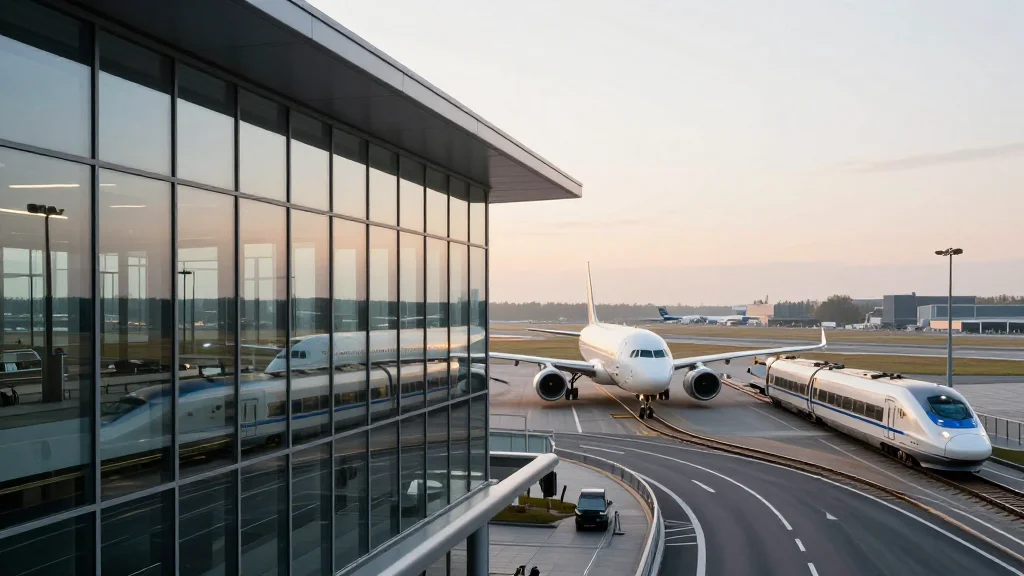
Poland’s decision to launch a greenfield multimodal airport reflects a broader shift in European infrastructure strategy. Rather than retrofitting cramped legacy facilities, the Port Polska hub is being built from the ground up to serve as a seamless mobility platform. By situating the airport between Warsaw and Łódź and coupling it with a high‑speed rail corridor, the project dramatically expands the catchment area, reducing reliance on short‑haul feeder flights and positioning the region as a central node for both passengers and freight.
The design emphasizes operational efficiency and passenger experience. A single masterplan aligns terminal layout, runway geometry, baggage handling and digital infrastructure, enabling faster aircraft turnarounds and smoother passenger flows. Sustainable features such as noise mitigation, energy‑efficient systems and BREEAM certification are embedded from day one. Cargo operations benefit from an adjacent Airport City and a Free Customs Zone, creating a streamlined logistics ecosystem that can accommodate e‑commerce surges and traditional freight alike. Unified digital platforms will facilitate real‑time data sharing among airlines, ground handlers and logistics providers, future‑proofing the hub against emerging technologies.
Economically, the airport is poised to become a catalyst for growth across Central and Eastern Europe. With an initial capacity of up to 44 million passengers and built‑in scalability, the facility can adapt to rising demand without costly overhauls. The integrated transport links promise faster, more reliable supply chains for manufacturers and retailers exporting to the EU, while the construction phase already generates thousands of jobs. As the hub matures, it is expected to attract ancillary services, boost tourism, and reinforce Poland’s position as a strategic gateway between Western Europe and the broader Eurasian market.
Made for travel
Comments
Want to join the conversation?
Loading comments...