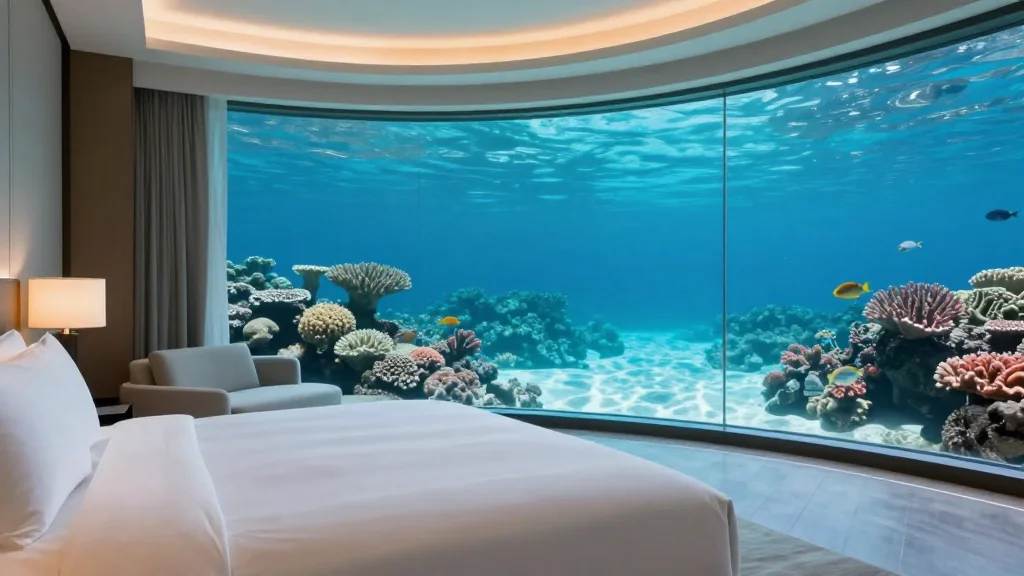
Manta Resort Debuts Third‑Generation Underwater Room on Tanzania’s Pemba Island

Why It Matters
The Manta Resort’s new underwater suite illustrates how high‑end tourism can be directly tied to measurable environmental outcomes. By converting room revenue into coral‑reef restoration and community development, the project demonstrates a scalable pathway for other destination hotels to embed sustainability into their core business model. Beyond the immediate financial impact, the initiative raises the profile of Pemba Island as a premier eco‑luxury destination, potentially attracting further investment in marine conservation infrastructure across East Africa. The visibility generated by global media coverage may also accelerate policy discussions around responsible tourism in fragile marine zones.
Key Takeaways
- •Third‑generation Underwater Room launched on Pemba Island, Tanzania
- •Guest bedroom positioned three metres below the Indian Ocean surface
- •Developed by Genberg Underwater Hotels with upgraded safety and design features
- •All room revenue earmarked for coral‑reef restoration, monitoring and community programs via Blue Alliance
- •Initial pricing exceeds $1,500 per night, with 12 nights per month allocated for bookings
Pulse Analysis
The Manta Resort’s latest offering arrives at a moment when luxury travelers are seeking purpose‑driven experiences that go beyond traditional amenities. By embedding a revenue‑share mechanism that funds tangible conservation work, the resort differentiates itself from competitors that rely solely on marketing sustainability as a brand veneer. This approach could catalyze a new segment of ‘impact‑linked’ hospitality, where investors evaluate projects not just on occupancy and ADR but also on ecological return on investment.
Historically, niche concepts like the original Utter Inn proved that novelty could generate media buzz, but they rarely translated into sustained financial models. The Manta Resort’s twelve‑year operational track record, combined with a formal partnership with Blue Alliance, suggests a maturation from novelty to a repeatable, revenue‑generating ecosystem service. If the model scales, we may see larger chains experimenting with micro‑habitat hotels—think floating reef pods or desert‑biome cabins—each tied to local environmental projects.
However, the venture also faces challenges. Maintaining a submerged structure in a dynamic marine environment demands rigorous maintenance and could expose the resort to regulatory scrutiny, especially if reef health declines. Moreover, the premium price point limits accessibility, potentially confining the conservation impact to a narrow donor base. The next test will be whether the resort can broaden its appeal without diluting the exclusivity that justifies its price, and whether the financial inflow to reef projects can be quantified in measurable ecological outcomes.
Overall, the Manta Resort’s underwater room signals a shift toward tourism that is both experiential and regenerative, setting a benchmark that could reshape investment criteria across the hospitality sector.
Manta Resort Debuts Third‑Generation Underwater Room on Tanzania’s Pemba Island
Comments
Want to join the conversation?
Loading comments...