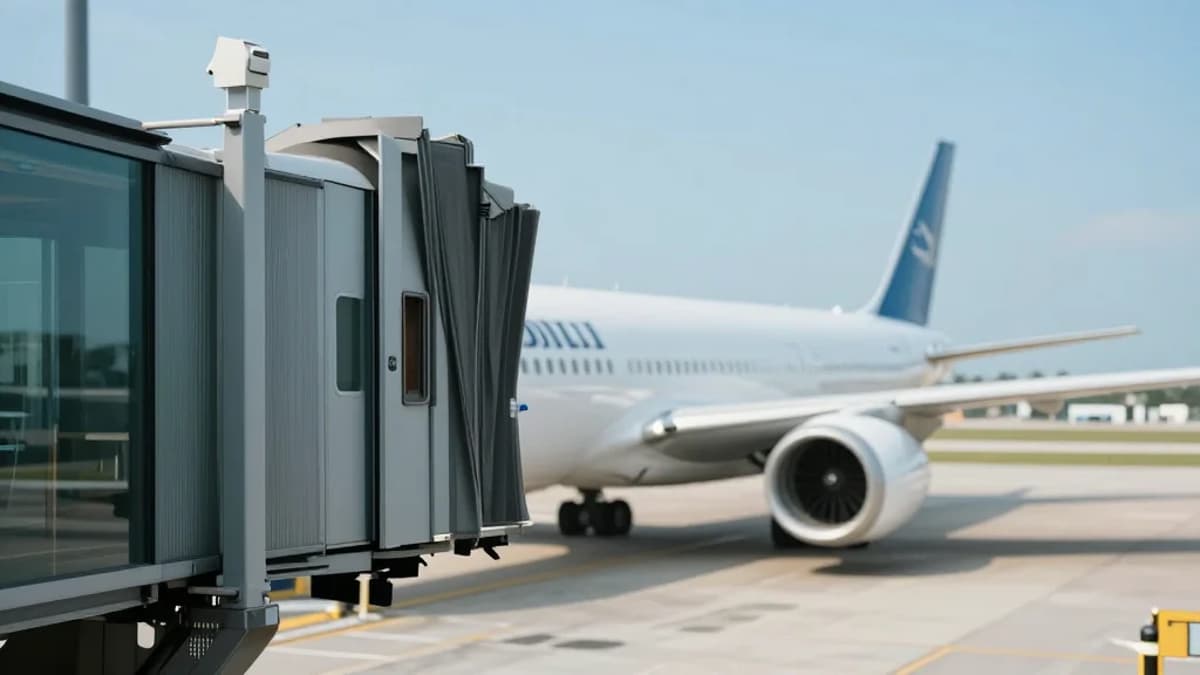
Miami-Dade County Mayor and American Airlines Unveil Plans for MIA’s Concourse D Expansion
•February 25, 2026
0
Why It Matters
The D60 expansion boosts MIA’s capacity to handle larger aircraft and growing international traffic, reinforcing Miami’s role as a primary gateway to Latin America and the Caribbean while delivering a greener, passenger‑focused terminal experience.
Key Takeaways
- •$1B D60 expansion adds 17 gates by 2030.
- •Project targets LEED Silver and Envision Verified sustainability.
- •Part of $9B MIA modernization plan across terminals.
- •Enhances MIA’s capacity as Latin America hub.
- •Breaks ground 2027, completion aligns with 2030 gateway vision.
Pulse Analysis
Miami International Airport has emerged as the United States’ busiest international freight hub and the second‑busiest for passenger arrivals, driven by surging demand from Latin America and the Caribbean. Over the past decade, the airport’s traffic grew faster than most global gateways, prompting officials to launch an ambitious $9 billion capital improvement agenda. This plan addresses not only capacity constraints but also the need for a seamless, technology‑enabled passenger journey from curb to gate, positioning MIA to capture future growth in both legacy and low‑cost carrier markets.
The centerpiece of the latest phase is the Gate D60 expansion, a $1 billion, three‑level construction that will replace a single boarding area with 17 dedicated contact gates for narrow‑body and regional jets. Each gate will feature spacious hold rooms, direct access to U.S. Customs and Border Protection, and upgraded retail and dining options designed to elevate the traveler experience. Sustainability is baked into the design, with targets for LEED Silver and Envision Verified certifications, reflecting a broader industry shift toward resilient, low‑carbon airport infrastructure. The project also includes an advanced baggage handling system that promises faster turnaround times and reduced mishandling rates.
Beyond the D60, the broader MIA modernization includes the forthcoming Concourse K, a $745 million Central Terminal overhaul, and extensive upgrades to elevators, escalators, and public restrooms. Collectively, these initiatives are projected to generate $181 billion in regional economic activity and sustain roughly 60 percent of Florida’s international visitor flow. By delivering a future‑ready gateway, Miami International aims to solidify its competitive edge against other North‑American hubs, attract new long‑haul routes, and support the city’s status as a global business and tourism engine.
Miami-Dade County Mayor and American Airlines unveil plans for MIA’s Concourse D expansion
0
Comments
Want to join the conversation?
Loading comments...