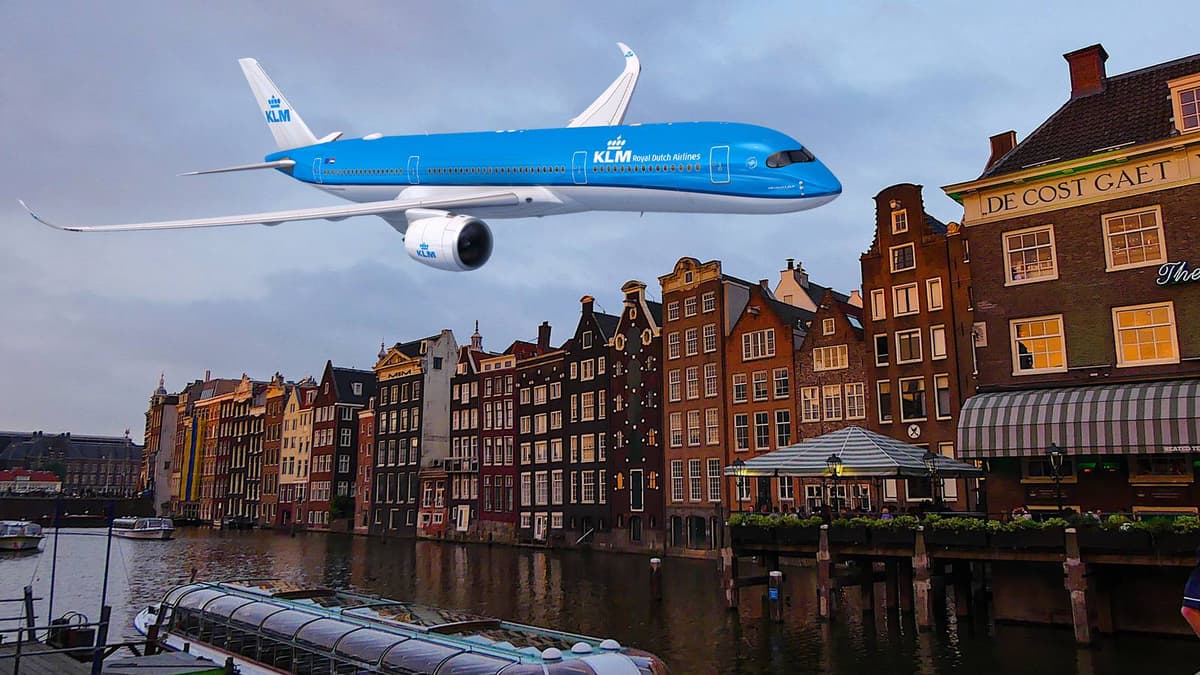
New Cabin & Quieter Operations: Why KLM's New Airbus A350-900 Is A Regulatory Survival Tool
Companies Mentioned
Why It Matters
By adopting quieter A350‑900s, KLM can comply with stricter noise regulations while preserving its long‑haul network, protecting revenue and competitive positioning in Europe’s busiest hub.
Key Takeaways
- •KLM adds A350‑900s to replace aging A330s and 777s
- •New jets cut cabin noise, easing Dutch night‑flight restrictions
- •7 bn‑euro order (~$7.6 bn) supports fleet renewal and ultra‑long‑haul routes
- •Premium cabin redesign offers 34 lie‑flat business seats and expanded economy‑comfort
- •Extended range may enable direct one‑stop Asian services, lowering costs
Pulse Analysis
Amsterdam’s Schiphol airport has faced mounting pressure from residents and regulators to curb aviation noise, culminating in a 2025 mandate that eliminated night flights for the Boeing 747‑400 and forced a 5,000‑flight reduction after dark. KLM’s response is a strategic fleet overhaul that leans heavily on the Airbus A350‑900, a jet engineered for acoustic efficiency. Multi‑layer insulation, redesigned air ducts and softer interior materials collectively dampen cabin noise, allowing the airline to operate within tighter curfew windows without incurring penalties or risking future night‑time shutdowns.
The financial commitment underscores the scale of the transformation: the Air France‑KLM group placed a €7 billion order—roughly $7.6 billion—covering 39 A350‑900s and 11 A350‑1000s, with several 1000‑series units swapped for the quieter 900 model. Beyond compliance, the A350‑900 delivers operational savings through lower fuel burn and maintenance costs compared with the aging A330 and 777 fleets. Inside, KLM’s cabin redesign introduces 34 lie‑flat business seats, a 26‑seat premium‑economy cabin and a 33‑seat economy‑comfort class, each equipped with USB‑C power and UHD entertainment, enhancing the passenger experience while maintaining higher yield potential.
Strategically, the A350‑900’s longer range opens the door to one‑stop, point‑to‑point routes to Asian hubs that previously required multi‑leg itineraries. This capability can reduce per‑seat costs, shorten travel times and strengthen KLM’s position against rivals that rely on older, noisier aircraft. In a market where environmental compliance and passenger comfort increasingly drive airline choice, KLM’s quiet‑jet rollout positions it to safeguard slot access at Schiphol, retain lucrative ultra‑long‑haul services, and capture growth in premium demand.
New Cabin & Quieter Operations: Why KLM's New Airbus A350-900 Is A Regulatory Survival Tool
Comments
Want to join the conversation?
Loading comments...