New Phoenix Airport Museum Installation Showcases the Region’s Legacy of Ingenuity
•March 3, 2026
0
Why It Matters
The mural reinforces Phoenix’s brand as a Southwest innovation corridor, influencing traveler perception and supporting economic development initiatives.
Key Takeaways
- •New mural spans post‑security bridge at Terminal 4
- •Highlights aerospace, biosciences, advanced manufacturing, climate tech, startups
- •Partnership between Sky Harbor and Greater Phoenix Economic Council
- •Reinforces Phoenix’s image as regional innovation corridor
- •Targets millions of annual airport travelers with local story
Pulse Analysis
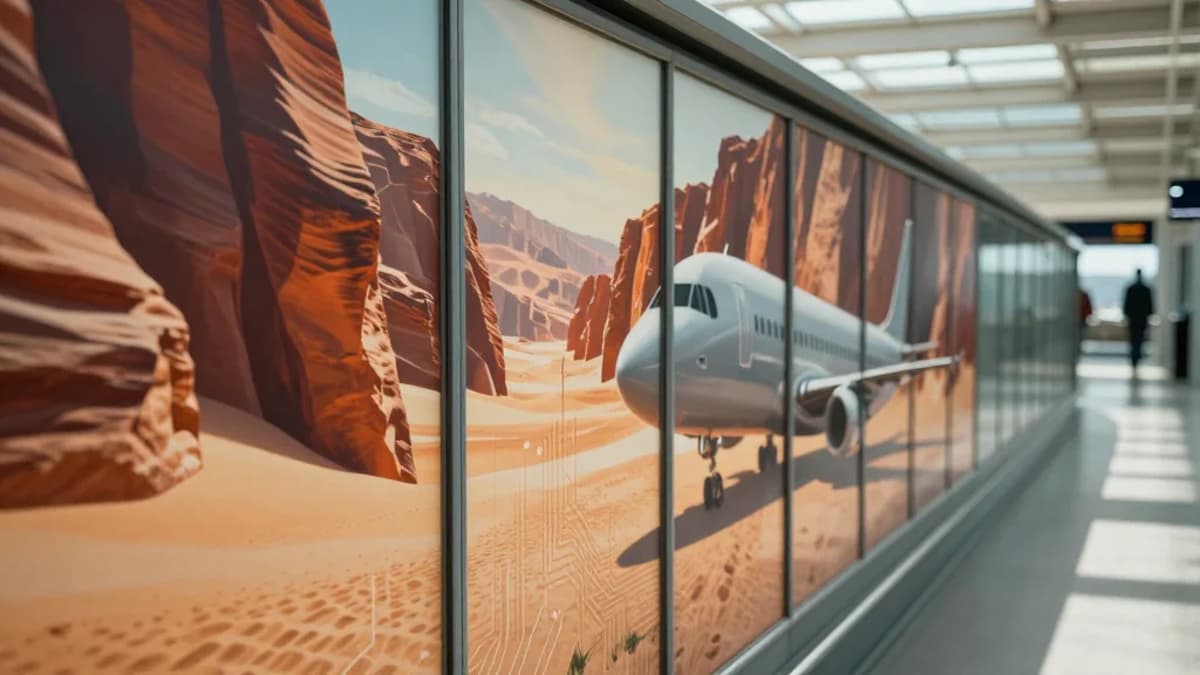
Phoenix Sky Harbor’s Terminal 4 has turned a routine security corridor into a storytelling venue with the “Desert Innovation” mural. Spanning the post‑security bridge between gates A and D, the installation blends historic photographs of ancient irrigation canals with modern images of semiconductor fabs and aerospace hangars. Commissioned by the Phoenix Airport Museum and funded through a partnership with the Greater Phoenix Economic Council, the exhibit offers travelers a visual narrative of the region’s evolution from desert settlement to high‑tech hub. The artwork serves both as a cultural welcome and a branding touchpoint for the airport.
The mural’s focus on aerospace, biosciences, advanced manufacturing, climate‑tech and startup ecosystems mirrors the sectors that GPEC identifies as growth engines for Greater Phoenix. By foregrounding these industries in a high‑traffic public space, the airport amplifies the region’s innovation narrative to the millions of passengers passing through each year. This visibility can attract talent, investment, and tourism, reinforcing the city’s positioning as a Southwest corridor for research and development. Moreover, the collaboration illustrates how public‑private partnerships can leverage cultural assets to support economic development objectives.
Airport museums are emerging as strategic tools for destination branding, and Phoenix’s “Desert Innovation” sets a benchmark for other hubs. The installation not only enriches the passenger experience but also creates a measurable platform for storytelling that can be tied to tourism marketing campaigns and corporate outreach. As airlines and airports compete for loyalty, integrating local heritage and future‑oriented themes can differentiate a facility and drive ancillary revenue through increased retail and concession traffic. Phoenix’s approach signals a broader shift toward using cultural infrastructure to catalyze regional competitiveness.
New Phoenix Airport Museum Installation Showcases the Region’s Legacy of Ingenuity
0
Comments
Want to join the conversation?
Loading comments...