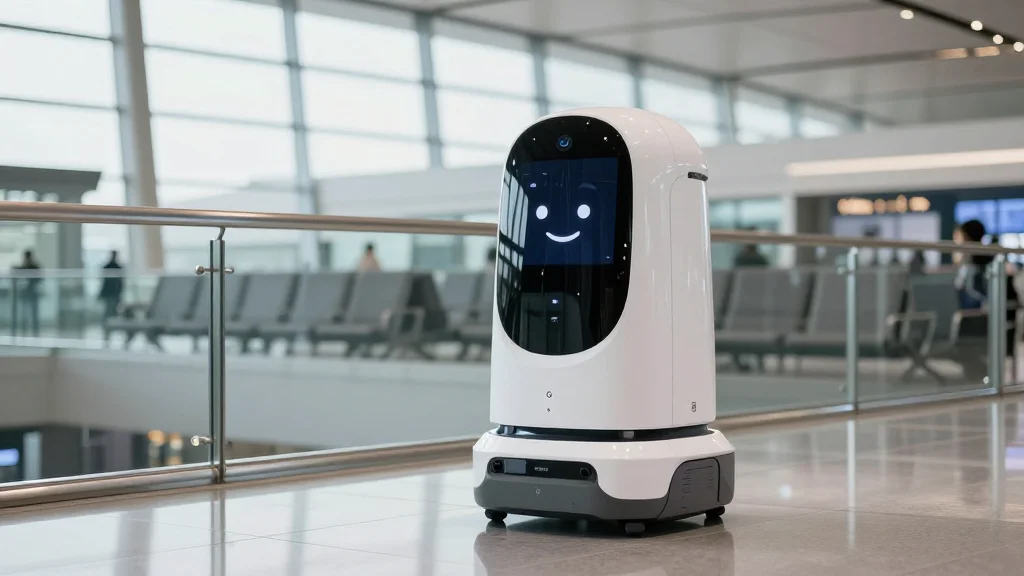
Nuremberg Airport Trials Robot Assistant for Passengers
Why It Matters
The test proves edge AI can deliver real‑time, privacy‑preserving passenger assistance, reducing cloud reliance and boosting operational efficiency for airports worldwide.
Key Takeaways
- •Edge AI robot answers multilingual airport queries without cloud
- •Three compressed models run on embedded device, preserving data privacy
- •Passengers accepted humanoid assistant, improving info accessibility
- •Fraunhofer IIS integrated airport data into local LLM for context
- •Reduces bandwidth needs and enhances data sovereignty at airports
Pulse Analysis
Airports are increasingly turning to artificial intelligence to streamline the traveler journey, but most solutions rely on cloud‑based models that transmit data to remote servers. Nuremberg Airport’s recent trial flips that paradigm by deploying an edge AI robot that processes speech, understands queries, and generates spoken answers entirely on‑device. This architecture eliminates latency, cuts bandwidth costs, and, crucially, ensures that sensitive audio never leaves the terminal, addressing growing concerns over data privacy and regulatory compliance.
The robot’s capabilities stem from three highly optimized machine‑learning models. A compact multilingual speech recognizer converts spoken input into text, which feeds a locally hosted large language model enhanced with Retrieval‑Augmented Generation to retrieve airport‑specific information. Finally, a lightweight text‑to‑speech engine delivers answers in the passenger’s language. By shrinking these models to run on an embedded platform, Fraunhofer IIS achieved a balance between performance and resource constraints, demonstrating that sophisticated natural‑language processing can be achieved without the power of a data centre.
Beyond the technical showcase, the trial signals a shift in how airports might future‑proof their services. Edge AI reduces dependence on external networks, making operations more resilient to outages and cyber‑threats. Passengers benefit from instant, accurate assistance without needing smartphones, enhancing accessibility for a diverse audience. As other hubs observe Nuremberg’s success, we can expect a wave of on‑site AI assistants that combine convenience, security, and cost efficiency, redefining the standard for digital airport experiences.
Nuremberg Airport trials robot assistant for passengers
Comments
Want to join the conversation?
Loading comments...