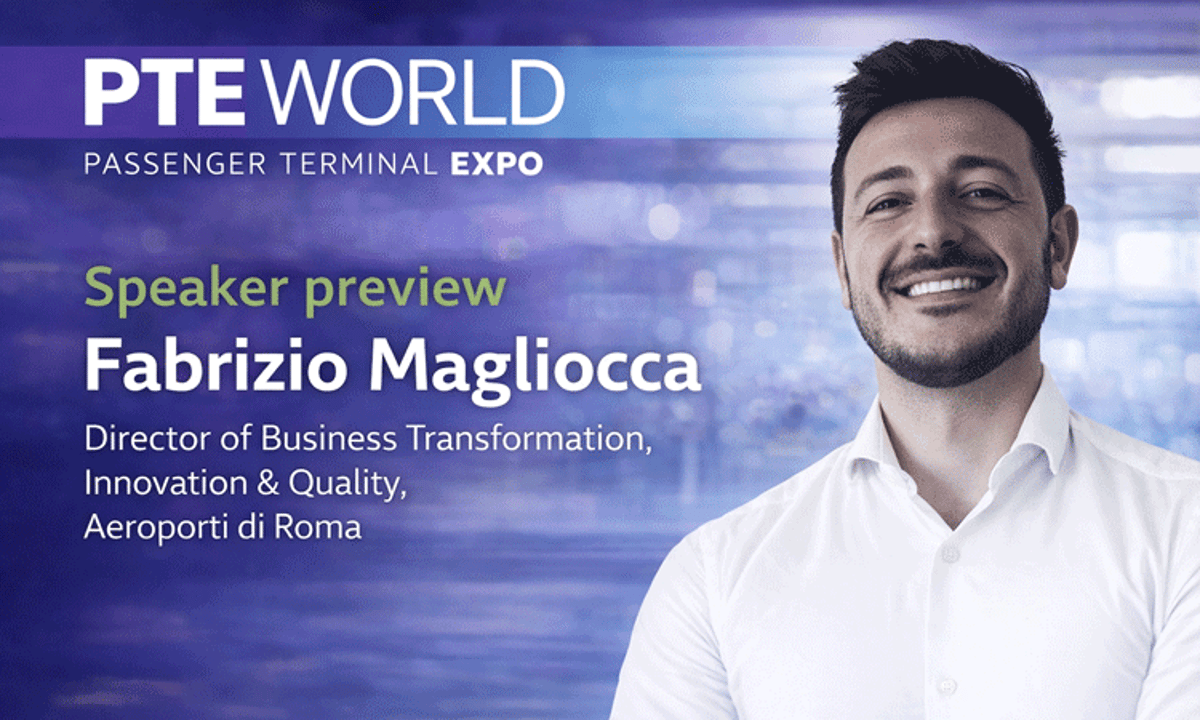
PTE PREVIEW: Fabrizio Magliocca, Director of Business Transformation, Innovation & Quality, Aeroporti Di Roma
•February 27, 2026
0
Why It Matters
ADR’s integrated approach demonstrates how legacy airports can leverage AI, quality governance, and sustainability to stay competitive, setting a benchmark for the global aviation sector.
Key Takeaways
- •AI and digital twins drive predictive airport operations
- •Quality management integrated with innovation ensures consistent service
- •Sustainability embedded across infrastructure, operations, and planning
- •Agentic AI currently automates enterprise workflows, not core ops
- •Legacy system integration demands timing, governance, and process redesign
Pulse Analysis
Airports worldwide are accelerating digital transformation, and Rome’s ADR exemplifies the shift toward AI‑driven predictive operations. By deploying computer‑vision monitoring, real‑time analytics, and digital twins linked to live data, ADR can anticipate bottlenecks, optimise gate assignments, and personalise passenger journeys. This technology stack not only improves on‑time performance but also creates a data‑rich environment where airlines and ground handlers collaborate more seamlessly, reinforcing the airport’s role as a smart mobility hub.
A distinguishing feature of ADR’s roadmap is the fusion of quality management with innovation. Rather than treating new tools as isolated pilots, the transformation team evaluates every solution against rigorous quality criteria, from signage readability to AI algorithm bias. This disciplined approach safeguards reliability while accelerating rollout. Simultaneously, sustainability is woven into every phase—energy‑efficient infrastructure, carbon‑aware scheduling, and circular‑economy initiatives—positioning the airport as a green gateway within Europe’s transport ecosystem.
Agentic AI, currently focused on automating repetitive corporate processes, represents the next frontier for ADR. Early gains in workflow efficiency and decision support are building the governance framework needed for operational deployment. In the short term, mature technologies such as AI‑based forecasting, resource‑planning platforms, and computer‑vision‑enhanced turnaround optimisation will deliver measurable cost savings. At the upcoming PTE World conference, Magliocca will showcase how these AI‑driven insights can tighten A‑CDM collaboration, offering peers a blueprint for scaling innovation without compromising safety or resilience.
PTE PREVIEW: Fabrizio Magliocca, Director of Business Transformation, Innovation & Quality, Aeroporti di Roma
0
Comments
Want to join the conversation?
Loading comments...