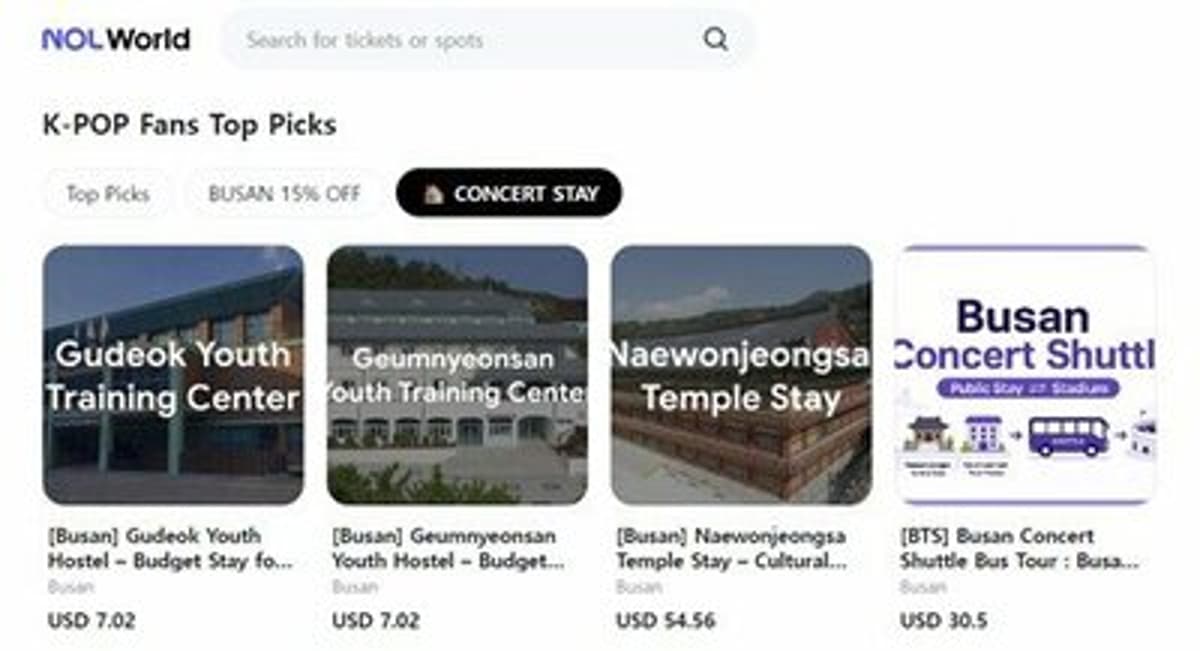
Public Lodging for Foreigners in Busan Nearly Fully Booked Ahead of June BTS Concert
Companies Mentioned
Why It Matters
The near‑full booking underscores BTS’s power to drive international tourism, offering Busan a rare revenue surge and showcasing how public lodging can support large‑scale cultural events.
Key Takeaways
- •400 foreigner slots opened via Nol Universe platform.
- •Reservation rate hit 99.56% for June 12-13.
- •Youth centers nearly full; only eight‑person rooms left.
- •Naewonjeong Temple limited to 12‑person rooms.
- •BTS concert expected to boost Busan tourism revenue.
Pulse Analysis
BTS’s "Arirang" world tour stop in Busan illustrates the magnetic pull of K‑pop on global travel patterns. Fans from Europe, the Americas, and Southeast Asia are willing to fly thousands of miles, often coordinating group trips around concert dates. This phenomenon, dubbed "K‑pop tourism," has become a strategic pillar for South Korean cities seeking to diversify visitor sources beyond traditional leisure travelers. Busan’s decision to publicize affordable lodging reflects an understanding that price‑sensitive fans will prioritize destinations that ease logistical hurdles, thereby amplifying the city’s appeal as a concert hub.
To accommodate the surge, Busan’s municipal government repurposed Naewonjeong Temple and two youth centers, offering dormitory‑style rooms at subsidized rates. The Nol Universe platform, launched on April 27, opened 400 slots exclusively for foreign tourists, a move that blends cultural heritage sites with modern hospitality. By allocating space in a historic temple, the city not only provides low‑cost beds but also showcases Korean culture, creating a unique visitor experience that can translate into higher ancillary spending on food, transport, and souvenirs. The near‑full occupancy—mid‑80% for pre‑concert nights and over 99% on concert days—demonstrates the effectiveness of coordinated public‑private lodging initiatives.
Economically, the BTS concert is projected to inject millions of dollars into Busan’s local economy. Visitors typically spend on accommodation, dining, retail, and transportation, with average per‑person expenditures estimated at $150‑$200. Multiplying this by the anticipated 30,000‑plus foreign attendees yields a direct tourism revenue boost exceeding $5 million, not counting the indirect benefits of heightened global media exposure. The success of this model may encourage other Korean municipalities to adopt similar public lodging strategies for future large‑scale events, reinforcing South Korea’s position as a premier destination for cultural tourism.
Public lodging for foreigners in Busan nearly fully booked ahead of June BTS concert
Comments
Want to join the conversation?
Loading comments...