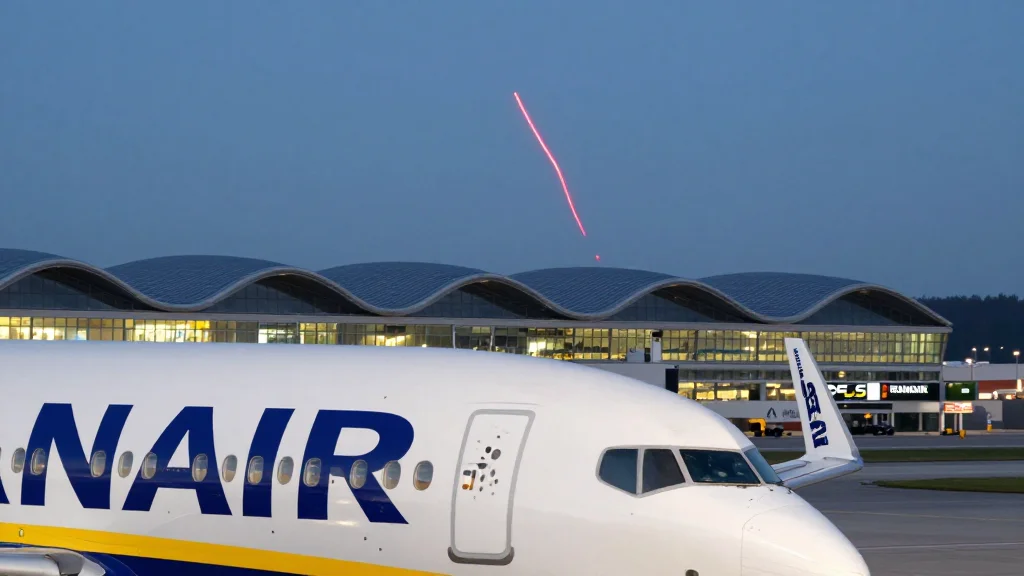
Ryanair Cuts Berlin Flights as Costs Rise in Germany
Companies Mentioned
Why It Matters
Reduced low‑cost capacity will push ticket prices higher and pressure German policymakers to reconsider airport and tax fees that deter airline investment. The shift also signals a broader competitive disadvantage for Germany within Europe’s fragmented aviation landscape.
Key Takeaways
- •Ryanair halves Berlin capacity, removes its aircraft base
- •Airport fees and German aviation tax have risen sharply
- •Fewer low‑cost seats likely push fares up on leisure routes
- •Competitors may fill gap but at higher cost structures
- •Germany risks losing airline capacity to lower‑cost neighboring markets
Pulse Analysis
Ryanair’s retreat from Berlin Brandenburg Airport illustrates how low‑cost carriers rigorously balance marginal costs against demand elasticity. Since the pandemic, the German capital’s airport fees have climbed, while the nation’s aviation tax—already among Europe’s highest—has been nudged upward. Coupled with rising air‑traffic‑control and security surcharges, the cost equation no longer favors Ryanair’s ultra‑low‑fare model, prompting the airline to halve its Berlin schedule and pull its base, a move that immediately thins the city’s point‑to‑point network.
The capacity contraction reverberates through Germany’s tourism and business travel sectors. Leisure travelers, who typically chase the cheapest fares, will face higher ticket prices, potentially dampening weekend trips from southern and eastern Europe. Business passengers, less price‑sensitive, may shift to legacy carriers, but at a premium that could increase corporate travel budgets. Meanwhile, rivals such as easyJet and Eurowings can capture some displaced seats, yet their higher cost bases mean the overall market will tilt toward mid‑cost offerings, altering Berlin’s visitor mix and affecting hospitality revenues.
For policymakers, Ryanair’s decision is a stark reminder that regulatory uniformity does not guarantee cost parity across Europe. Nations that maintain lower airport charges and modest aviation taxes effectively subsidize airline capacity, attracting routes and associated economic activity. Germany’s current fee structure risks diverting mobile airline capital to neighboring markets like Poland or the Balkans, where operating costs are more favorable. Adjusting fees could restore competitive balance, but the airline’s calculus remains clear: airlines follow the numbers, not political statements, and will relocate wherever the economics are most advantageous.
Ryanair Cuts Berlin Flights as Costs Rise in Germany
Comments
Want to join the conversation?
Loading comments...