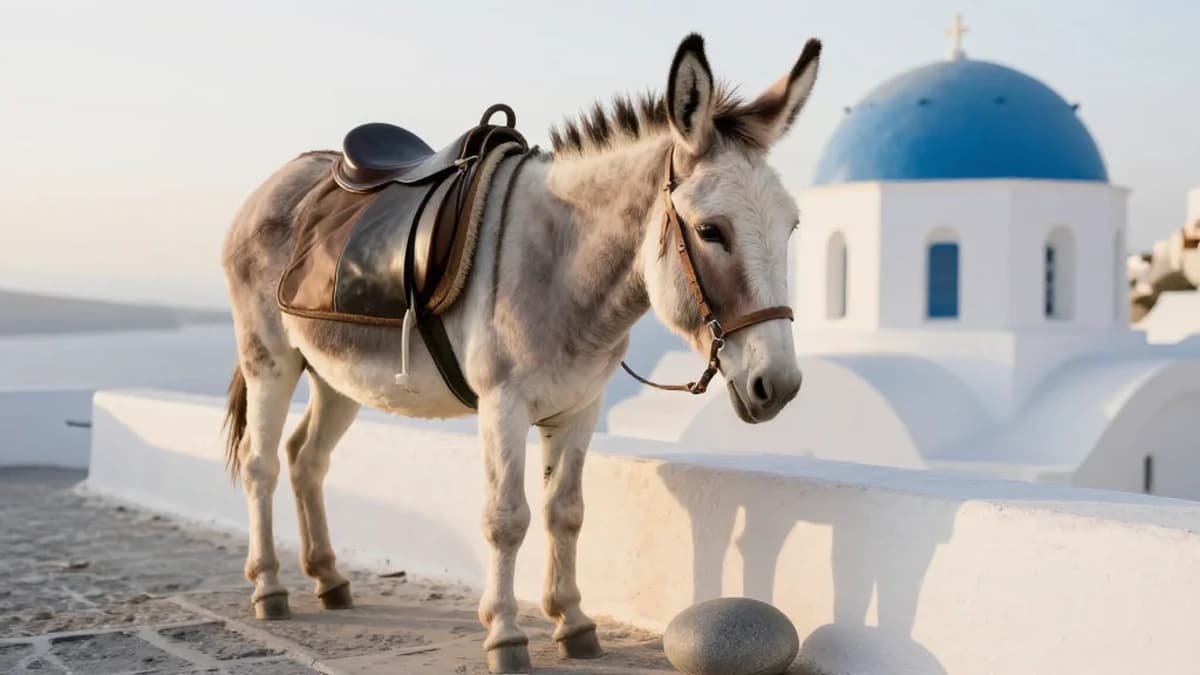
Santorini Targets Overweight Tourists With Donkey Weight Limit
•February 21, 2026
0
Why It Matters
The limit protects animal health and reduces liability for operators, while signaling industry pressure to replace exploitative practices with infrastructure that can handle mass cruise arrivals.
Key Takeaways
- •100 kg cap equals one‑fifth animal’s weight
- •Rule introduced in Greece’s 2018 animal‑welfare reform
- •Overloaded donkeys suffered spinal injuries and exhaustion
- •Enforcement varies, especially during peak cruise seasons
- •Highlights need for sustainable, non‑animal tourist transport
Pulse Analysis
The iconic donkey rides that line Santorini’s steep ascent from the old port have become a litmus test for the island’s struggle with overtourism. Each summer, thousands of cruise passengers converge on the narrow pathways, overwhelming the limited cable‑car capacity and prompting many to seek the cheapest, most picturesque option: a ride on a donkey or mule. Decades of unchecked loading have left a trail of spinal injuries, saddle sores, and chronic fatigue among the animals, prompting animal‑rights groups to document the abuse and demand regulatory action.
In 2018 Greece amended its animal‑welfare code to cap the load on equids at 100 kg, roughly one‑fifth of an average donkey’s body weight. The provision was designed to protect the animals while preserving the tourist experience, but its enforcement has been patchy, especially during peak cruise arrivals when local operators face intense pressure to accommodate crowds. Violations still surface in photo evidence shared by NGOs, exposing a gap between legislation and on‑the‑ground practice, and raising liability concerns for businesses that rely on the rides for revenue.
The weight‑limit rule, while modest, signals a shift toward more humane tourism management and offers a foothold for broader reforms. Municipalities are now exploring alternatives such as expanded cable‑car networks, electric shuttles, and stair‑way upgrades that can move thousands without endangering animals. For the travel industry, the case underscores the cost of relying on legacy attractions that clash with modern sustainability expectations. As destinations worldwide grapple with similar pressures, Santorini’s experience may become a benchmark for integrating animal welfare into tourism policy.
Santorini Targets Overweight Tourists With Donkey Weight Limit
0
Comments
Want to join the conversation?
Loading comments...