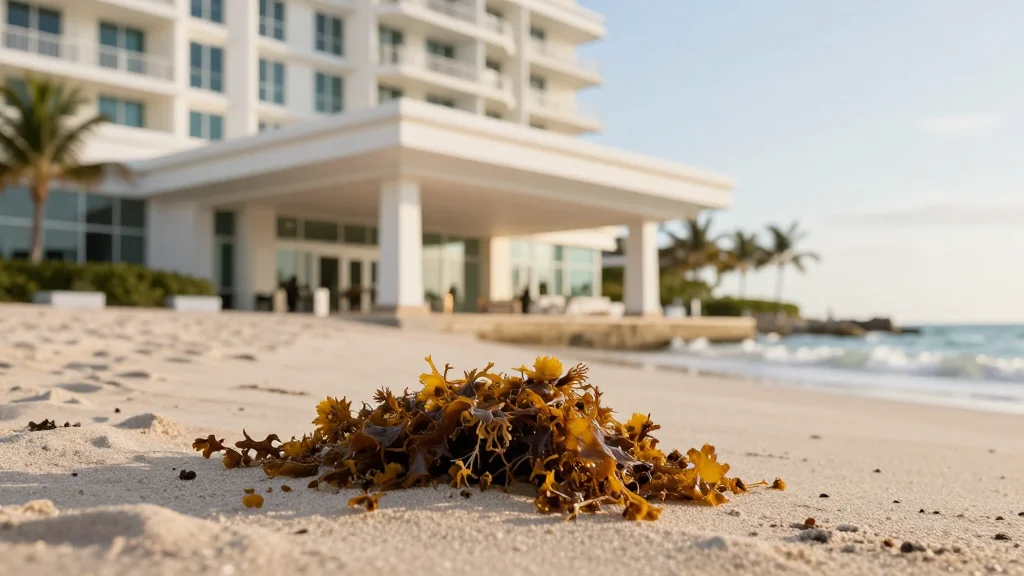
Sargassum Surge Pushes Miami‑Dade Hotel Cleanup Costs Past $4 Million and Triggers Occupancy Drop

Why It Matters
The sargassum crisis underscores how climate‑driven environmental events can quickly become financial liabilities for the hospitality sector. With Miami‑Dade accounting for a sizable share of U.S. luxury beach tourism, prolonged beach degradation could reshape travel patterns, diverting high‑spending guests to competing destinations. Moreover, the $4 million in public cleanup costs, passed indirectly to hotels, illustrates the hidden fiscal pressures that can erode profit margins and deter new investment in coastal properties. If unchecked, the phenomenon could accelerate a shift toward inland or non‑beach‑centric hotel models, prompting a reallocation of capital across the broader U.S. hospitality market. Policymakers and operators will need to balance immediate mitigation spending with longer‑term resilience planning to safeguard the sector’s contribution to the regional economy.
Key Takeaways
- •Miami‑Dade beachfront hotels face $4 million annual taxpayer‑funded sargassum cleanup costs.
- •Satellite data shows record‑breaking sargassum blooms in January 2024, the earliest and largest on record.
- •Tourist sentiment is turning negative; a 17,000‑member Facebook group influences travel decisions.
- •Economic modeling estimates $2.7 billion in direct tourism losses, up to $10 billion in worst‑case scenarios.
- •2024 tourism generated $22 billion from 28 million visitors; future beach degradation could cut this figure.
Pulse Analysis
The sargassum surge is a textbook case of environmental risk translating into immediate operational and strategic challenges for hotels. Historically, Miami’s beach appeal has been a cornerstone of its luxury hotel pricing power. The current seaweed influx erodes that premium, forcing operators to either absorb higher maintenance costs or pass them to guests through surcharges—both of which can depress demand. In the short term, we expect a measurable dip in RevPAR for beachfront assets, especially those without strong brand loyalty or diversified amenity portfolios.
Long‑term, the crisis could catalyze a structural shift in the region’s hospitality development pipeline. Investors may favor inland or mixed‑use projects that are less vulnerable to shoreline volatility, while existing beachfront owners might accelerate retrofits such as offshore barriers or rapid‑response cleaning fleets. The $4 million public outlay, while modest relative to the $22 billion tourism spend, signals a growing fiscal burden that could prompt local governments to levy targeted taxes on hotel revenues, further compressing margins.
Strategically, hotels that quickly pivot to alternative guest experiences—curated cultural tours, wellness retreats, and indoor entertainment—stand to retain a larger share of the market. Those that lag risk a reputational hit that could linger beyond the next bloom season, especially as social media amplifies negative beach imagery. The sargassum episode thus serves as a warning bell for the broader hospitality industry: climate‑linked environmental disruptions demand proactive resilience planning or face cascading financial fallout.
Sargassum Surge Pushes Miami‑Dade Hotel Cleanup Costs Past $4 Million and Triggers Occupancy Drop
Comments
Want to join the conversation?
Loading comments...