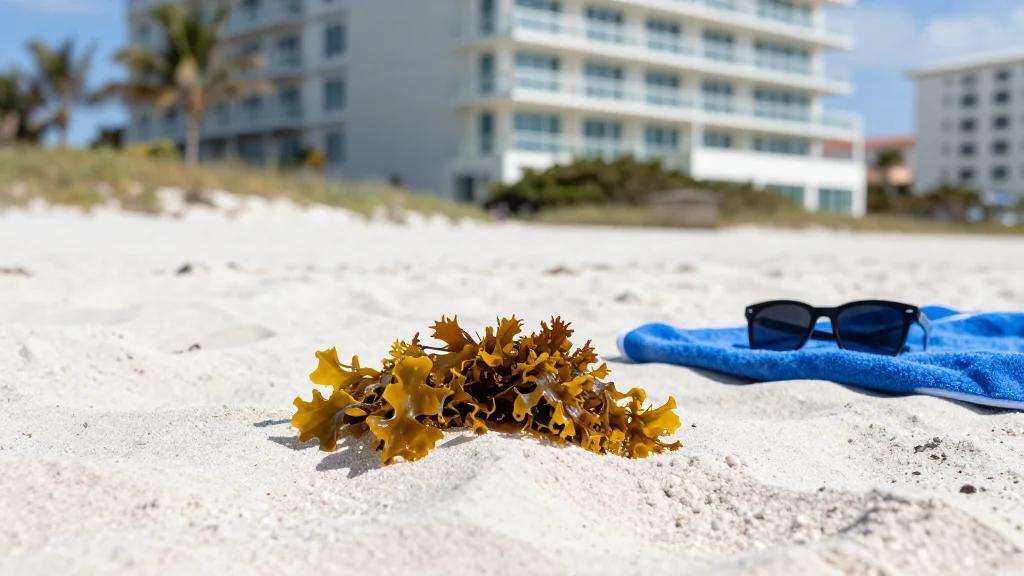
South Florida Hotels Battle Record Sargassum Invasions, $5B Losses

Why It Matters
The sargassum invasion threatens the core value proposition of South Florida’s hospitality market—sun, sand, and sea. With tourism accounting for over $22 billion in annual spend, even modest declines in beach appeal can cascade into lower occupancy, reduced ancillary revenue and job losses across the region. Moreover, the crisis highlights the vulnerability of coastal economies to climate‑driven marine phenomena, prompting a reassessment of risk management practices in hotel operations. If the research converting sargassum into food‑grade alginate succeeds, it could create a new, sustainable revenue stream that offsets removal costs and positions the hospitality sector as a partner in circular‑economy innovation. Conversely, failure to mitigate the seaweed’s impact may accelerate a shift in traveler preferences toward inland or alternative coastal destinations, reshaping the competitive landscape for Florida’s hotel brands.
Key Takeaways
- •Taxpayers spend nearly $4 million each year on sargassum removal tractors.
- •Economists estimate $5 billion in tourism losses this season, with worst‑case projections near $10 billion.
- •Miami‑Dade County cut a $3 million sargassum‑removal contract to curb spending.
- •A 17,000‑member Facebook group tracks traveler reactions and influences booking decisions.
- •FIU researchers are piloting high‑pressure processing to turn sargassum into alginate for food use.
Pulse Analysis
The sargassum crisis is a textbook case of environmental risk translating directly into hospitality revenue volatility. Historically, South Florida’s hotel market has thrived on its beach cachet, but the current blooms expose a structural dependency on a natural asset that is increasingly unpredictable. The $4 million annual clean‑up budget, while sizable, is a drop in the ocean compared with the $5 billion revenue at stake, suggesting that municipalities and hotel operators must look beyond reactive removal.
From a strategic standpoint, the emerging alginate initiative could redefine the cost‑benefit equation. If FIU’s process can be commercialized, hotels could potentially source a locally produced, sustainable thickener for on‑site dining, reducing supply chain costs and enhancing brand sustainability narratives. This would also create a feedback loop where the very nuisance becomes a differentiator, turning a negative into a marketing asset. However, scaling the technology will require capital investment, regulatory approval for food safety, and a clear market demand—factors that could delay or derail the upside.
In the short term, hotel chains should double down on guest communication and contingency planning. Transparent updates about beach conditions, alternative amenities, and partnership with local clean‑up crews can mitigate reputational damage. Longer‑term, the industry may need to diversify its product offering, emphasizing inland experiences, wellness retreats, and cultural attractions that are less vulnerable to marine disruptions. The sargassum episode could thus accelerate a broader strategic shift, prompting hotels to hedge against climate‑related beach degradation while exploring innovative waste‑to‑value pathways.
South Florida Hotels Battle Record Sargassum Invasions, $5B Losses
Comments
Want to join the conversation?
Loading comments...