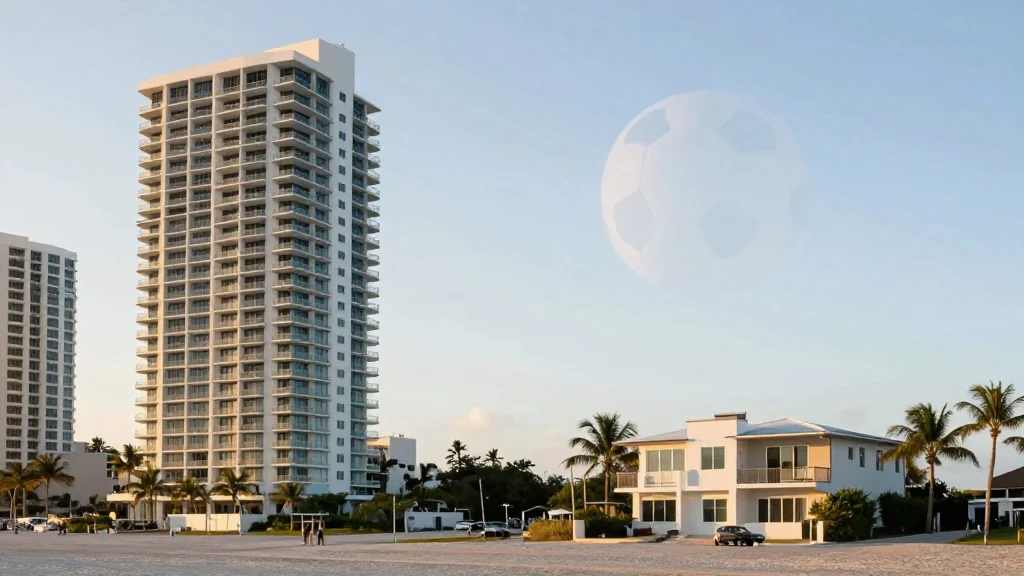
South Florida Short‑Term Rentals Jump Up to 106% Ahead of 2026 World Cup

Why It Matters
The booking surge illustrates how mega‑events can quickly reallocate hospitality demand from traditional hotels to the short‑term rental sector, reshaping revenue streams for property owners. For the broader South Florida economy, higher occupancy rates translate into increased tax revenues and ancillary spending at restaurants, attractions, and transportation services. If the trend continues into the knockout rounds, hotels may need to adjust pricing strategies or partner with rental platforms to capture overflow demand, while policymakers could face pressure to balance tourism growth with housing affordability for residents.
Key Takeaways
- •AirDNA reports a 70% increase in Fort Lauderdale and 106% increase in Miami short‑term rental nights for the Colombia‑Portugal match versus 2025.
- •Average nightly rates are $340 in Fort Lauderdale and $342 in Miami for the top‑demand match.
- •Brazil‑Scotland generated 13,520 booked nights, a 66% rise in Fort Lauderdale and 130% rise in Miami.
- •Homeowners benefit from over 9,000 additional bookings since January, boosting cash flow amid a sluggish tourism market.
- •Hotels face heightened competition as rentals capture the bulk of family and group travelers during the World Cup.
Pulse Analysis
The World Cup’s impact on South Florida’s short‑term rental market underscores a broader shift in how large‑scale sporting events redistribute hospitality demand. Historically, hotels have captured the lion’s share of event‑driven bookings, but the proliferation of platforms like Airbnb and Vrbo now allows homeowners to monetize excess inventory with minimal friction. The data shows that while hotels can command premium rates for corporate and VIP guests, the volume advantage lies with rentals, especially for families and groups seeking multiple bedrooms.
From a strategic perspective, hotels may need to rethink their asset‑light models, perhaps by entering joint‑venture agreements with rental operators or by offering bundled experiences that combine hotel amenities with local housing. Meanwhile, municipalities should monitor the balance between short‑term rental growth and long‑term housing supply, as unchecked expansion could exacerbate affordability concerns. The current restraint in price hikes – only a 43% increase for the most popular night – suggests owners are prioritizing occupancy over maximized per‑night revenue, a tactic that could sustain demand throughout the tournament’s later stages.
Looking forward, the post‑World Cup period will be a litmus test for whether the rental surge is a temporary spike or a lasting reallocation of market share. If the latter, we could see a permanent recalibration of South Florida’s hospitality ecosystem, with hotels adapting to a more fragmented, experience‑driven traveler base while short‑term rentals cement their role as a core component of the region’s tourism infrastructure.
South Florida Short‑Term Rentals Jump Up to 106% Ahead of 2026 World Cup
Comments
Want to join the conversation?
Loading comments...