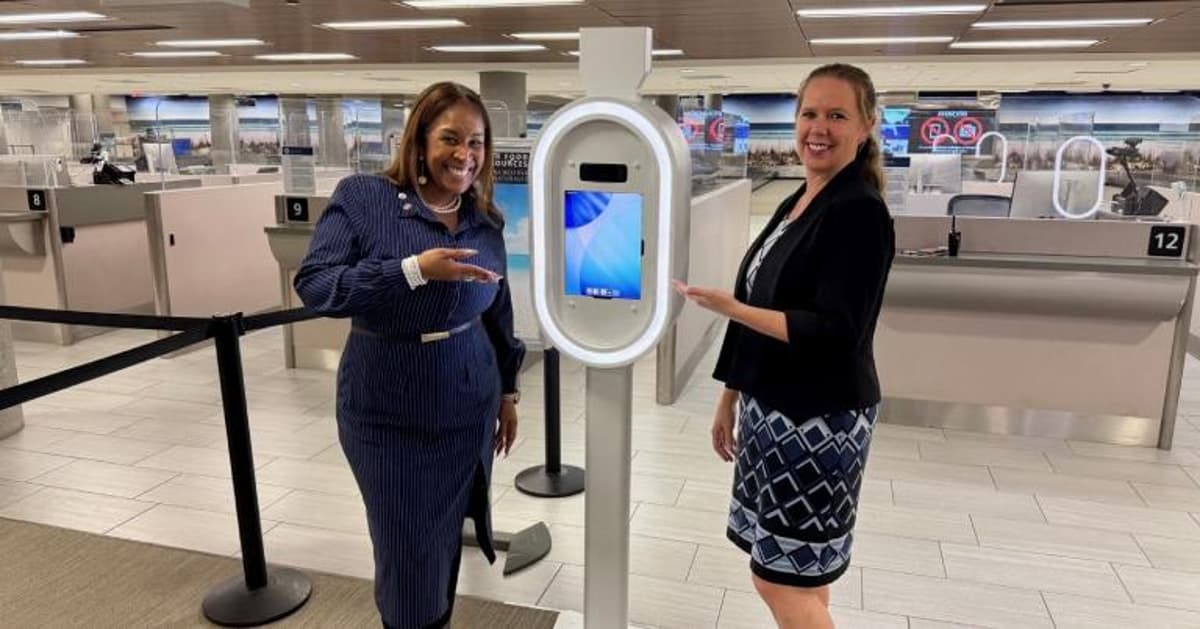
Tampa International Airport Launches Enhanced Passenger Processing in Partnership with U.S. CBP
•March 7, 2026
0
Why It Matters
By dramatically speeding up arrivals, EPP improves airport throughput, reduces staffing strain, and enhances security focus on higher‑risk travelers, setting a new efficiency benchmark for the aviation industry.
Key Takeaways
- •Tampa Airport now uses touchless facial verification for U.S. arrivals
- •Processing time drops to 6‑8 seconds per passenger
- •Wait times reduced 25% across participating airports
- •System frees officers to focus on high‑risk travelers
- •Program now active at 15 U.S. airports
Pulse Analysis
The rollout of Enhanced Passenger Processing (EPP) at Tampa International Airport marks a significant step in the U.S. aviation sector’s shift toward biometric, touch‑free border control. Leveraging facial‑comparison algorithms integrated with U.S. Customs and Border Protection’s database, the system validates a traveler’s identity in six to eight seconds, eliminating the need for manual passport checks. This technology aligns with post‑pandemic expectations for contactless experiences and mirrors similar deployments at major hubs such as Aruba and Honolulu. By automating identity verification, EPP not only accelerates passenger flow but also sets a new benchmark for airport digital transformation.
For airport operators, the speed gains translate into measurable operational efficiencies. Tampa’s two dedicated EPP lanes have already delivered a 25 percent reduction in average wait times for U.S. citizens, freeing up curbside space and allowing baggage claim to operate with fewer bottlenecks. From a security perspective, the system conducts real‑time law‑enforcement vetting while officers concentrate on higher‑risk travelers, enhancing the risk‑based screening model that CBP champions. The data‑driven approach also provides actionable insights for staffing and resource allocation, reducing overtime costs and improving overall service quality.
The broader industry impact is clear: biometric EPP is becoming a standard component of modern airport infrastructure. With the program now live at 15 U.S. airports and CBP processing over 420 million travelers annually, the scalability of the solution is proven. Airlines benefit from smoother connections and higher on‑time performance, while passengers enjoy a frictionless arrival experience that can boost airport loyalty scores. As more carriers and airports adopt similar technologies, competitive pressure will drive further innovations in AI‑powered identity verification, potentially extending the model to domestic departures and international pre‑clearance facilities.
Tampa International Airport launches Enhanced Passenger Processing in partnership with U.S. CBP
0
Comments
Want to join the conversation?
Loading comments...