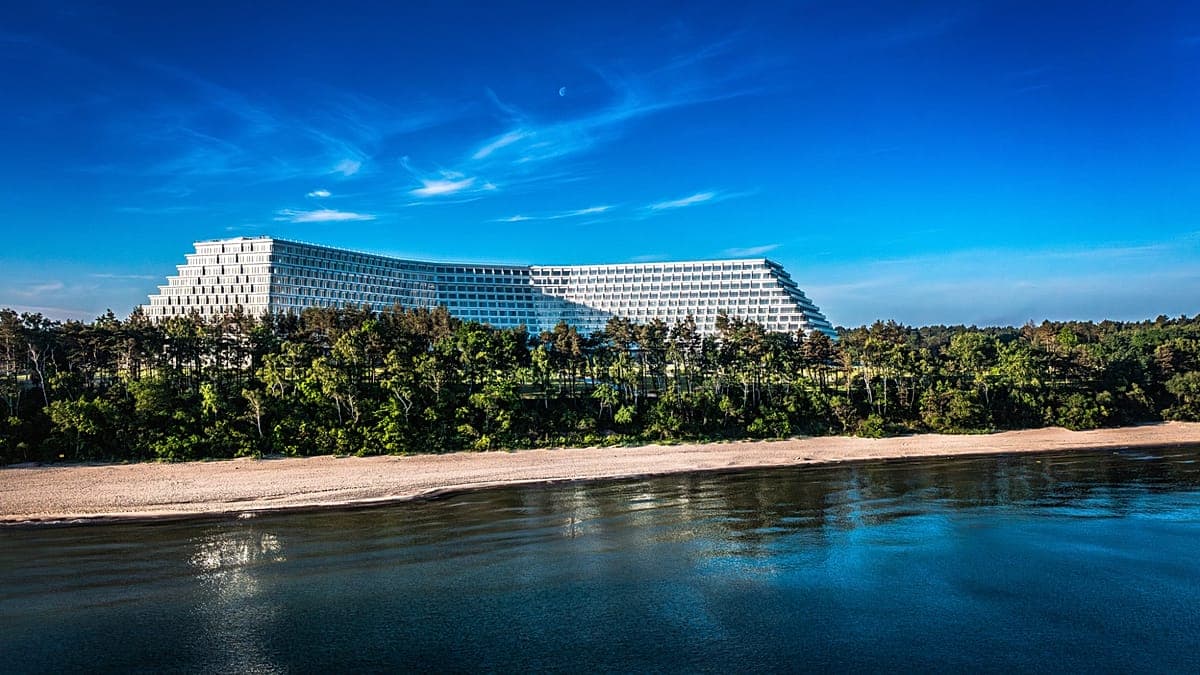
The Colossus Next Door: Will the German Baltic Sea Survive Poland's Mega Hotel?
•March 9, 2026
0
Why It Matters
The hotel could reshape tourism dynamics on the German‑Polish Baltic coast, influencing employment, wages and regional development strategies.
Key Takeaways
- •1,200‑room Polish hotel threatens German Baltic tourism market
- •Project delayed by permits, COVID, founder’s death
- •1,500 trees cleared; 4,000 replanted as compensation
- •German hoteliers fear labor poaching and price undercutting
- •Poland uses subsidies; Germany seeks infrastructure upgrades
Pulse Analysis
The planned Gołębiewski resort in Pobierowo represents a new wave of ultra‑large hospitality projects that aim to capture mass tourism from cruise ships and holidaymakers alike. With 13 floors, 1,200 rooms and a self‑contained wellness complex, it eclipses the region’s historic landmarks such as Hotel Neptun, which offers under 500 rooms. This scale reflects a broader Polish strategy to leverage coastal assets for economic growth, using state subsidies to fund infrastructure and attract foreign visitors, while positioning the Baltic Sea as a competitive alternative to traditional Mediterranean destinations.
From an economic perspective, the hotel’s sheer capacity raises concerns for neighboring German states. Wage differentials—Polish labor often costs a fraction of German minimum wages—could lure workers across the border, intensifying a talent shortage in Mecklenburg‑Vorpommern’s hospitality sector. German hotel associations warn that price undercutting may force local operators to cut margins or invest heavily in upgrades to retain market share. Yet, they also see an opportunity: heightened competition could spur service quality improvements and encourage diversification away from mass‑tourism models that dominate the Polish side.
Environmental and regulatory issues add another layer of complexity. The development cleared roughly 1,500 trees from a former military site, a move defended by the operator as minimal impact, while promising to plant 4,000 new trees. Critics argue that the project threatens coastal ecosystems and sets a precedent for large‑scale construction in protected zones. German authorities are calling for stronger infrastructure—sea bridges, public amenities, and beach facilities—to balance tourism growth with sustainability. The outcome will likely shape cross‑border cooperation and dictate whether the Baltic coast evolves into a unified tourism hub or remains a patchwork of contrasting development philosophies.
The colossus next door: Will the German Baltic Sea survive Poland's mega hotel?
0
Comments
Want to join the conversation?
Loading comments...