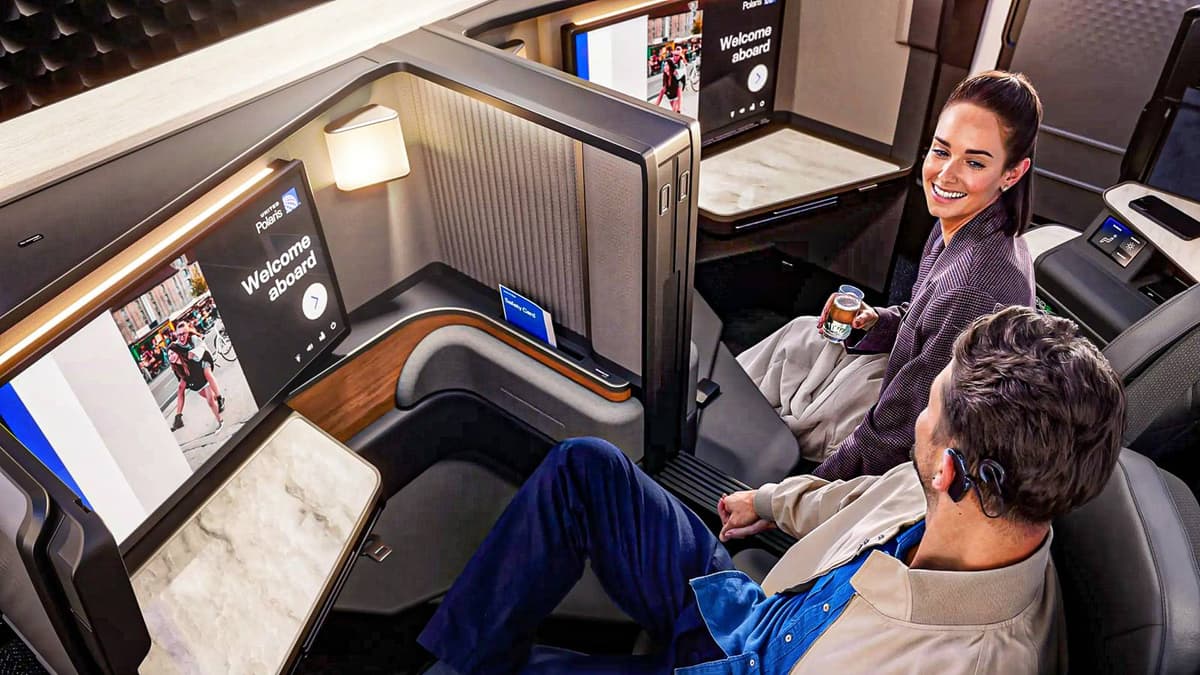
The Striking Differences Between United's Polaris Studio, Delta One Suites & Qatar's Qsuite In 2026
Companies Mentioned
Why It Matters
These upgrades shift revenue focus to high‑yield passengers, boosting profit margins per aircraft and reshaping competitive dynamics among legacy carriers.
Key Takeaways
- •United's Polaris Studio seats are 25% larger than standard Polaris seats
- •Delta One Suites span the whole cabin, no business‑plus tier
- •Qatar's Next‑Gen Qsuite adds 4K OLED screens and Starlink Wi‑Fi
- •Premium‑economy cabins raise revenue per square foot, attracting leisure travelers
Pulse Analysis
The post‑pandemic surge in premium‑travel demand has forced legacy carriers to rethink cabin architecture as a primary profit lever. Business‑class seats now command a larger share of an aircraft’s revenue per square foot than economy, prompting airlines to invest in spacious, technology‑rich products that justify higher fares. United’s Polaris Studio exemplifies this trend, adding roughly a quarter more seat width and integrating brighter interiors across its 787 fleet, a move designed to attract high‑yield leisure and corporate travelers seeking comfort without sacrificing capacity.
Delta and Qatar illustrate divergent strategies within the same premium‑travel race. Delta’s One Suite, recognized by Skytrax as North America’s best, offers a uniform, high‑quality experience across the entire cabin, reinforcing brand consistency and operational simplicity. In contrast, Qatar’s Next‑Generation Qsuite pushes the envelope with 4K OLED displays, Starlink connectivity, and reconfigurable quad suites that cater to families and couples, positioning the airline to reclaim the top global ranking. Both approaches underscore how airlines leverage differentiated cabin experiences to capture market share in a crowded premium segment.
Beyond business class, premium‑economy is emerging as a critical bridge product, delivering a noticeable comfort upgrade at a price point below full business. By delivering wider seats, extra legroom, and enhanced dining, carriers can monetize additional cabin space while appealing to price‑sensitive leisure travelers and budget‑conscious business passengers. As airlines continue to refine these tiers, the competitive landscape will increasingly hinge on how effectively they balance seat density, passenger experience, and ancillary revenue streams.
The Striking Differences Between United's Polaris Studio, Delta One Suites & Qatar's Qsuite In 2026
Comments
Want to join the conversation?
Loading comments...