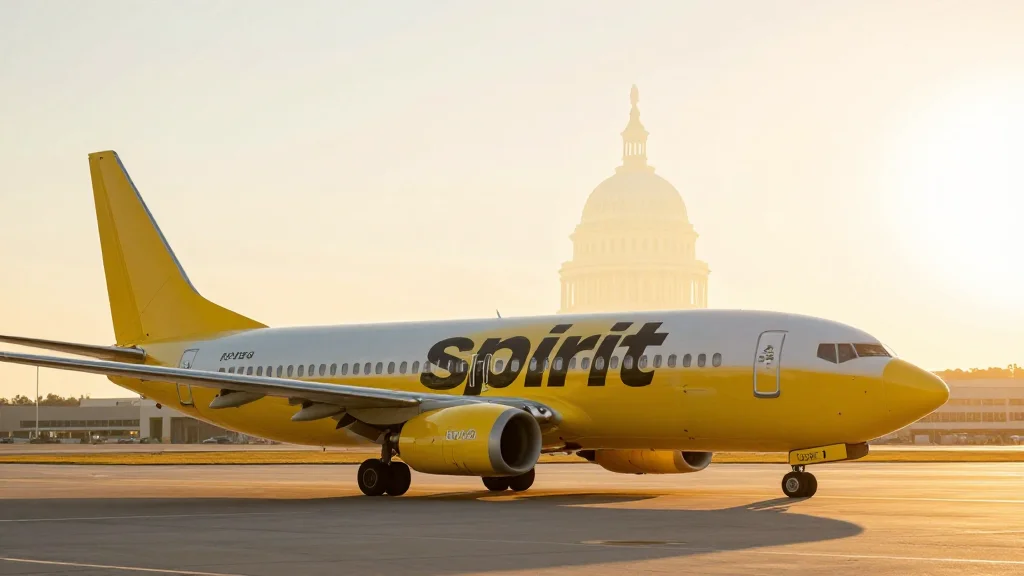
Trump Administration Prepares $500 Million Spirit Airlines Bailout That Looks Illegal And Leaves Taxpayers On The Hook
Companies Mentioned
Why It Matters
A targeted, non‑congressional bailout could reshape aviation policy, creating a precedent for government ownership of private carriers and exposing taxpayers to financial risk.
Key Takeaways
- •Government-backed $500M loan tied to warrants gives U.S. ownership stake
- •No congressional authority exists for a targeted airline rescue
- •Spirit's repeated bankruptcies raise doubts about long‑term viability
- •Bailout could set precedent of picking winners in aviation sector
- •Taxpayers may bear risk if government assumes equity in failing carrier
Pulse Analysis
The United States has intervened in the airline industry during extraordinary crises, most notably after the September 11 attacks and throughout the COVID‑19 pandemic. Those programs were authorized by Congress through the CARES Act and provided blanket liquidity to all carriers. The proposed $500 million loan to Spirit Airlines, however, would be a narrow, government‑backed financing tied to equity‑type warrants, a structure that lacks explicit statutory approval. Legal scholars argue that without a congressional mandate, the executive branch would be overstepping its lending authority and effectively nationalizing a private firm.
Spirit’s business model—ultra‑low‑fare tickets paired with extensive ancillary fees—has struggled to absorb spiraling fuel costs and a tightening credit market. The carrier filed for bankruptcy twice within twelve months, signaling deep structural weaknesses rather than a temporary cash shortfall. A government loan aimed at shoring up liquidity would not address the underlying cost base or the airline’s inability to achieve sustainable profitability. Consequently, the infusion could merely postpone liquidation, leaving taxpayers exposed to the risk of a defaulted loan and a diluted equity position.
The episode also raises broader policy questions about market distortion and antitrust oversight. Transportation Secretary Sean Duffy’s recent remarks emphasized preserving competition, yet a direct bailout would give the government a shareholder’s voice in airline governance, blurring the line between regulator and owner. If upheld, the precedent could encourage other distressed carriers to seek bespoke federal rescues, undermining the level playing field that Congress intended. Lawmakers and investors alike will be watching closely as the administration balances political pressure to save 14,000 jobs against fiscal responsibility.
Trump Administration Prepares $500 Million Spirit Airlines Bailout That Looks Illegal And Leaves Taxpayers On The Hook
Comments
Want to join the conversation?
Loading comments...