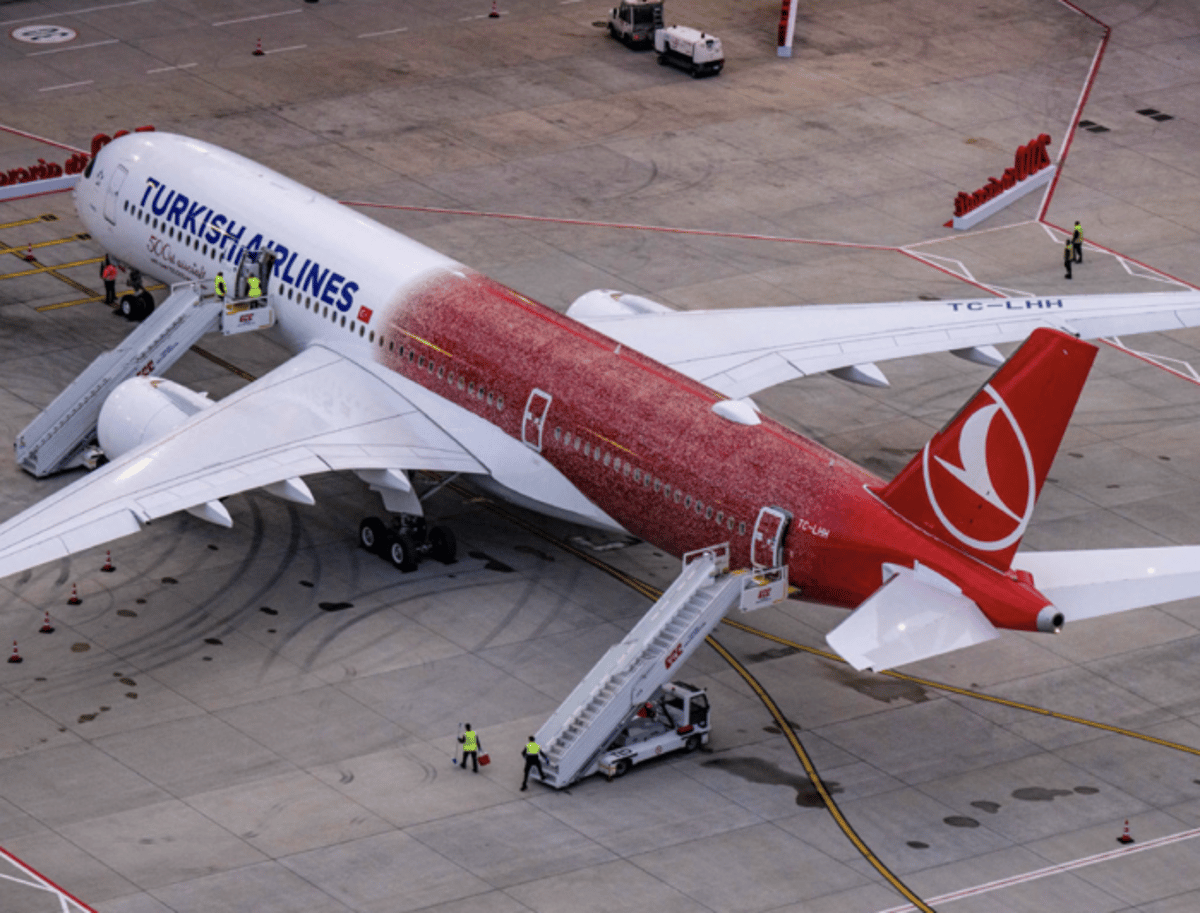
Turkish Airlines Unveils Its 500th Aircraft Featuring a Special Livery of 100,000 Employees
•February 13, 2026
0
Why It Matters
The milestone signals Turkish Airlines’ aggressive expansion, positioning it among the world’s largest carriers and reinforcing Turkey’s hub‑and‑spoke strategy. It also demonstrates confidence in long‑term passenger demand and modern fleet investment.
Key Takeaways
- •500th aircraft features employee‑focused livery.
- •Fleet now serves 356 destinations on six continents.
- •Goal: 1,000 aircraft by 2036.
- •Event highlighted national unity with martyrs' children.
- •Marks start of “Second 500” expansion phase.
Pulse Analysis
Turkish Airlines’ fleet strategy has accelerated dramatically since the early 2000s, moving from a modest regional player to one of Europe’s youngest and largest operators. By the end of 2025 the airline will operate 500 aircraft, a figure that doubles its 2003 fleet size and supports service to 356 destinations on six continents. This rapid scaling aligns with the carrier’s ambition to become a primary hub for Eurasian traffic, leveraging Istanbul’s geographic advantage to capture connecting passengers between Europe, Asia, and Africa. The push toward a 1,000‑aircraft fleet by 2036 reflects confidence in sustained demand growth and a commitment to modern, fuel‑efficient aircraft that meet emerging environmental standards.
The “TK Family” aircraft’s employee‑centric livery is more than a branding exercise; it reinforces a culture of collective ownership and national pride. By displaying images of 100,000 staff members and retirees, Turkish Airlines signals a deep internal cohesion that can translate into higher service quality and employee retention. The inclusion of children of martyrs and representatives from all 81 Turkish provinces adds a symbolic layer, positioning the airline as a unifying force in Turkish society and enhancing its corporate social responsibility profile.
From a market perspective, the milestone puts Turkish Airlines in direct competition with legacy carriers such as Lufthansa and Air France‑KLM, which are also expanding their fleets and network reach. The airline’s aggressive growth plan could pressure rivals to accelerate their own capacity upgrades, especially in the Middle‑East and Central‑Asian corridors where Turkish Airlines already enjoys a strong presence. Investors will likely view the 500‑aircraft benchmark as a validation of the carrier’s strategic roadmap, potentially unlocking new financing opportunities for future aircraft orders and supporting Turkey’s broader economic objectives of becoming a global aviation hub.
Turkish Airlines Unveils Its 500th Aircraft Featuring a Special Livery of 100,000 Employees
0
Comments
Want to join the conversation?
Loading comments...