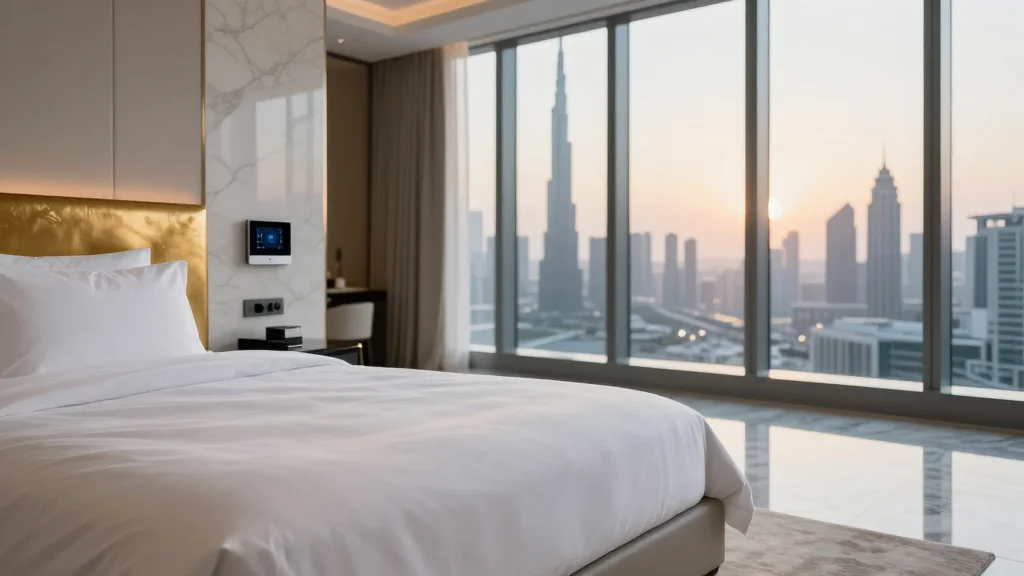
UAE Luxury Hotels Accelerate $134 B Renovation Wave with Bigger Rooms and Smart Tech

Why It Matters
The accelerated renovation programmes signal a decisive shift in the UAE’s luxury hospitality strategy, moving from reactive maintenance to proactive, experience‑driven investment. By expanding room sizes and embedding smart technology, hotels aim to attract high‑spending leisure and business travelers who prioritize space, convenience and personalized service. The scale of capital deployed—potentially tens of billions of dollars—will influence asset valuations, investor confidence and the region’s ability to retain its status as a premier luxury destination. Furthermore, the design emphasis on local cultural narratives and wellness amenities reflects a broader industry trend toward differentiated, place‑based experiences. If successful, these upgrades could raise the benchmark for luxury standards worldwide, compelling competitors in other markets to adopt similar renovation strategies to stay relevant.
Key Takeaways
- •Luxury hotels such as Park Hyatt, Burj Al Arab and Armani Hotel are fast‑tracking multi‑billion‑dirham refurbishments.
- •Renovations focus on larger rooms, smarter in‑room tech, acoustic comfort and locally‑inspired design.
- •Joao Cravo (Trilight) confirmed softer demand is accelerating previously planned upgrades.
- •UAE hotel revenue reached Dh 492 billion (~$134 billion) in 2025, underscoring the market’s financial weight.
- •Design leaders stress that upgrades aim to future‑proof properties and boost long‑term competitiveness.
Pulse Analysis
The UAE’s decision to compress renovation timelines reflects a calculated gamble: accept short‑term revenue loss for long‑term premium positioning. Historically, the region’s luxury hotels have relied on iconic architecture and brand cachet; now they are adding tangible product upgrades that can be quantified in higher ADRs and longer guest stays. This mirrors a global shift where technology and space have become core components of the luxury value proposition.
From a competitive standpoint, the upgrades could widen the gap between legacy luxury operators and newer entrants that lack the capital to undertake such extensive overhauls. Investors will likely scrutinise the return on these refurbishments through post‑renovation performance metrics, setting a new standard for asset management in hospitality. Moreover, the emphasis on local design narratives may inspire a wave of culturally resonant projects across the Middle East, differentiating the UAE from other luxury hubs that rely primarily on brand uniformity.
Looking ahead, the success of this renovation boom will depend on the speed of travel recovery and the ability of hotels to translate design and tech enhancements into measurable guest satisfaction and revenue growth. If the upgrades deliver the projected uplift, they could become a template for other high‑density luxury markets seeking to rejuvenate aging inventories while capitalising on post‑pandemic demand.
UAE Luxury Hotels Accelerate $134 B Renovation Wave with Bigger Rooms and Smart Tech
Comments
Want to join the conversation?
Loading comments...