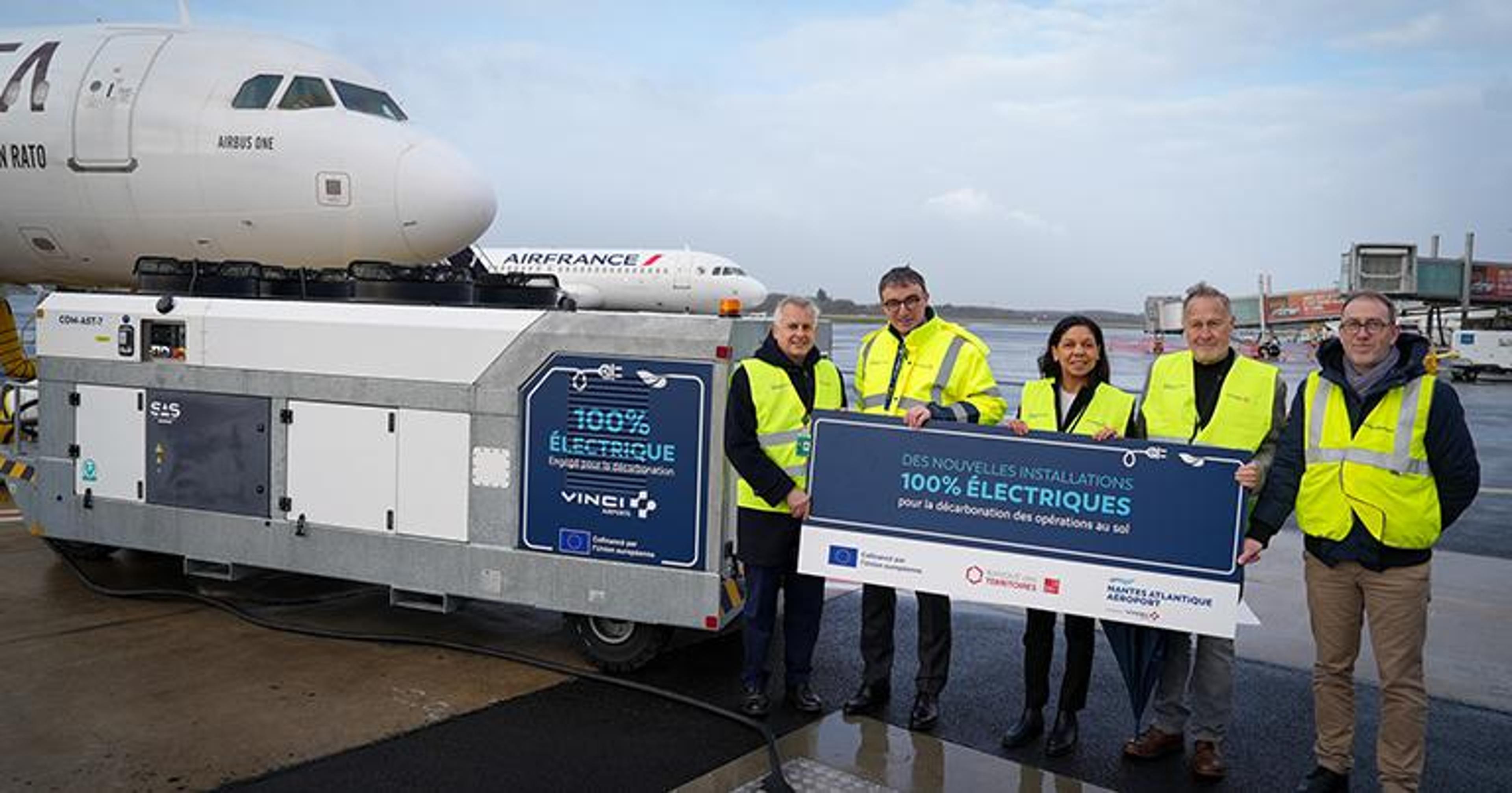
VINCI Airports’ Nantes Atlantique Commissions New Infrastructure to Decarbonise Ground Operations
•February 6, 2026
0
Why It Matters
The electrification directly lowers greenhouse‑gas output and operating costs, accelerating VINCI’s net‑zero timeline and setting a replicable standard for European airports. It also strengthens the airport’s appeal to airlines seeking greener ground handling solutions.
Key Takeaways
- •€15 million investment powers 12 electrified stands.
- •100 charging points cut ground‑fuel use by up to 50%.
- •Supports VINCI’s EU/UK net‑zero target by 2030.
- •EU grant of €4.5 million backs the project.
- •Reduces airlines’ Scope 3 emissions from APU usage.
Pulse Analysis
Electrifying airport ground operations has moved from pilot schemes to large‑scale rollouts across Europe, driven by tighter carbon regulations and airline pressure to shrink Scope 3 emissions. Powering aircraft stands, baggage tractors, and service buses with electricity eliminates the need for auxiliary power units and diesel generators, delivering immediate fuel savings and noise reductions. Operators are also leveraging smart charging infrastructure to balance load on the grid and integrate renewable energy sources. As airports become energy hubs, the shift supports broader aviation decarbonisation pathways, including sustainable aviation fuels and hydrogen‑based solutions.
Nantes Atlantique Airport’s €15 million upgrade exemplifies this momentum. The project installed twelve electrified contact stands that supply aircraft with cabin power and air‑conditioning without burning jet fuel, and added one hundred charging points ranging from 7.4 kW for light vehicles to 120 kW for buses and ground support equipment. Early estimates suggest a 40‑50 percent reduction in on‑site greenhouse‑gas emissions, while the EU’s €4.5 million grant underscores public backing for low‑carbon airport infrastructure. The new system also improves operational efficiency, reducing turnaround times and maintenance costs for airlines and handling firms.
For VINCI Airports, Nantes is a benchmark for its net‑zero ambition across the EU and UK portfolio, which targets zero emissions by 2030. Replicating the Nantes model can accelerate the group’s carbon‑neutral roadmap, offering a template that combines private capital with European funding mechanisms. Industry peers such as Schiphol and London Stansted are pursuing similar electrification and renewable‑energy projects, signaling a competitive imperative to adopt green ground services. As regulators tighten emissions standards, airports that demonstrate measurable reductions will attract environmentally conscious carriers and may qualify for incentives, reinforcing the business case for rapid electrification.
VINCI Airports’ Nantes Atlantique commissions new infrastructure to decarbonise ground operations
The following article was published by Future Travel Experience
Nantes Atlantique Airport has commissioned new electrified ground infrastructure, investing €15 million to reduce emissions from airside operations. The project supports VINCI Airports’ net-zero strategy and boosts efficiency.
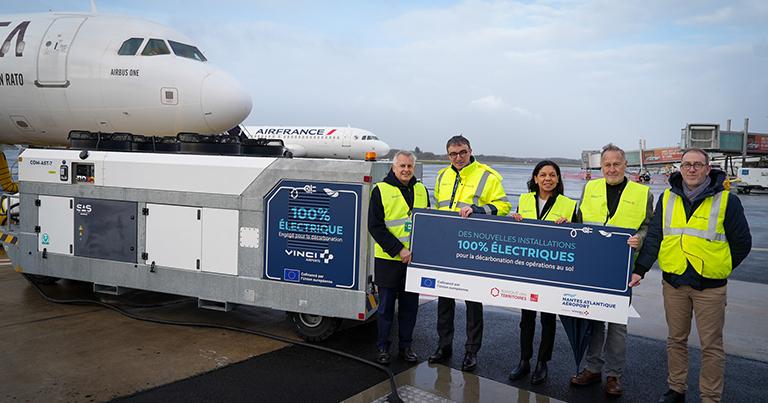
Nantes Atlantique Airport has commissioned new electrified ground infrastructure, investing €15 million to reduce emissions from airside operations. The project supports VINCI Airports’ net-zero strategy and boosts operational efficiency.
Summary:
-
Nantes Atlantique Airport invests €15 million in electrified ground infrastructure to cut emissions from airside operations.
-
12 electrified aircraft stands and 100 charging points enable reduced APU use and lower Scope 3 emissions.
-
VINCI Airports advances net-zero ambitions, targeting zero emissions across EU and UK airports by 2030.
Nantes Atlantique Airport, part of the network of VINCI Airports (a Corporate Partner of the FTE Digital, Innovation & Startup Hub), has commissioned new electrical infrastructure designed to significantly reduce emissions from ground operations, following 15 months of construction work and an investment of €15 million. The airport now features 12 electrified aircraft stands and 100 additional electric charging points for airside vehicles and ground support equipment, fully aligned with VINCI Airports’ environmental strategy.
The electrification of ground operations is an immediate lever for reducing the carbon footprint of airlines and ground handling companies, which account for an airport’s indirect emissions (Scope 3). Thanks to these new facilities, aircraft parked at contact stands can now be supplied with electricity and air conditioning without using auxiliary power units or thermal equipment.
“By electrifying aircraft stands and deploying charging stations for ground support equipment, we are helping to reduce emissions from airlines and ground handling companies,” said Guillaume Dubois, Chairman of Aéroports du Grand Ouest and CEO of Nantes Atlantique Airport. “This is fully in line with the strategy we are pursuing to reduce the environmental impact of airport activities. This commitment, led by VINCI Airports since 2016, is part of a comprehensive approach to reducing CO₂ emissions from our own airport operations while also addressing those generated by third parties.”
At the same time, the airport has deployed 100 electric charging points across the apron: 7.4 kW chargers for light vehicles, 120 kW chargers for buses, as well as sockets adapted for baggage tractors and refuelling vehicles. This modernisation significantly reduces the use of fossil fuels and can cut greenhouse gas emissions from ground operations by up to 50%.
This initiative is also part of VINCI Airports’ environmental strategy, which aims to achieve net zero emissions across its airports in the European Union and the United Kingdom by 2030.
“By electrifying its ground services, Nantes Atlantique Airport is positioning itself among Europe’s leading airports, firmly committed to the decarbonisation of the aviation sector,” said Richard Ferrer, Head of the Alternative Fuels Sector at the European Climate, Infrastructure and Environment Executive Agency (CINEA). “With a grant of nearly €4.5 million, the European Union has supported this initiative, which represents a major step forward towards a sustainable, low-carbon airport model, both in the Pays de la Loire region and across Europe, directly contributing to European climate ambitions.”
You may also be interested in
12 technology and CX trends that can enhance airline and airport operations in 2026
Avinor enhances sustainability with new biogas plant at Norway’s Svalbard Airport
Shannon Airport unveils new passenger gates and airfield solar PV farm in €6.6m investment
Korean Air upgrades inflight meal containers with new, sustainable, plant-based alternatives
Cathay and Airbus form co-investment partnership for scaling Sustainable Aviation Fuel adoption
Schiphol pilots hydrogen-powered vehicles as it targets emission-free ground operations by 2030
Lufthansa Group’s Miles & More loyalty program introduces new incentives for sustainable flying
Article originally published here:
VINCI Airports’ Nantes Atlantique commissions new infrastructure to decarbonise ground operations
0
Comments
Want to join the conversation?
Loading comments...