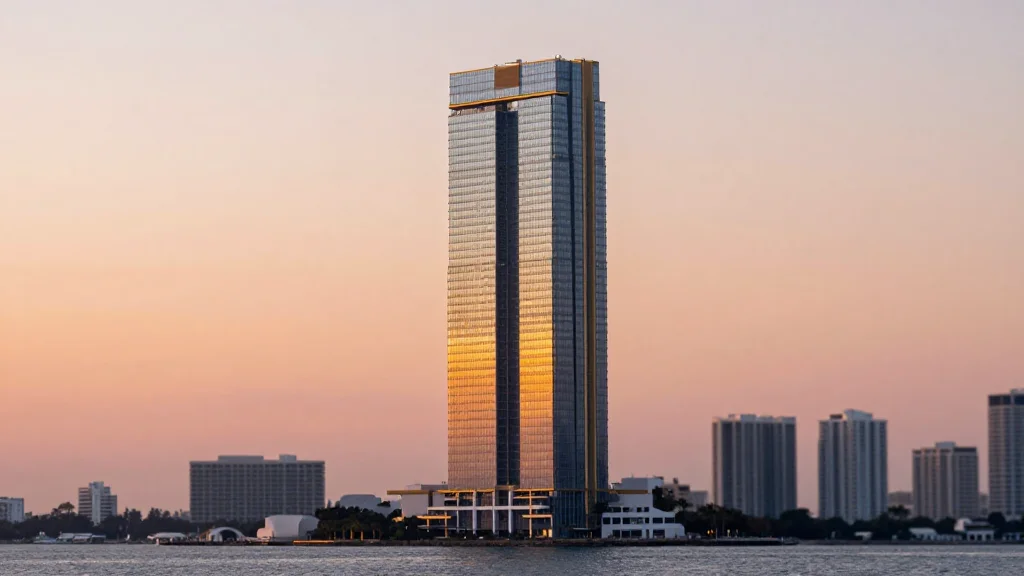
Waldorf Astoria Miami to Become City’s First Super‑tall at 1,049 Ft, Sparking Skyline Race

Companies Mentioned
Why It Matters
The Waldorf Astoria’s emergence as Miami’s first supertall signals a strategic shift toward ultra‑luxury vertical development, a trend that could redefine the city’s economic profile. By attracting high‑net‑worth residents and tourists, the tower may boost ancillary sectors such as retail, dining and cultural attractions, reinforcing Miami’s bid to be a global hospitality capital. At the same time, the concentration of massive projects intensifies pressure on municipal services, transportation networks, and affordable‑housing initiatives, prompting policymakers to reconcile growth with equity. Moreover, the tower’s mixed‑use format—combining a flagship hotel with private residences—offers a blueprint for future developments seeking to diversify revenue streams amid fluctuating travel demand. If successful, it could encourage other operators to pursue similar models, accelerating the city’s transition from a low‑rise coastal resort destination to a high‑rise, high‑density urban hub.
Key Takeaways
- •Waldorf Astoria Hotel & Residences Miami: 100 stories, 1,049 ft, slated for 2028 completion
- •First supertall in Miami, surpassing the 868‑ft Panorama Tower
- •Adjacent Delano Residences (985 ft) to feature Miami’s first public observation deck
- •Citadel HQ (1,049 ft) and Okan Tower (902 ft) illustrate broader supertall pipeline
- •Developers cite luxury demand; city faces engineering, zoning and affordability challenges
Pulse Analysis
Miami’s pivot to supertall luxury towers reflects a broader real‑estate cycle where cities with limited horizontal expansion turn skyward to meet premium demand. Historically, Miami’s growth has been anchored by low‑rise beachfront condos; the new vertical thrust marks a departure driven by several forces. First, global capital is chasing scarcity—high‑rise, high‑visibility assets offer a tangible status symbol for investors from Europe, the Middle East and Asia. Second, the city’s tax environment and relatively permissive zoning have lowered barriers for developers willing to invest billions in engineering‑intensive projects.
The Waldorf Astoria’s mixed‑use strategy mitigates risk by diversifying income: hotel operations can absorb tourism volatility, while residences provide a steadier cash flow from long‑term owners. This model could become a template for future projects, especially as the hospitality sector rebounds from pandemic disruptions. However, the concentration of supertalls also amplifies exposure to market corrections. If luxury demand softens, the city could face a glut of high‑cost inventory, pressuring occupancy rates and driving down yields.
From an urban‑planning perspective, the skyline race forces Miami to confront legacy issues—traffic congestion, flood risk, and the need for resilient infrastructure. The city’s ability to integrate these towers with public transit, storm‑water management and affordable‑housing policies will determine whether the supertall boom translates into sustainable growth or a speculative bubble. In the short term, the Waldorf Astoria will likely elevate Miami’s brand, attracting media attention and high‑spending visitors, but the long‑term impact will hinge on how well the city balances ambition with inclusivity.
Waldorf Astoria Miami to Become City’s First Super‑tall at 1,049 ft, Sparking Skyline Race
Comments
Want to join the conversation?
Loading comments...