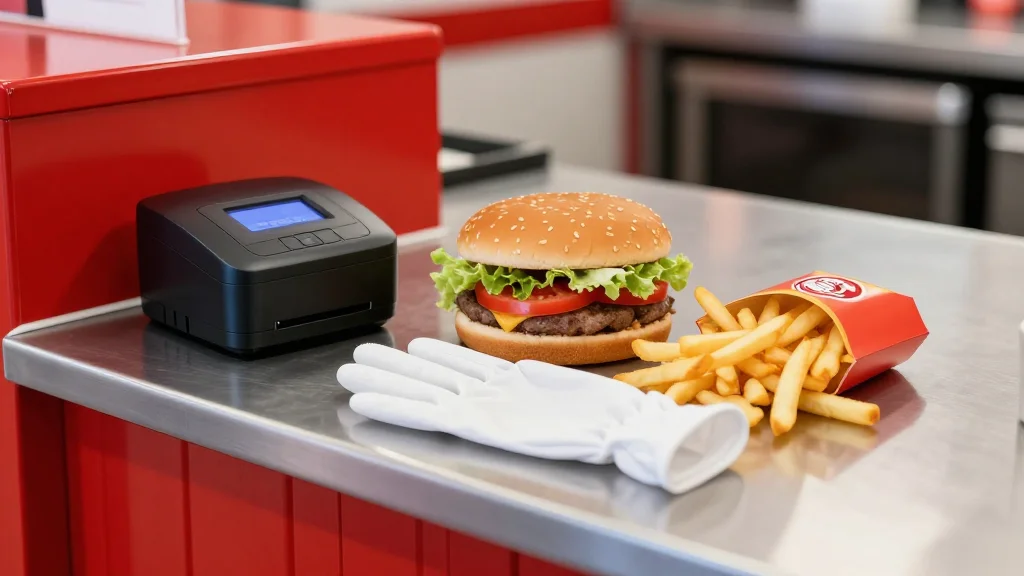
Wendy’s Bets Order Accuracy and Clean Stores Will Revive Sales
Companies Mentioned
Why It Matters
Improving order accuracy and restaurant cleanliness directly addresses the consumer experience gaps driving sales erosion, and the new value menu seeks to win back price‑sensitive diners as rivals post growth. Success could stabilize Wendy’s market share and improve franchisee economics amid a competitive QSR landscape.
Key Takeaways
- •Q1 comps down 7.8%; fifth straight quarterly decline
- •Label‑printer rollout now covers >85% of restaurants, lifts order‑accuracy scores 170 bps
- •White Glove cleanliness program improves satisfaction 160 bps
- •New $4‑$8 Biggie Deals target snackers, families, and higher‑spend diners
Pulse Analysis
Wendy’s Q1 performance underscores the pressure fast‑food chains face when consumer expectations outpace operational execution. While rivals such as McDonald’s and Burger King posted modest sales gains, Wendy’s saw a 7.8% dip in comparable sales, prompting a sharper focus on the fundamentals of the dining experience. Project Fresh, the brand’s multi‑year turnaround plan, now zeroes in on two levers that directly influence guest perception: order accuracy and restaurant cleanliness. By deploying menu‑item label printers to more than 85% of its locations, Wendy’s reduces the likelihood of mis‑filled orders and speeds up item identification, a change that lifted its order‑accuracy metric by 170 basis points.
The “White Glove” cleanliness initiative complements the technology upgrade by standardizing hygiene protocols across franchisees. Coordinated inspections and real‑time feedback have driven a 160‑basis‑point rise in cleanliness scores, signaling that even incremental improvements in the physical environment can translate into measurable satisfaction gains. Industry analysts note that such operational tweaks are increasingly vital as consumers, especially lower‑income diners, become more price‑sensitive and less tolerant of service lapses. Wendy’s acknowledgment that higher‑income customers are responding better than their lower‑income counterparts highlights the need for a broader value proposition.
To address the pricing gap, Wendy’s introduced an expanded Biggie Deals suite—$4, $6 and $8 bundles designed to capture snack‑time traffic, family meals, and premium‑value seekers. The $6 offering, positioned as a full‑meal price point, combines fries, a drink, nuggets and a sandwich choice, while the $8 tier adds an extra sandwich for abundance‑focused diners. By anchoring the value platform around consistent pricing rather than sporadic promotions, Wendy’s hopes to build habitual traffic and improve frequency. If the operational upgrades and value menu resonate, the chain could halt its comp decline and regain momentum in a crowded quick‑service market.
Wendy’s bets order accuracy and clean stores will revive sales
Comments
Want to join the conversation?
Loading comments...