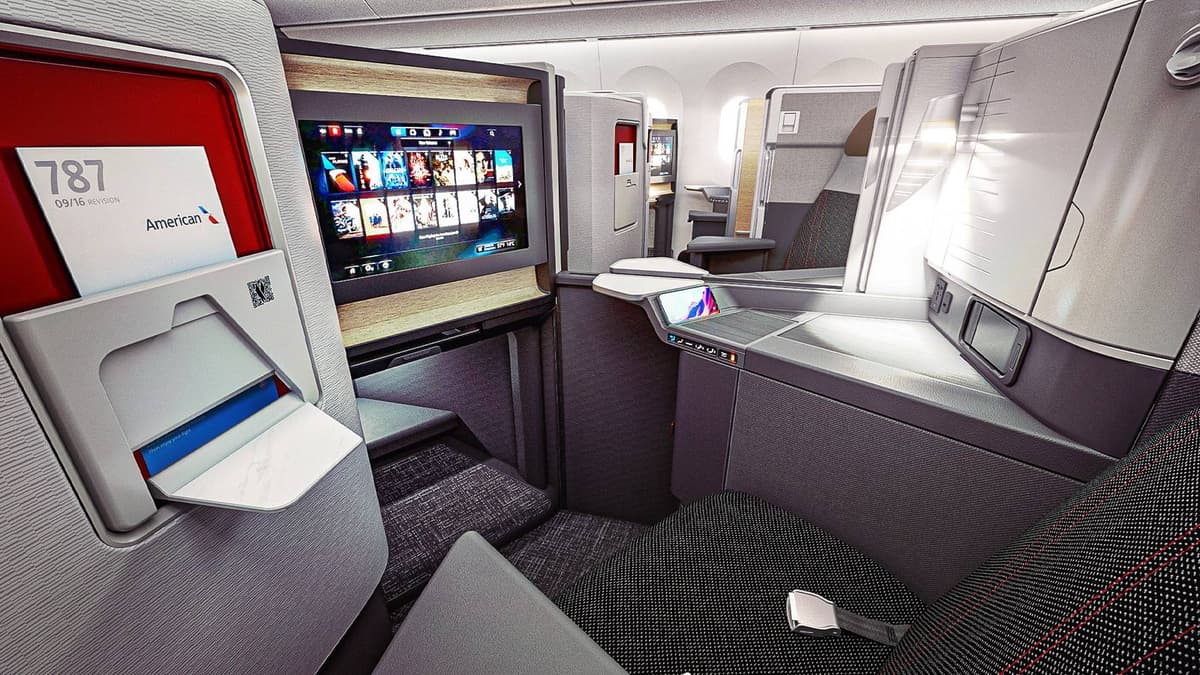
Why American Airlines' Longest-Ever Flight Needs Just 51 Business Class Suites To Pencil Out
Companies Mentioned
Why It Matters
The re‑engineered 787‑9P demonstrates American’s pivot toward higher‑yield premium cabins on ultra‑long‑haul routes, a move that could lift profitability and narrow the gap with rivals that already prioritize premium capacity.
Key Takeaways
- •AA7 flies 7,216 nm with 51 Flagship Business suites
- •787‑9P layout boosts premium share to 21 % of seats
- •Joint venture with Qantas enables revenue‑sharing on Brisbane route
- •Queensland subsidies help offset low load‑factor risk
- •American refitting 777s to add 70 suites, chasing premium demand
Pulse Analysis
American’s decision to outfit the Dallas‑Fort Worth‑Brisbane nonstop with the Boeing 787‑9P reflects a broader industry shift toward premium‑heavy cabins on ultra‑long‑haul routes. By increasing Flagship Business seats from 30 to 51, the airline lifts the premium‑seat ratio to 21 % of the 244‑seat configuration, aligning its product with the high‑willingness‑to‑pay business travelers who dominate Pacific traffic. The metal‑neutral joint venture with Qantas further amplifies revenue potential, allowing coordinated pricing and shared risk on a market traditionally dominated by Australian carriers.
Financially, the 789P’s higher‑yield cabin offsets the inherent cost challenges of operating a 13,363‑km flight. Queensland’s subsidies lower the break‑even load factor, but the premium‑seat boost improves unit economics enough to make the route profitable even without government support. Compared with United’s 787‑9 (48 business seats) and Delta’s A350‑900 (40 business seats), American now offers a comparable premium product, positioning itself to capture a larger share of the lucrative business‑travel segment during the northern‑winter peak.
Looking ahead, American’s cabin‑reconfiguration strategy extends beyond the 787‑9P. The airline is refurbishing its 777‑300ER fleet to feature 70 Flagship Suites and plans to increase premium capacity on its 777‑200ERs by 25 %. These moves signal a long‑term commitment to premium revenue growth, a critical lever as U.S. carriers grapple with limited wide‑body fleets and the need to maximize per‑seat profitability on trans‑Pacific routes. By aligning product, partnership, and financial incentives, American aims to close the margin gap with its Pacific rivals and solidify its foothold in the high‑value Australia market.
Why American Airlines' Longest-Ever Flight Needs Just 51 Business Class Suites To Pencil Out
Comments
Want to join the conversation?
Loading comments...