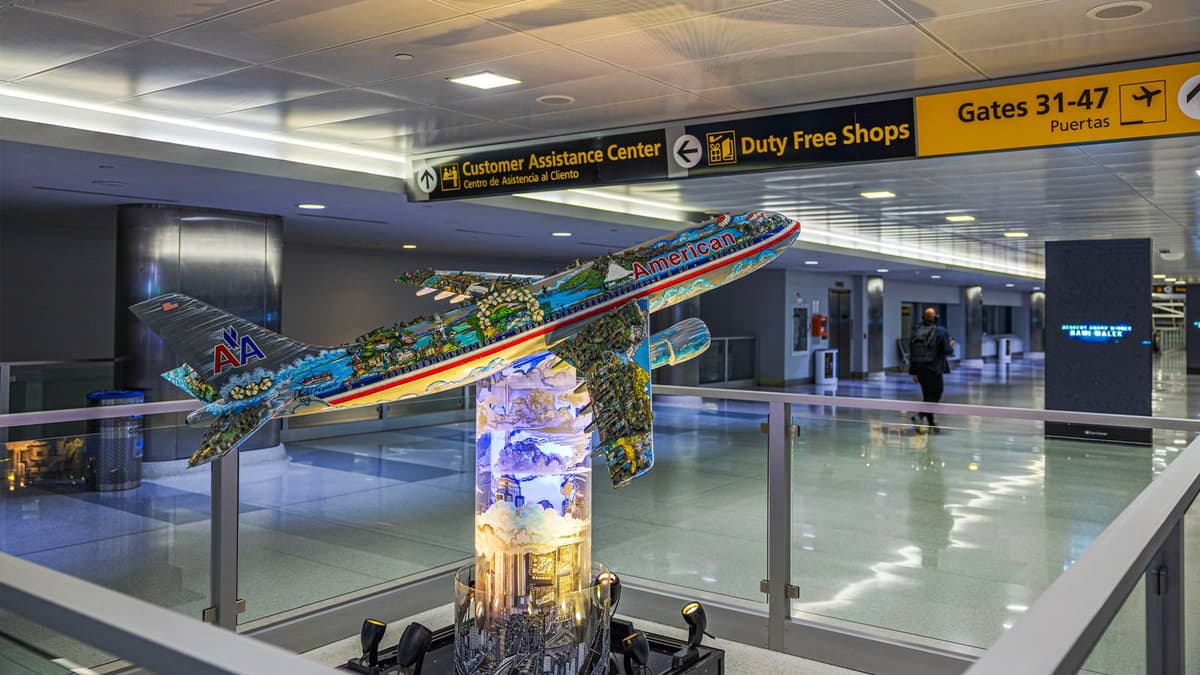
Why American Airlines Removed Moving Walkways At New York-JFK After Its $125 Million Terminal Makeover
Companies Mentioned


Why It Matters
By sacrificing convenience, American Airlines seeks to boost non‑ticket revenue, a growing profit pillar for legacy carriers. The strategy signals a shift in airport design toward monetizing passenger dwell time.
Key Takeaways
- •American removed walkways to boost retail dwell time.
- •Terminal Eight now has 56% more concession space.
- •14 million annual passengers targeted for higher spend.
- •JFK’s $19 billion upgrade emphasizes shopping over speed.
- •Airlines increasingly rely on non‑ticket revenue streams.
Pulse Analysis
The $125 million renovation of JFK’s Terminal Eight reflects a strategic pivot from pure passenger efficiency to revenue generation. American Airlines, as the lead tenant and operator, transformed the concourse into a “Great Hall” anchored by The Boroughs dining hall and upscale retail. By eliminating moving walkways, the airline deliberately slows the journey from security to gate, extending dwell time and nudging travelers toward higher‑margin concessions. With 56% more concession space and an estimated 14 million passengers passing through annually, the airline expects a measurable uplift in per‑passenger spend, supplementing its ticket revenue at a time when legacy carriers face thin margins.
This approach mirrors a broader industry trend where airports treat terminal real estate as a commercial asset. Across the globe, facilities like London Gatwick and Copenhagen have re‑engineered post‑security zones to maximize retail exposure, sometimes even offering shortcuts that bypass duty‑free areas for a fee. The $19 billion JFK master plan, which includes massive retail footprints at Terminals One and Six, underscores the shift toward “airport as shopping mall.” Vendors benefit from high‑traffic footfall, while airports and airline operators negotiate revenue‑sharing leases that can dwarf traditional aeronautical income.
For airlines, the move signals an increasing reliance on ancillary streams such as retail, parking, and loyalty programs to offset volatile ticket margins. While passengers may grumble about longer walks, the enhanced environment can improve brand perception and encourage repeat travel through a more enjoyable, shop‑filled experience. As other carriers observe American’s experiment, we may see a wave of terminal redesigns that prioritize commercial space, reshaping the airport experience from a transit hub to a destination in its own right.
Why American Airlines Removed Moving Walkways At New York-JFK After Its $125 Million Terminal Makeover
Comments
Want to join the conversation?
Loading comments...