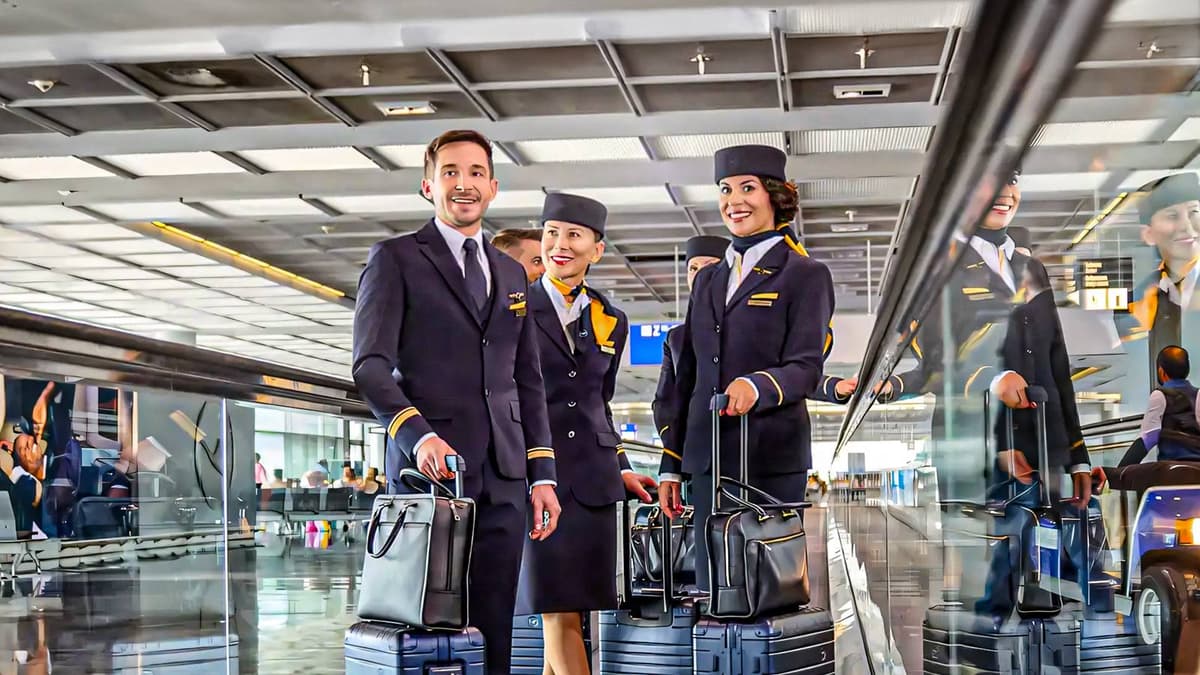
Why Do Flight Attendants Often Wear Hats As Part Of Their Uniform?
Companies Mentioned
Why It Matters
Uniform hats provide quick visual cues for assistance and emergency response, directly influencing passenger safety and brand perception. Their evolution reflects broader industry trends toward flexible branding and operational efficiency.
Key Takeaways
- •Hats help passengers quickly identify crew during emergencies
- •Uniform colors signal brand values like safety or friendliness
- •Designers such as Vivienne Westwood shape airline image through uniforms
- •Hat colors often denote rank and seniority within the crew
- •Modern crews frequently remove hats in cabin for practicality
Pulse Analysis
The legacy of flight‑attendant hats dates back to the 1970s, when airlines adopted futuristic silhouettes to convey authority and safety. Early designs used distinctive headwear to ensure passengers could spot crew members at bustling airports, a visual cue that later proved vital in emergencies. Over the decades, the hat became a canvas for branding, with colors and styles mirroring each carrier’s identity—red for warmth, navy for trust, and vibrant palettes for low‑cost friendliness.
Beyond function, airlines enlist high‑profile fashion houses to craft uniforms that embody cultural narratives and corporate ethos. Vivienne Westwood’s work for Virgin Atlantic blended British chic with classic glamour, while Balenciaga’s Korean Air designs introduced avant‑garde flair. Many carriers also encode hierarchy into headwear; senior cabin crew may wear purple or gray hats, instantly signaling authority to both passengers and staff. This visual hierarchy streamlines service coordination and reinforces internal brand structure.
In recent years, practicality has reshaped hat usage. Crew members now typically remove hats once the aircraft doors close, citing safety and comfort concerns, and only replace them for pre‑flight appearances. This shift reflects a broader industry move toward flexible dress codes without sacrificing brand visibility. By balancing tradition with operational needs, airlines maintain the psychological benefits of uniformity—reducing passenger anxiety and reinforcing a cohesive travel experience—while adapting to modern service dynamics.
Why Do Flight Attendants Often Wear Hats As Part Of Their Uniform?
Comments
Want to join the conversation?
Loading comments...