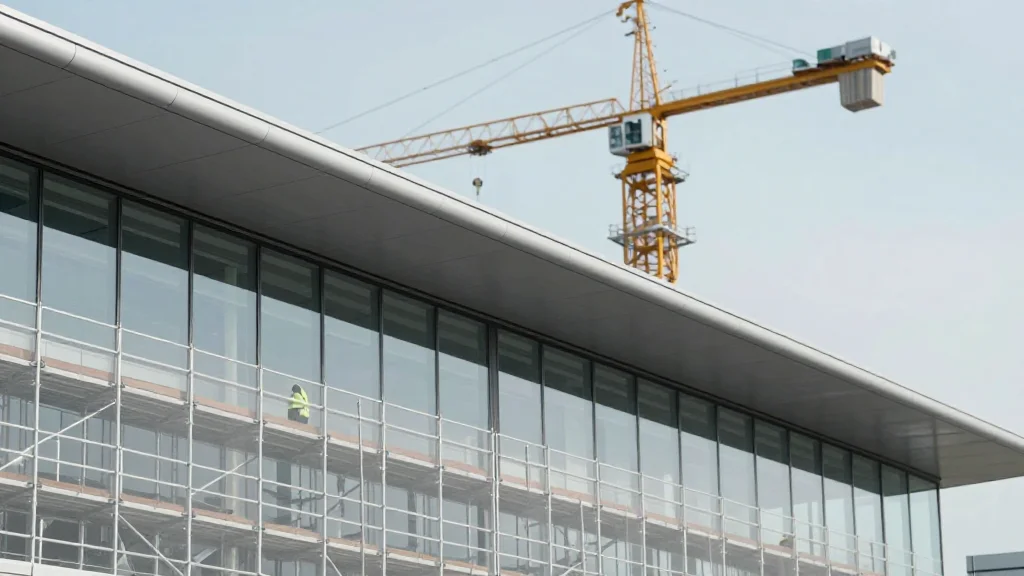
Work Begins on Transformation of Frankfurt’s Terminal 2
Why It Matters
The renovation secures Frankfurt’s position as Europe’s leading hub by modernising critical infrastructure, enhancing capacity and sustainability for future traffic growth. It also creates a competitive edge for airlines, especially Star Alliance members, seeking efficient connections at a major gateway.
Key Takeaways
- •Fraport suspends Terminal 2 operations to start a €1.5 bn upgrade.
- •Renovation targets security, HVAC, fire systems and passenger flow efficiency.
- •All airlines shifted to Terminal 3; key infrastructure like baggage system stays active.
- •Terminal 2 slated to reopen mid‑2030s with >10 million passenger capacity.
- •Project aims to boost sustainability and flexibility for Frankfurt’s hub status.
Pulse Analysis
Frankfurt Airport, Germany’s busiest gateway, has long relied on Terminal 2 since its 1994 debut. After three decades of intensive use, the facility’s aging mechanical and safety systems no longer meet the efficiency standards required by a global hub. By leveraging the newly opened Terminal 3, Fraport can now shut down Terminal 2 without disrupting airline schedules, allowing a comprehensive overhaul that aligns the airport with next‑generation aviation standards.
The €1.5 billion transformation—roughly $1.64 billion—focuses on modernising core technical infrastructure, including fire‑alarm, smoke extraction, HVAC, and building automation. Simultaneously, passenger‑centric upgrades such as centralised security checkpoints, re‑engineered flow corridors and adaptable retail zones aim to cut processing times and improve the travel experience. Sustainable design elements, like energy‑efficient systems and upgraded vertical transport, will lower the terminal’s carbon footprint, supporting Frankfurt’s broader environmental commitments.
From an industry perspective, the project signals Frankfurt’s intent to retain its status as Europe’s premier hub amid rising competition from other major airports. The mid‑2030s reopening, with a capacity exceeding 10 million passengers, will provide additional slots for Star Alliance carriers and other airlines, fostering route expansion and connectivity. Moreover, the phased approach—maintaining critical services such as baggage handling and the Sky Line people mover—demonstrates a model for large‑scale airport renovations that minimise operational disruption while delivering long‑term capacity and sustainability gains.
Work begins on transformation of Frankfurt’s Terminal 2
Comments
Want to join the conversation?
Loading comments...