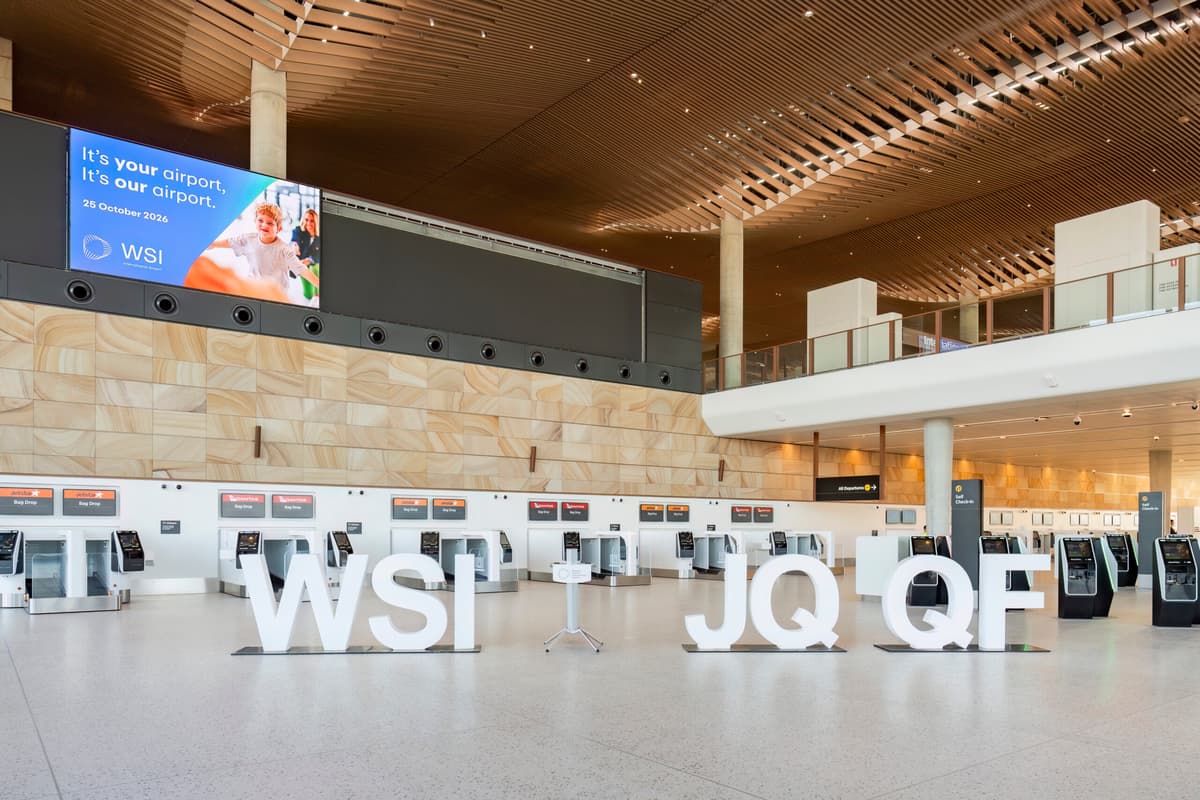
WSI to Launch Domestic Flights in October 2026
Why It Matters
The launch diversifies Sydney’s aviation landscape, giving Western Sydney residents direct domestic connections and boosting regional economic activity through passenger and cargo traffic.
Key Takeaways
- •Jetstar launches 14 weekly WSI‑Melbourne flights from Oct 25 2026
- •QantasLink adds four weekly WSI‑Brisbane and Melbourne flights starting Mar 28 2027
- •New 24‑hour cargo precinct opens July 26 2026, Qantas freighter flies July 27
- •Airbus A320s seat 188; Embraer E190s seat ~95 with business class
- •Domestic service expands travel options for Western Sydney residents
Pulse Analysis
Western Sydney International Airport, often dubbed the “second gateway” for the city, is poised to reshape the region’s connectivity. While Sydney’s primary airport has long dominated domestic traffic, the new WSI facility offers a modern runway, state‑of‑the‑art terminal, and ample room for future expansion. By introducing scheduled passenger flights in late 2026, the airport addresses a growing demand for convenient travel options in the fast‑expanding western suburbs, reducing congestion at the main hub and shortening ground travel times for millions of residents.
The airline lineup underscores a strategic partnership with Australia’s low‑cost and full‑service carriers. Jetstar’s initial schedule of up to 14 weekly flights to Melbourne, plus services to the Gold Coast and Brisbane, leverages the high‑capacity Airbus A320, accommodating up to 188 passengers per leg. QantasLink’s entry in 2027 brings the Embraer E190, a 95‑seat regional jet with a dedicated business‑class cabin, catering to premium travelers. These routes not only link Western Sydney directly to key east‑coast markets but also create new feeder opportunities for regional airports, potentially spurring tourism and business travel across the corridor.
Beyond passenger traffic, the 24‑hour cargo precinct slated for July 2026 positions WSI as a logistics hub. Early adoption by Qantas’ freighter fleet signals confidence in the airport’s handling capabilities and its proximity to major freight corridors. The cargo facility is expected to attract additional airlines, stimulate warehousing development, and generate high‑value jobs. Combined with the passenger services, the dual‑use model enhances the airport’s revenue streams and supports the broader economic agenda of Greater Sydney’s western growth corridor, making WSI a pivotal asset in Australia’s aviation future.
WSI to Launch Domestic Flights in October 2026
Comments
Want to join the conversation?
Loading comments...