Human Resources News and Headlines
  • All Technology
  • AI
  • Autonomy
  • B2B Growth
  • Big Data
  • BioTech
  • ClimateTech
  • Consumer Tech
  • Crypto
  • Cybersecurity
  • DevOps
  • Digital Marketing
  • Ecommerce
  • EdTech
  • Enterprise
  • FinTech
  • GovTech
  • Hardware
  • HealthTech
  • HRTech
  • LegalTech
  • Nanotech
  • PropTech
  • Quantum
  • Robotics
  • SaaS
  • SpaceTech
AllNewsDealsSocialBlogsVideosPodcastsDigests

Human Resources Pulse

EMAIL DIGESTS

Daily

Every morning

Weekly

Sunday recap

NewsDealsSocialBlogsVideosPodcasts
Human ResourcesNewsA New Addition to PTO: Heartbreak Leave
A New Addition to PTO: Heartbreak Leave
Human Resources

A New Addition to PTO: Heartbreak Leave

•February 11, 2026
0
Employee Benefit News
Employee Benefit News•Feb 11, 2026

Why It Matters

Providing heartbreak leave signals genuine employee wellbeing support, helping attract and retain talent in a competitive market. It also reduces hidden productivity losses caused by emotional distress.

Key Takeaways

  • •One third of workers support dedicated heartbreak leave.
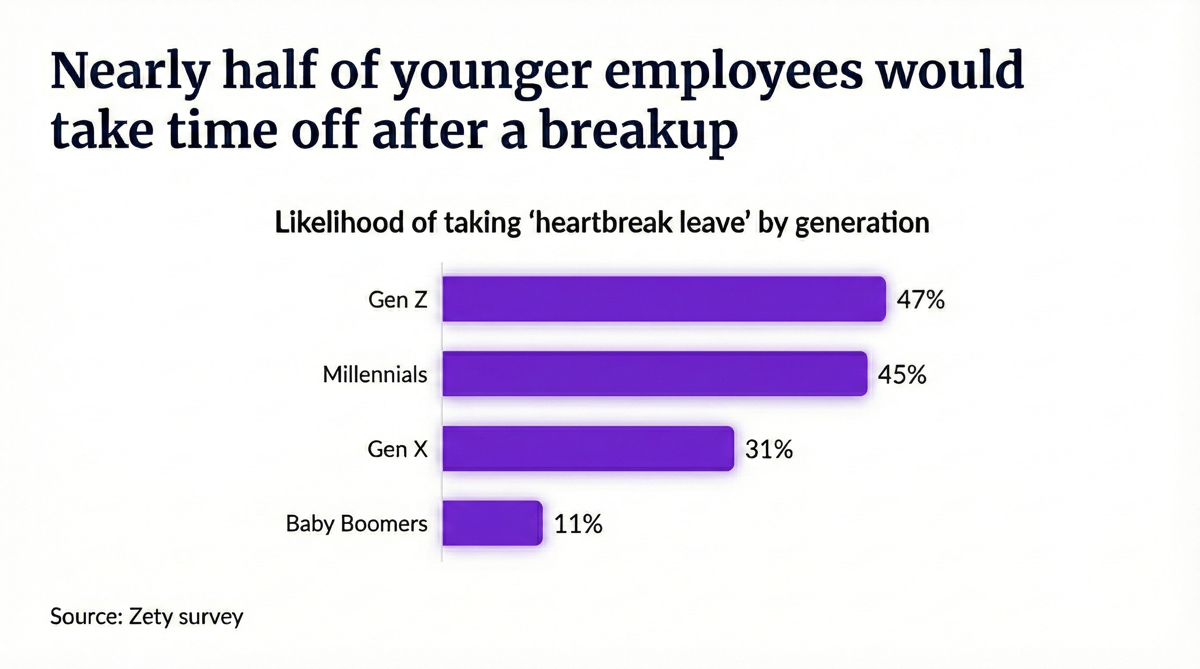
  • •Gen Z and millennials most likely to use heartbreak leave.
  • •Offering such leave boosts culture, trust, and productivity.
  • •Men show slightly higher interest than women in taking leave.
  • •Employers can pair leave with counseling, flexible work, legal aid.

Pulse Analysis

The rise of mental‑health‑focused benefits has reshaped how companies think about paid time off. Traditional vacation and sick days often fail to address acute emotional events such as breakups, which can derail focus and performance. By recognizing heartbreak as a legitimate reason for leave, employers tap into a broader wellbeing narrative that aligns with the growing demand for holistic employee support, especially among digitally native generations accustomed to transparent workplace policies.

Beyond the moral argument, heartbreak leave can deliver measurable business outcomes. Studies link emotional distress to reduced engagement, missed deadlines, and higher error rates. When employees know they can step away to recover without stigma, they return more focused, fostering higher morale and loyalty. For Gen Z and millennials—who prioritize purpose and empathy in employers—such a benefit differentiates a brand in talent wars, potentially lowering turnover and associated hiring costs.

Implementing heartbreak leave requires thoughtful integration with existing programs. Companies should outline clear eligibility, duration, and documentation guidelines while pairing the policy with flexible work options, remote capabilities, and access to counseling or legal resources. Communication is key: HR must educate managers to handle requests sensitively and to connect employees with auxiliary support services. When executed well, heartbreak leave becomes a catalyst for a culture that values personal resilience, ultimately strengthening collaboration and productivity across the organization.

A new addition to PTO: Heartbreak leave

By Lee Hafner

February 11, 2026, 1:00 p.m. EST • 3 Min Read


Breakups can be brutal, but do they warrant PTO? Employees think so.

One in three workers believes “heartbreak leave” should be offered to help those struggling with the wrong side of romance, according to a survey by online career platform Zety. The same number say they have already taken time off for this reason, bringing to light a potentially overlooked area of employer support.

While leaders might be quick to say vacation or sick leave already covers this need, there’s an advantage to employers offering it on its own, says career expert Jasmine Escalera. “This helps to normalize the fact that what happens in your personal life does affect your career,” she says.

The survey makes this overlap clear, with respondents saying their breakups had negatively affected everything from engagement and focus to problem solving and punctuality. Pointing to her own experience of navigating a divorce, Escalera notes that her employer at the time acknowledged the impact on her as a person, as well as on her work, and suggested she take time off to heal.

“That’s a really great way to boost culture, trust and productivity,” she says. “It’s a way for you to show your employees you care, and then for your employees to come back and say, ‘Wow, I was treated really well. I care even more now, too.’”

Potential benefits of heartbreak leave

Younger employees — 47 % of Gen Z and 45 % of millennials — were especially likely to say they’d take time off following a breakup, according to the survey. Still worth mentioning is Gen X, one‑third of whom would call out, too. The data also showed that more men than women — 36 % compared to 28 % — would opt to be absent.

Escalera explains that, because younger generations have become extremely vocal about mental and emotional health support in the workplace, a benefit like heartbreak leave would make an employer stand out to talent.

“For younger generations of employees, these things matter so much,” she says. “We’re talking about a group of professionals who always had access to Instagram and TikTok, so they know exactly what workplace trends they should be advocating for.”

Beyond permission to take time off, an empathetic benefit like heartbreak leave gives employees permission to admit when they’re not OK, regardless of the reason. If “heartbreak leave” isn’t listed as a standalone offering, leaders can still emphasize that emotional challenges like breakups are grounds to take some time away. When this comfort level exists in a company’s culture, the individuals, teams and business are better for it, says Escalera.

“It gives your team members the ability to support you in a very different way, and for you to do the same. Talk about a new level of collaboration, cohesion, availability and productivity — to be able to be there for our team members, and for them to be able to be there for us, really showcases teamwork in a whole new way.”

Tying in other benefits and accommodations

Along with time off, some survey respondents said they would appreciate the ability to work remotely, have flexible hours, minimize meetings and adjust workloads while managing a split.

This is also a situation where benefit leaders can communicate — or ensure team leaders know about — other existing offerings, such as counseling services, financial help or legal advice, that might help. For example, in the case of divorce, an employee may need to revise insurance forms and consult legal representation.

“This is a great moment to remind employees, ‘Hey, we have opportunities for you to engage with someone who can help you with your finances, or to engage with mental health resources — things that sometimes employees just forget exist,’” she says.

By combining empathy‑based benefits with supportive leadership, companies can provide a well‑rounded approach to caring for employees when life takes a hard turn.

“We all go through these experiences, and we all have challenging times with them, so we should be conscientious of giving this to employees,” Escalera says. “Companies that care about your needs are the kinds of companies that are going to get the most out of their employees.”

Lee Hafner

Editor, Employee Benefit News


For reprint and licensing requests for this article, click here.

Read Original Article
0

Comments

Want to join the conversation?

Loading comments...